Form library · Facilities and maintenance

Pump maintenance checklist

For maintenance technicians recording a pump service. Enter the suction and discharge gauge readings, the phase current and the vibration on the bearing housing: the form works out the differential pressure and compares it, the current and the vibration with the range, motor plate and alarm level you enter, then counts the checks and the defects by priority. Try the form below, see every question or open a completed example.

Ready to use from the form library, and every question is yours to edit. Try it for a small trial fee, cancel any time.

Try it on your phone

Try it on this phone

Fill in the pump maintenance on your phone now

See how the pump maintenance looks on your phone

Scan the code with your phone camera. It opens the real form, no sign-up needed.

Open the live example and fill it in, just as your team would on site. No sign-up needed.

See it on this phone

Every question is editable. Add this form to your account, then change the wording, add or remove questions and options, and make it fit your own jobs.

Or start your trial with this form ready →

One email, and we won't add you to a mailing list.

What should guide pump maintenance?

HSE advises competent maintenance, manufacturer instructions and safe isolation. Use a procedure suitable for the pump and fluid handled.

Last updated . Facts checked by the SiteSurvey team on 6 October 2026 against HSE maintenance of work equipment and HSE inspection of work equipment.

Built for servicing pumps

Record the service at the pump on a phone. Enter the suction and discharge gauge readings, the highest phase current and the vibration on the bearing housing: the form works out the differential pressure and compares it, the current and the vibration with the range, the motor plate and the alarm level you enter, then counts the checks and the defects by priority. The form sets no limits of its own.

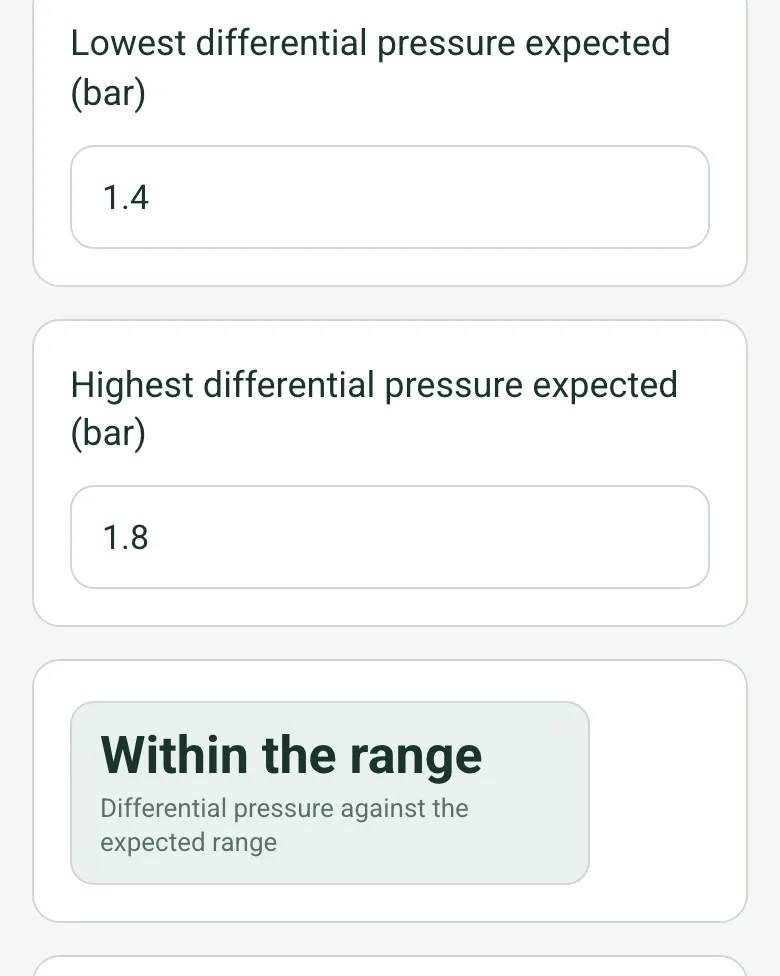
Lowest and highest differential pressure expected 1.4 and 1.8 bar, and the measured differential worked out as Within the range

Differential pressure against the expected range

Enter the two gauge readings and the expected range from the commissioning record or the pump curve. The form works out the differential and marks it below, within or above the range; a low one often means a blocked strainer, a high one a closed valve.

How calculated fields work →
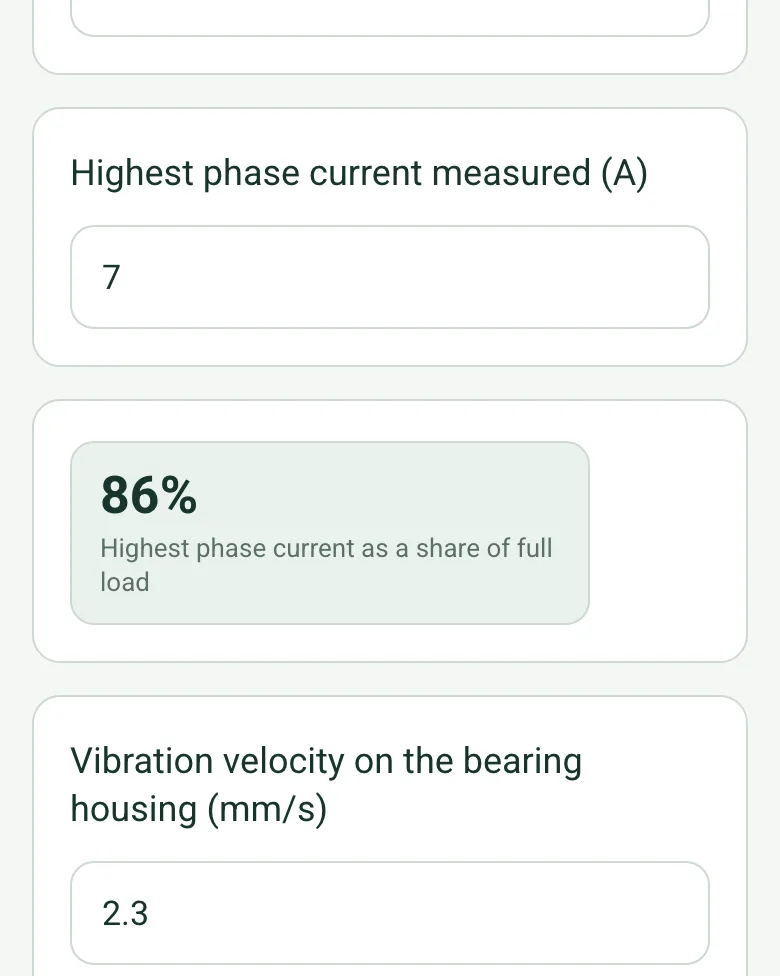
Highest phase current 7 A worked out as 86% of full load, with the vibration velocity on the bearing housing below it

Current and vibration

Enter the full load current from the motor plate and the highest phase current, and the vibration velocity with the alarm level from your procedure or the maker's data. The form shows the share of full load and whether the vibration is at the alarm level, and counts the duty readings needing attention.

How calculated fields work →
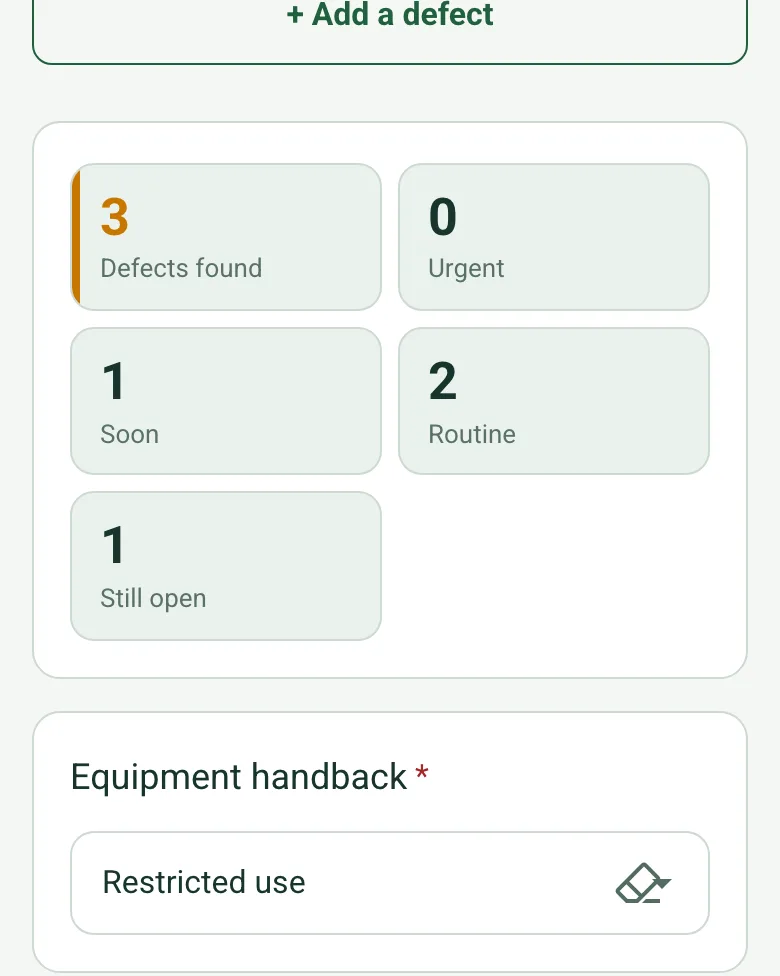
Counts worked out as 3 defects found: 0 urgent, 1 soon, 2 routine and 1 still open, above Equipment handback set to Restricted use

Defects by priority

Log each defect with where it is, a photo and a priority. The form counts them and shows how many are still open, next to how the pump was handed back.

How calculated fields work →

Walk the plant room with Walk Cam

Record a short clip at each pump and say what you found. The note is written down for you and kept with the visit.

How Walk Cam works →

A completed pump maintenance record

A six-monthly service of a fictional hotel's standby heating pump: suction strainer cleaned, differential pressure 1.6 bar within 1.4 to 1.8 bar, current 86% of full load, and a weeping mechanical seal that left the pump on standby only until the seal is replaced. Open it as a filled-in form, or switch to a blank copy and try it yourself.

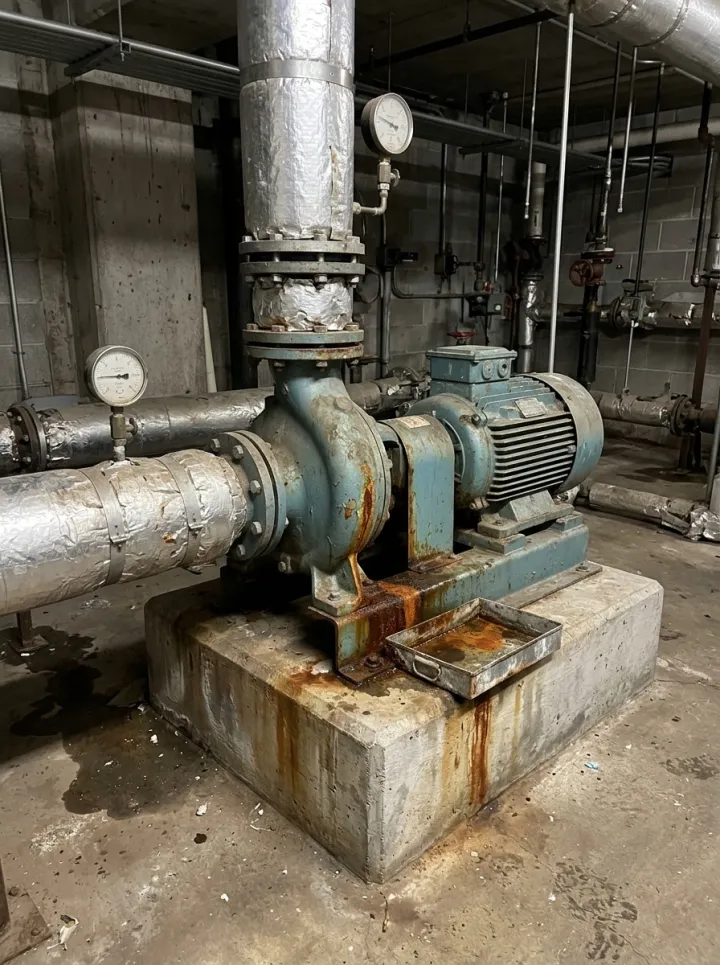
A close-coupled heating pump on a plinth with pressure gauges on the suction and discharge pipes and a drip tray under it
Suction and discharge gauges · 1.6 bar differential
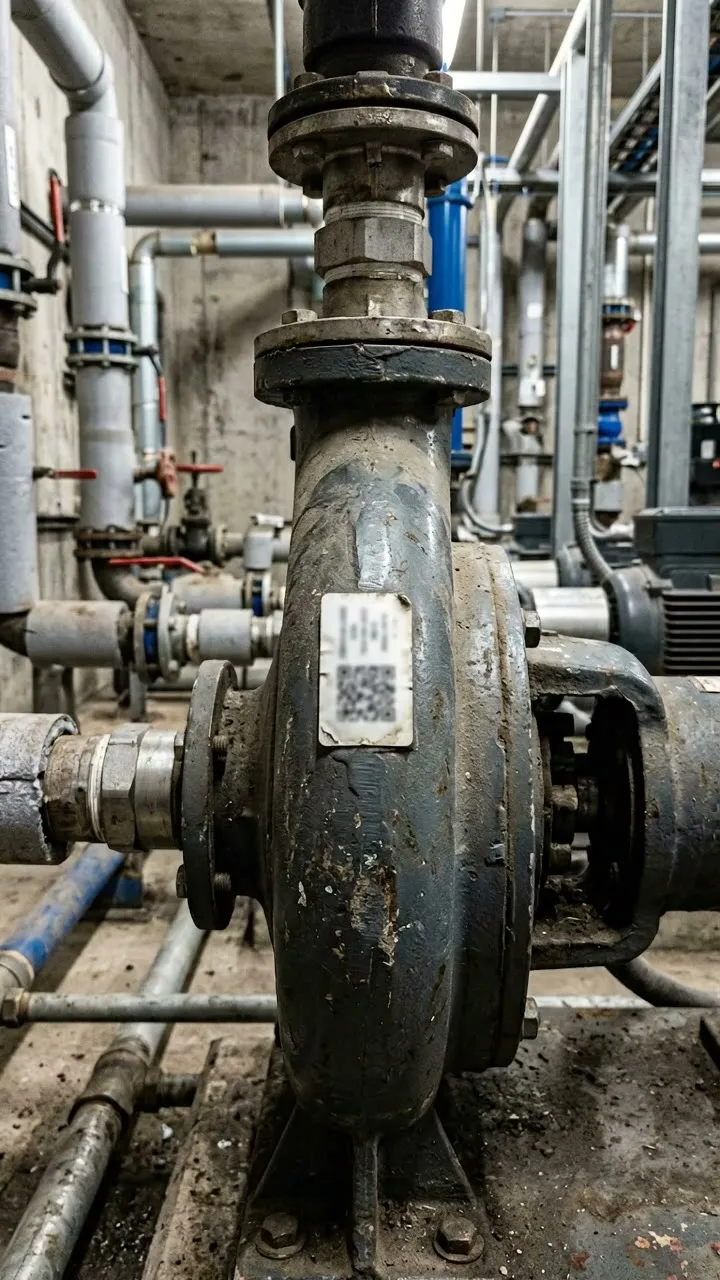
Rust staining and dried deposits on a pump casing below the mechanical seal
Seal weep · pump kept on standby until repaired

Try the pump maintenance form live

Answer a few questions and watch it adapt. Your answers are not saved, and any photos you add are deleted within the hour.

Live form: Pump MaintenanceOpen full screen ↗
Fill it in right here

This is the real form as your team would use it: questions appear as you answer, scores work themselves out and you can add photos and signatures. No sign-up needed. Or open a completed example to see every answer, photo and score filled in.

Want to see one filled in? See a completed pump maintenance report (PDF), made by SiteSurvey from a fictional site visit.

Fill it in on a phone or tablet

Your team completes the pump maintenance on site in the SiteSurvey app on iPhone, iPad and Android phones and tablets. The project name and address fill in for them, it works without signal, and it syncs when the device is back online with photos kept against the question they answer.

Customers and subcontractors do not need the app: send them a link and they can fill it in from any browser.

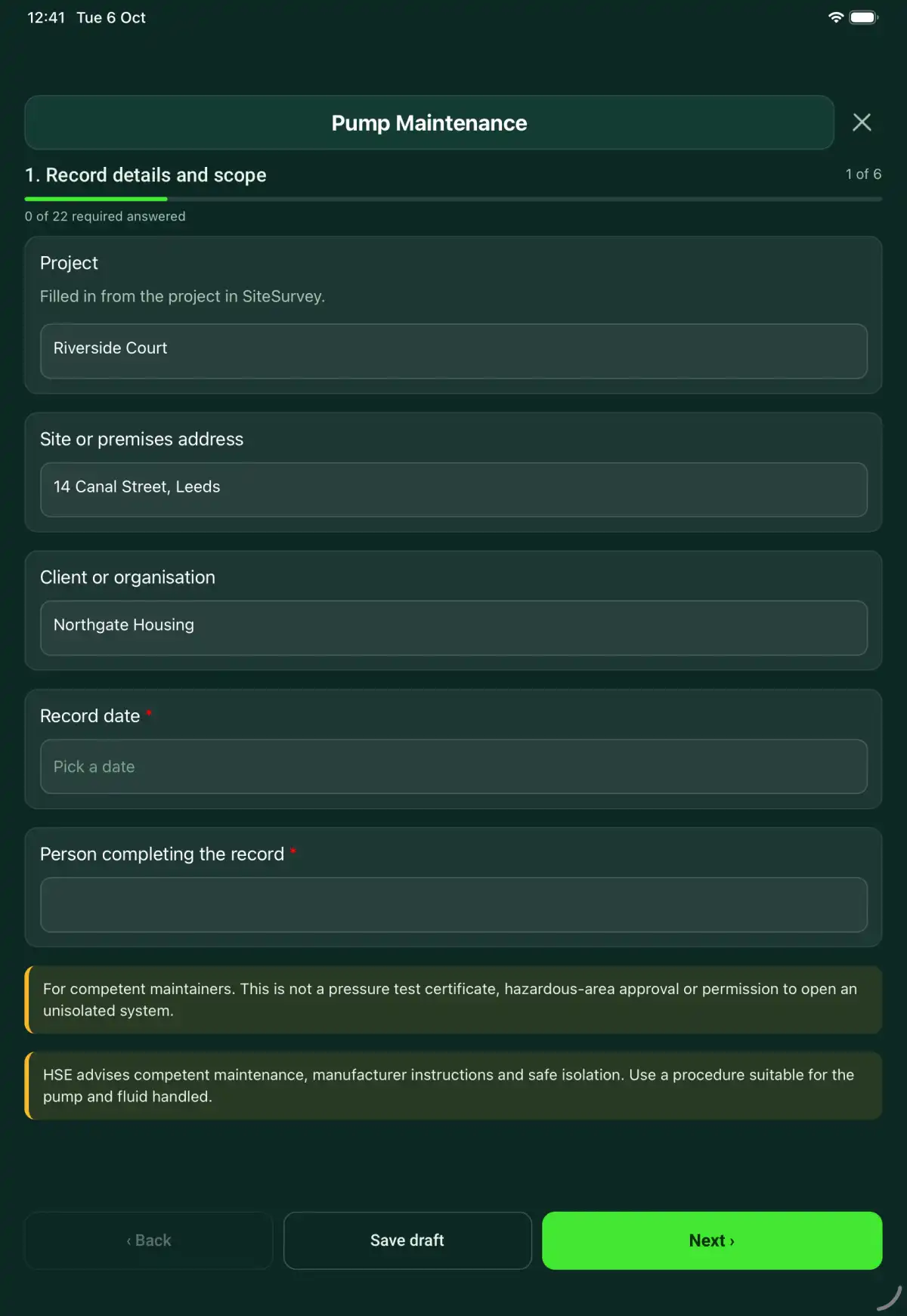
The Pump Maintenance form in the SiteSurvey app on a tablet
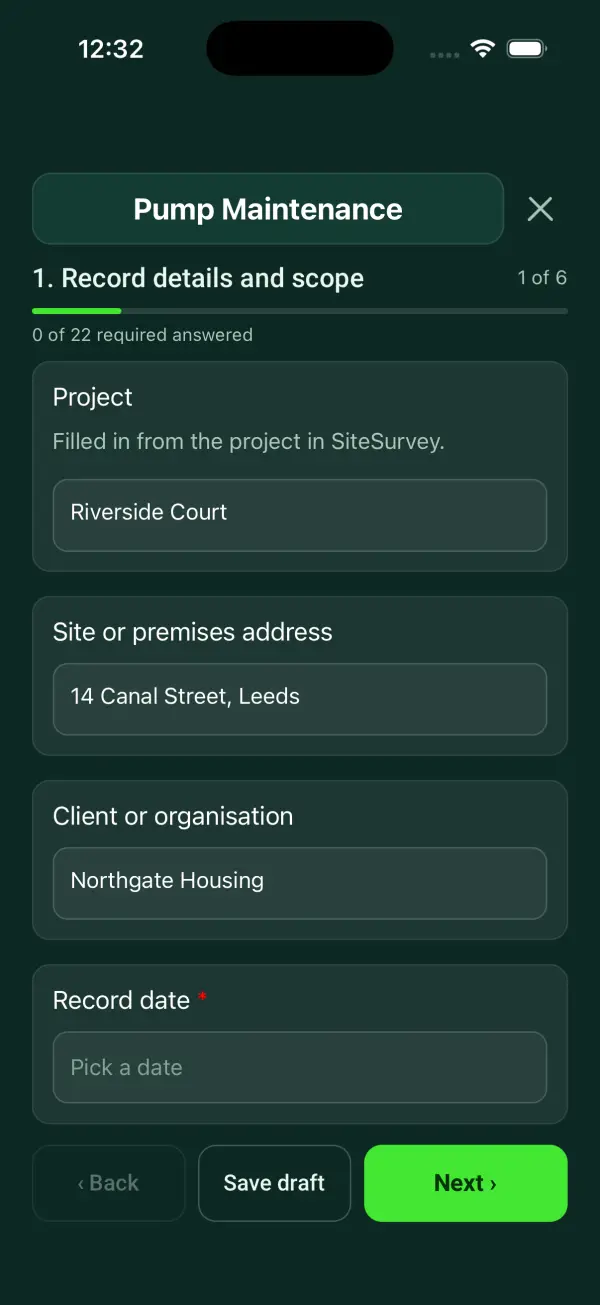
The Pump Maintenance form in the SiteSurvey app on a phone

Every question in the pump maintenance template

A pump maintenance record covering duty, seals, bearings, coupling, suction and discharge readings, service work, defects and return-to-service limits. 6 sections and 78 questions. Follow-up questions and guidance appear only when an answer calls for them, so the person on site never sees the ones that do not apply.

Make it your own: every question is editable

This is a starting point, not a fixed form. Once it is in your SiteSurvey account you can reword any question, add or remove questions, sections and answer options, and add your own logo, so it fits the way your team works and the jobs you do.

Details you only enter once

Add this form to a project in SiteSurvey and it fills in what the project already knows, so nobody on site retypes it and every form on the job uses the same names. Anything filled in can still be changed.

  • Project: the project name
  • Site or premises address: the site address, from the space or the project
  • Client or organisation: the project's customer
  • Manufacturer, model and serial number: the product's model

Record details and scope

  • ProjectShort answer

    Filled in from the project in SiteSurvey.

    Fills in from the project name
  • Site or premises addressShort answer
    Fills in from the site address, from the space or the project
  • Client or organisationShort answer
    Fills in from the project's customer
  • Record date*Date
  • Person completing the record*Short answer
  • CheckFor competent maintainers. This is not a pressure test certificate, hazardous-area approval or permission to open an unisolated system.
  • CheckSources. The Provision and Use of Work Equipment Regulations 1998 (PUWER), regulation 5: work equipment must be maintained in an efficient state, in efficient working order and in good repair, and where machinery has a maintenance log it must be kept up to date. Regulation 19 requires means of isolating equipment from its energy sources. Vibration severity is usually judged against the ISO 20816 series (formerly ISO 10816) and the manufacturer's alarm levels. Follow the manufacturer's instructions and a procedure suitable for the pump and the fluid handled.

Equipment and work

  • Pump asset ID and location*Short answer
  • Manufacturer, model and serial number*Short answer
    Fills in from the product's model
  • Scan the data plateScan a label: serial number, model number, asset number

    Optional. Scan the label or data plate to capture the serial and other numbers.

  • Maintenance procedure and revision*Short answer
  • Technician and competence reference*Short answer
  • Planned work and exclusions*Notes
  • Safe isolation or permit reference*Short answer

Duty and conditions

  • Fluid, hazards and safety data reference*Short answer
  • Duty point and operating range referenceShort answer
  • Run hours and duty or standby roleShort answer
  • Reported vibration, noise, leakage or loss of performanceNotes

Mechanical checks

For each reading include the location, units, operating condition and comparison criterion. Record an unavailable reading as a limitation.

  • Mountings and coupling condition checked*Choose one
    • Acceptable
    • Action needed
    • Not checked
    • Not applicable
  • Action, limitation or reason not applicable*Notes
    Shown only when the answers above make it relevant
  • Seals and visible leakage assessed*Choose one
    • Acceptable
    • Action needed
    • Not checked
    • Not applicable
  • Action, limitation or reason not applicable*Notes
    Shown only when the answers above make it relevant
  • Bearings and lubrication checked to procedure*Choose one
    • Acceptable
    • Action needed
    • Not checked
    • Not applicable
  • Action, limitation or reason not applicable*Notes
    Shown only when the answers above make it relevant
  • Suction and discharge connections and strainers checked*Choose one
    • Acceptable
    • Action needed
    • Not checked
    • Not applicable
  • Action, limitation or reason not applicable*Notes
    Shown only when the answers above make it relevant
  • Guards restored and rotation or function verified safely*Choose one
    • Acceptable
    • Action needed
    • Not checked
    • Not applicable
  • Action, limitation or reason not applicable*Notes
    Shown only when the answers above make it relevant
  • Checks acceptableWorked out by the form
  • Needing actionWorked out by the form
  • Not checkedWorked out by the form
  • GuidanceDuty readings Take them with the pump running on its normal duty. The pressure range, full load current and vibration alarm level come from the commissioning record, the motor plate and your procedure or the maker's data; the form sets none.
  • Suction gauge reading (bar)Number
  • Discharge gauge reading (bar)Number
  • Differential pressure (bar)Worked out by the form
    Shown when “Suction gauge reading (bar)” is answered and “Discharge gauge reading (bar)” is answered
  • Lowest differential pressure expected (bar)Number
  • Highest differential pressure expected (bar)Number
  • Differential pressure against the expected rangeWorked out by the form
    Shown when “Differential pressure (bar)” is answered and “Lowest differential pressure expected (bar)” is answered and “Highest differential pressure expected (bar)” is answered
  • Full load current on the motor plate (A)Number
  • Highest phase current measured (A)Number
  • Highest phase current as a share of full load (%)Worked out by the form
    Shown only when the answers above make it relevant
  • Vibration velocity on the bearing housing (mm/s)Number
  • Alarm level in your procedure or the maker's data (mm/s)Number
  • Vibration against the alarm levelWorked out by the form
    Shown when “Vibration velocity on the bearing housing (mm/s)” is answered and “Alarm level in your procedure or the maker's data (mm/s)” is answered
  • Duty readings needing attentionWorked out by the form

    Counts a differential pressure outside the expected range, a phase current over full load and vibration at or over the alarm level.

  • CheckA duty reading needs attention. A low differential pressure can mean a blocked strainer or a worn impeller, a high one a closed valve. Record the cause and the response in the measured values below.
    Shown only when the answers above make it relevant
  • Other measured values
    Repeat for each measured value. Each one asks:
    • Measurement point and parameter*Short answer
    • Actual value and unit*Short answer
    • Acceptance range and source*Short answer
    • Instrument ID and calibration referenceShort answer
    • Assessment*Choose one
      • Within criterion
      • Outside criterion
      • Unable to assess
    • Response to exception*Notes
      Shown only when the answers above make it relevant

Work and handback

  • Work performed and parts usedNotes
  • Post-work tests and evidenceNotes
  • Defects found
    Repeat for each defect. Each one asks:
    • Where on the pump or set*Short answer
    • Defect*Notes
    • Priority*Choose one
      • Urgent: make safe or restrict use now
      • Soon: before the next visit
      • Routine: at the next planned visit
    • Put right on this visit?Yes or No
    • What happens next, and whoNotes
      Shown when “Put right on this visit?” is No
    • Photos of the defectPhotos
  • Defects foundWorked out by the form
  • UrgentWorked out by the form
  • SoonWorked out by the form
  • RoutineWorked out by the form
  • Still openWorked out by the form
  • WarningAn urgent defect is still open. Record under Equipment handback how the equipment was left (restricted or out of service) and who on site was told before you leave.
    Shown only when the answers above make it relevant
  • Equipment handback*Choose one
    • Available within recorded limits
    • Restricted use
    • Out of service
  • Restrictions, isolation and person informed*Notes
    Shown only when the answers above make it relevant
  • Condition and work evidence photosPhotos

Actions and review

  • Are further actions required?*Choose one
    • Yes
    • No
  • Further action
    Repeat for each further action. Each one asks:
    Shown when “Are further actions required?” is “Yes”
    • Action and evidence reference*Notes
    • PriorityChoose one
      • Urgent
      • High
      • Medium
      • Low
    • Person responsible*Short answer
    • Target dateDate
    • Action status*Choose one
      • Open
      • In progress
      • Completed
    • Completion evidence*Notes
      Shown when “Action status” is “Completed”
  • Outstanding limitations and information to pass onNotes
  • Record status*Choose one
    • Ready for review
    • Further work needed
    • Work or use stopped
  • Reviewed byShort answer
  • Review dateDate
  • Next service dueDate

    Set by the maintenance schedule or the manufacturer.

  • Days to the next serviceWorked out by the form
    Shown when “Record date” is answered and “Next service due” is answered
  • CheckThe next service date is before the date of this record. Check the date.
    Shown only when the answers above make it relevant
  • Author signature*Signature
  • CheckSigning records the information entered. It does not itself certify legal compliance, remove a limitation or authorise unsafe work.

Scope and responsibility

For competent maintainers. This is not a pressure test certificate, hazardous-area approval or permission to open an unisolated system.

What a useful entry looks like

Other measured values

For each reading include the location, units, operating condition and comparison criterion. Record an unavailable reading as a limitation.

Reading taken at test point TP-2 under the recorded duty condition. Instrument and manufacturer criterion are referenced in the measurement record.

Fictional example of record wording. Use the actual evidence and approved arrangements for your job; this is not a completed report or an instruction to carry out the work.

See it filled in

A completed pump maintenance report, made by SiteSurvey from a fictional site visit: every answer, the photos, the guidance that applied and the sign-off, ready to send as a PDF.

See completed form (PDF) ↗

Pump Maintenance FAQs

How should I record “Other measured values”?

For each reading include the location, units, operating condition and comparison criterion. Record an unavailable reading as a limitation.

Can it cover different pump types?

Identify the type and procedure first. Explain checks that do not apply and add readings required for that pump.

Are pressure or vibration limits built in?

No. Enter the expected differential pressure range, the full load current and the vibration alarm level from the commissioning record, the motor plate and your procedure; the form compares the readings with them.

How is unsafe equipment recorded?

Select out of service or restricted use and record isolation, restrictions and the person informed.

What are the limits of this template?

For competent maintainers. This is not a pressure test certificate, hazardous-area approval or permission to open an unisolated system.

Can I complete this form on site and share the record?

In the SiteSurvey app the form works offline, with photos and signatures recorded against the questions. Share the completed record as a PDF or a link. Dates and action owners are recorded fields; this form does not send reminders or update other systems.

Related

Use this pump maintenance form with your team

Add it from the form library in one click, change any question, and every completed form becomes a branded PDF report.

Start your trial →