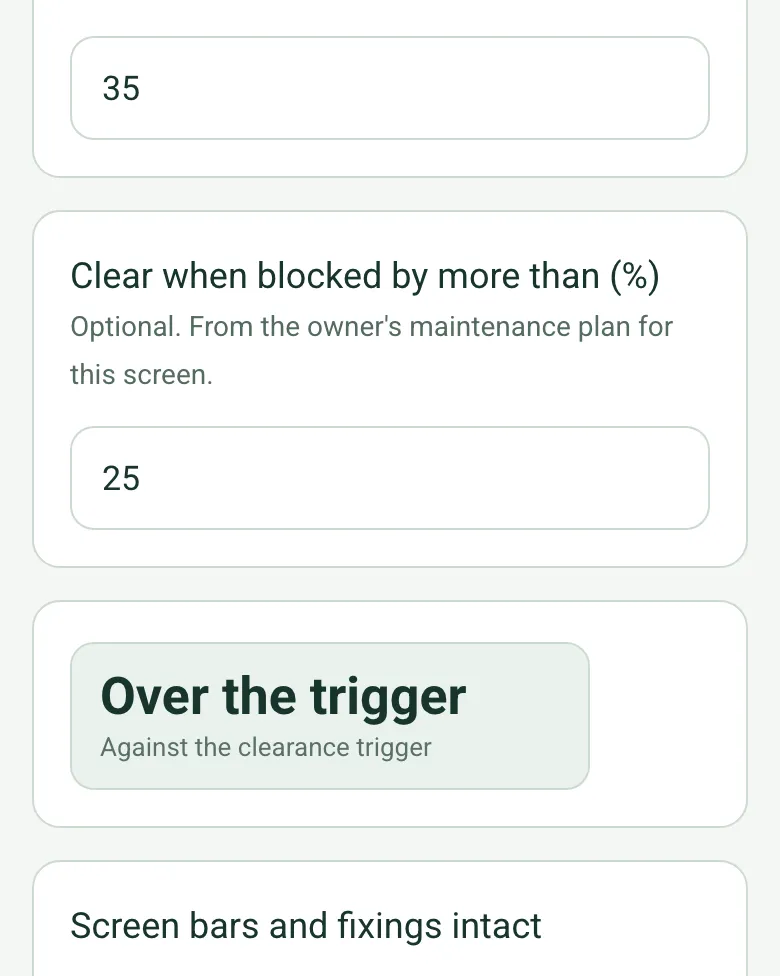
Screen blockage against your trigger
Estimate the share of the screen blocked from the bank and enter the trigger from the owner's maintenance plan. The form shows whether it is over, and warns if it was not cleared.
How calculated fields work →Form library · Facilities and maintenance
An inspection of a culvert, its trash screen and outlet, done from the bank or a safe platform and never from inside. Record the watercourse, the structure and why you are inspecting, and pin the inlet with GPS. Record the water level and flow, measure the gap from the water to the top of the opening from a photo, and the form shows how much of the opening is clear. Estimate how much of the screen is blocked and compare it with the clearance trigger in your maintenance plan. Check the channel, screen bars, headwall, banks, outlet and access, and the form counts the checks OK and with defects. Record the debris cleared, who it was reported to and the actions. Try the form below, see every question or open a completed example.
Ready to use from the form library, and every question is yours to edit. Try it for a small trial fee, cancel any time.
Try it on your phone
Try it on this phone
Fill in the culvert inspection on your phone now
See how the culvert inspection looks on your phone
Scan the code with your phone camera. It opens the real form, no sign-up needed.
Open the live example and fill it in, just as your team would on site. No sign-up needed.
See it on this phoneEvery question is editable. Add this form to your account, then change the wording, add or remove questions and options, and make it fit your own jobs.
In England, GOV.UK says you normally own the stretch of watercourse on or under your land, including a culvert, and that owners must let water flow naturally and should keep any trash screen, weir or other structure clear. It also says do not go inside a culvert, as you could get trapped or poisoned by gases: if it needs clearing or repairing, contact your risk management authority, which is the Environment Agency for a main river or the lead local flood authority or internal drainage board for other watercourses.
Last updated . Facts checked by the SiteSurvey team on 17 October 2026 against GOV.UK: owning a watercourse (Environment Agency) and Environment Agency: culvert, screens and outfall manual (project summary).
Pin the inlet with GPS and inspect from the bank. Measure the gap from the water to the top of the opening from a photo and the form shows how much of the opening is clear. Estimate how much of the screen is blocked and it is compared with the clearance trigger in your maintenance plan, with the checks counted.
Estimate the share of the screen blocked from the bank and enter the trigger from the owner's maintenance plan. The form shows whether it is over, and warns if it was not cleared.
How calculated fields work →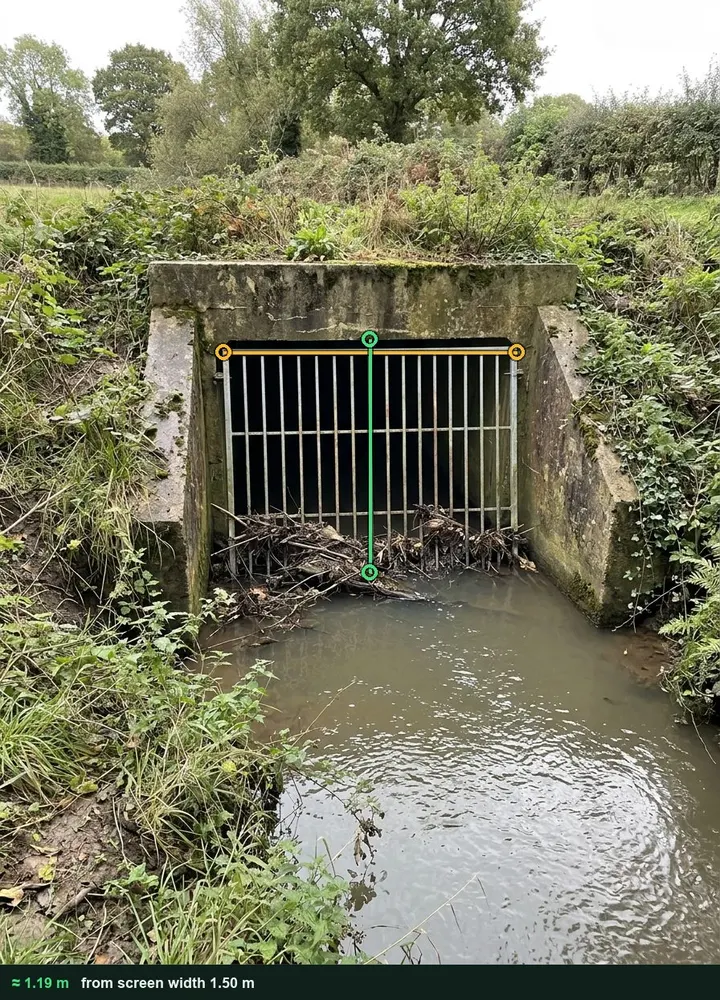
Photograph the headwall square on from the bank and use the screen width from the asset record as the known size. Nobody enters the water. It works on web forms in any phone browser today, and the app version is on its way.
How measuring from a photo works →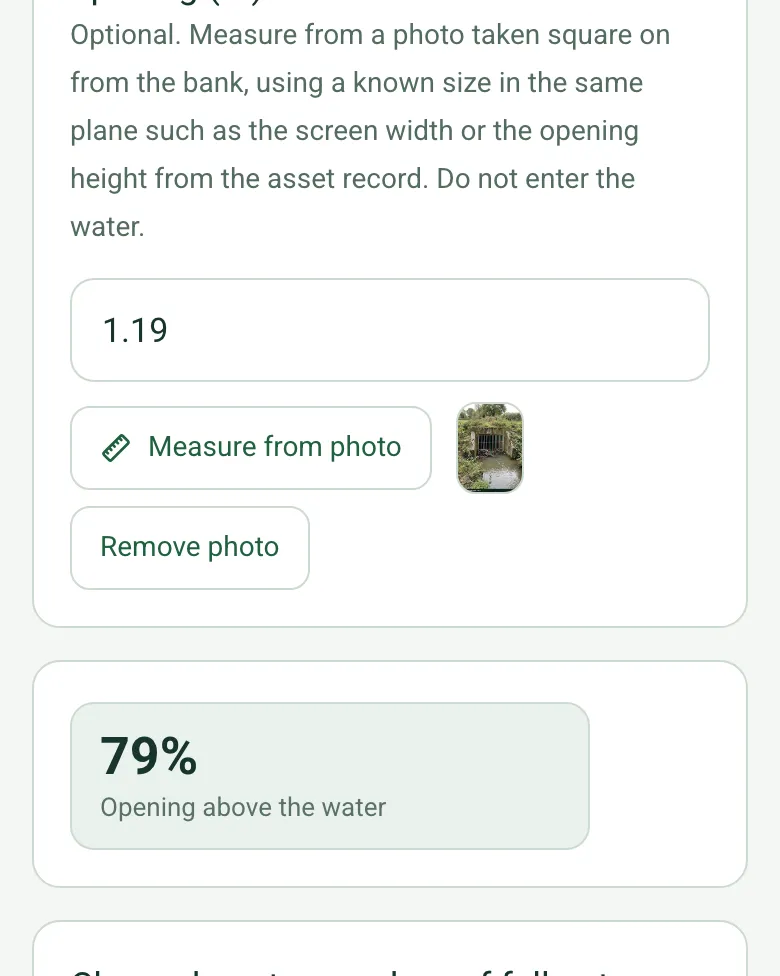
Enter the opening height from the asset record and the form shows the share of the opening above the water, to compare visit by visit and before heavy rain.
How calculated fields work →The optional Walk Cam route on the app films the approach, the screen, the headwall and the outlet, all from the bank.
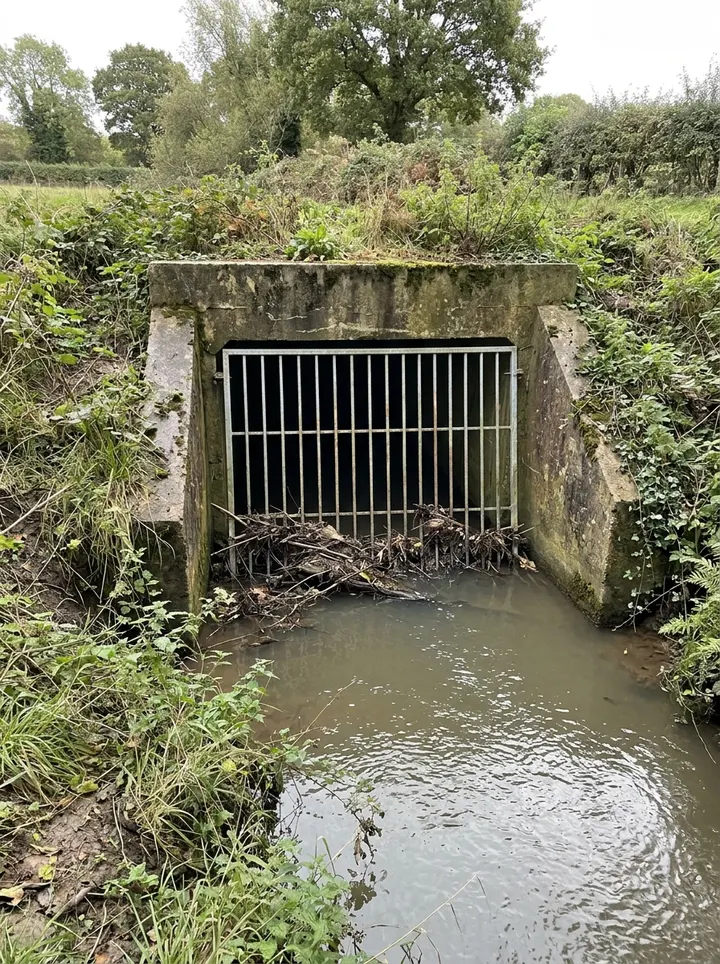
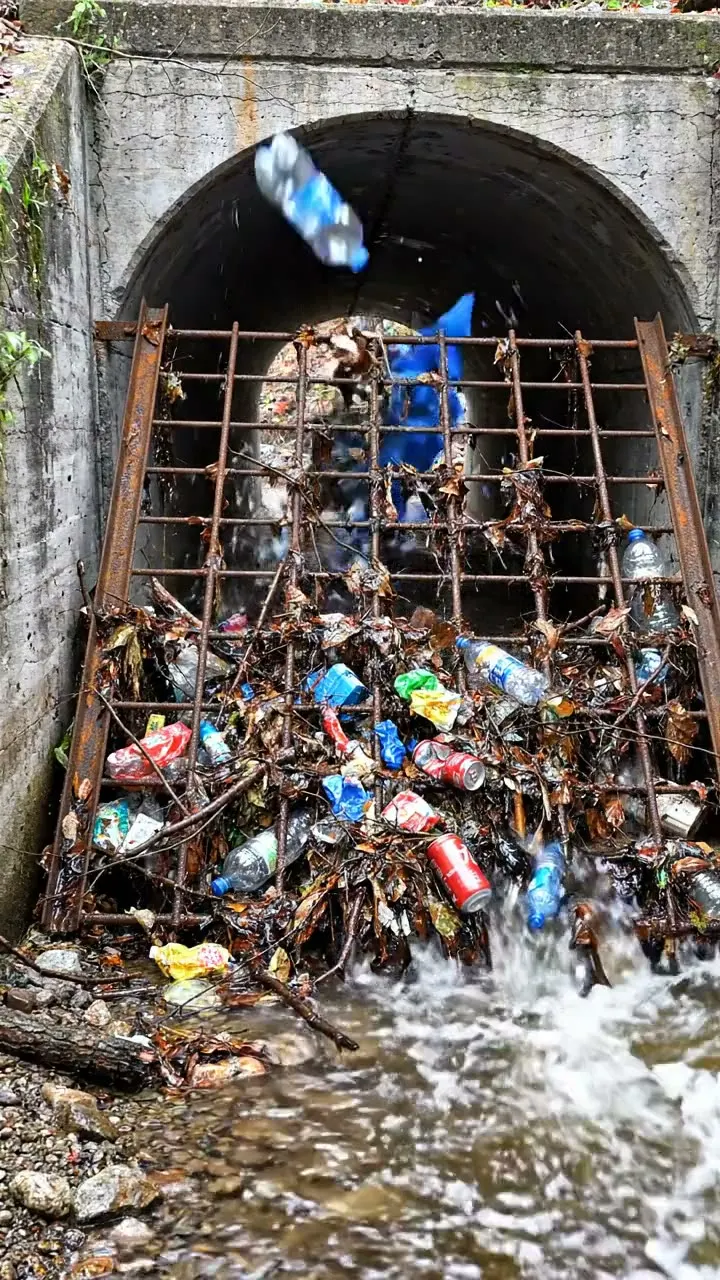
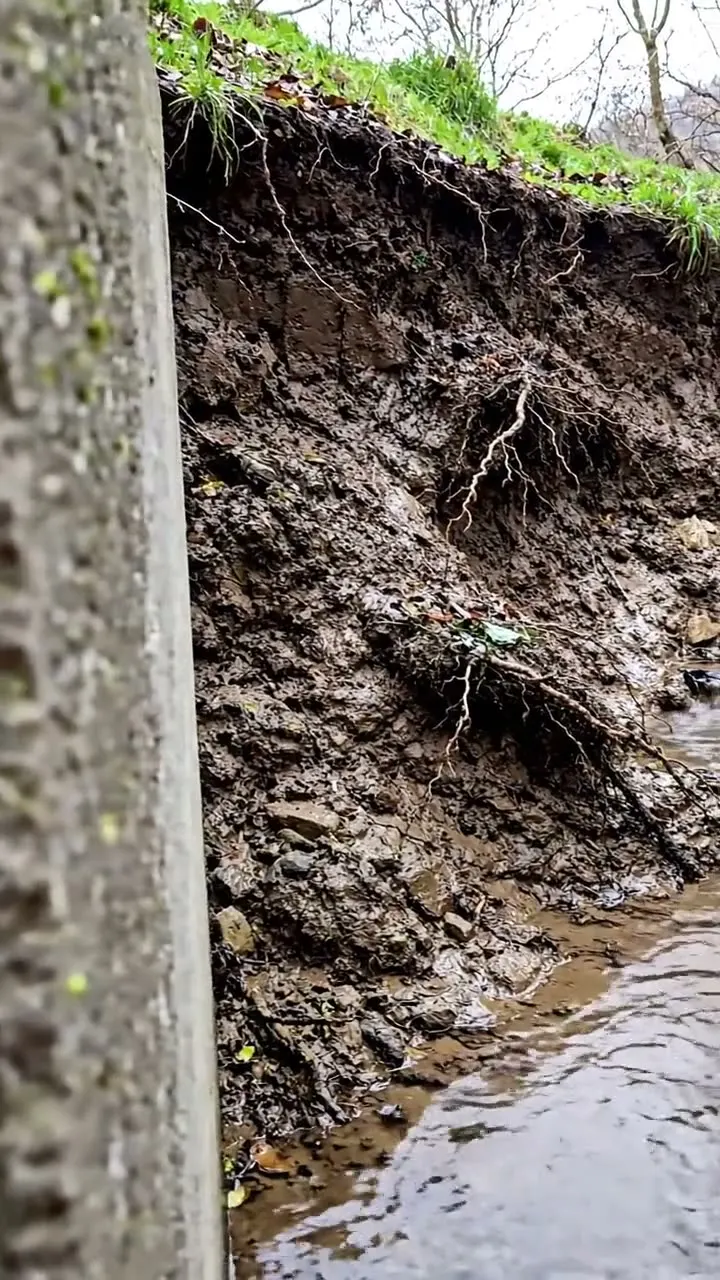
A fictional country park culvert in Hexham before forecast heavy rain: the screen about 35% blocked against a 25% clearance trigger, flow slowed, 1.19 m clear above the water in a 1.5 m opening (79%), a crack in the headwall and an eroded bank. Six bags of debris were raked off from the platform and the blockage reported to the lead local flood authority.
Answer a few questions and watch it adapt. Your answers are not saved, and any photos you add are deleted within the hour.
This is the real form as your team would use it: questions appear as you answer, scores work themselves out and you can add photos and signatures. No sign-up needed. Or open a completed example to see every answer, photo and score filled in.
Want to see one filled in? See a completed culvert inspection report (PDF), made by SiteSurvey from a fictional site visit.
Walk Cam route · four guided clips
Film the watercourse into the culvert, the screen and any debris, the headwall and the outlet, all from the bank.
Record the location, watercourse, date and water level. Stay on the bank and never enter the water or the culvert. The four AI-generated clips illustrate one route, not a real culvert.
Show the watercourse leading to the culvert and the water level, from the bank. Do not enter the water.
A small stream runs between grassy banks towards a culvert under a lane.
Film the screen or grille and any debris caught on it, from the bank or a safe platform.
Branches and leaves are caught on the culvert's metal trash screen.
Show the headwall, wing walls and banks for cracks, missing blocks and erosion.
The concrete headwall has a crack and the bank beside it is eroded.
Walk round to the outlet and film flow and any blockage. Never go inside a culvert.
Water flows freely from the culvert outlet into the stream.
A fictional six-page example with the four points, twelve stills from the clips, observations, follow-up actions and the limits of a visual record.
View the visual evidence (PDF) ↗ · Download the full sample report
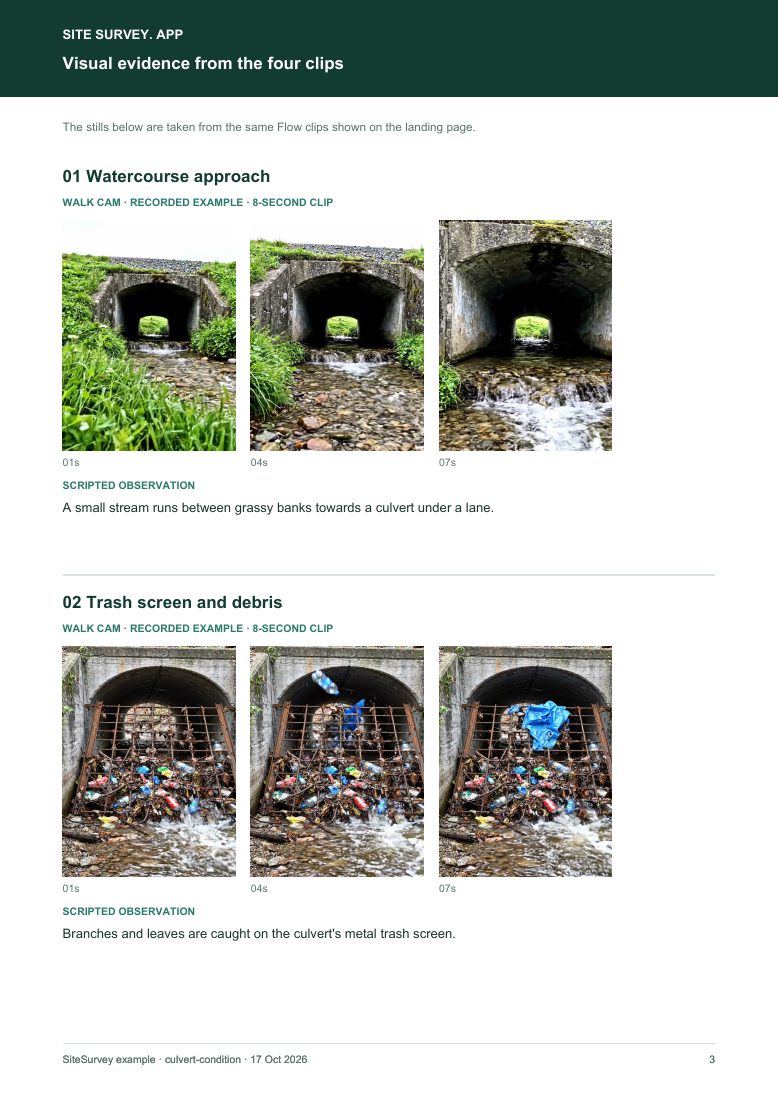
Video records what can be seen from outside. It cannot show the inside of the culvert, its structural condition or flood capacity. Example footage was generated in Google Flow and the observations are scripted; no real site is shown. Walk Cam works inside any form in the app. How Walk Cam works · All visual inspections
A culvert and trash screen inspection from the bank: watercourse and water level, flow, screen and debris, headwall, wing walls, banks and outlet, debris cleared, photos, who was told and actions. Never enter a culvert. 3 sections and 55 questions. Follow-up questions and guidance appear only when an answer calls for them, so the person on site never sees the ones that do not apply.
This is a starting point, not a fixed form. Once it is in your SiteSurvey account you can reword any question, add or remove questions, sections and answer options, and add your own logo, so it fits the way your team works and the jobs you do.
Add this form to a project in SiteSurvey and it fills in what the project already knows, so nobody on site retypes it and every form on the job uses the same names. Anything filled in can still be changed.
Optional. Mark the culvert inlet or screen from the bank, so the next inspector and the authority find it.
Optional. From the asset record or drawing, soffit to bed, or measure from a photo taken square on from the bank (an estimate). Do not enter the water.
Optional. Measure from a photo taken square on from the bank, using a known size in the same plane such as the screen width or the opening height from the asset record. Do not enter the water.
Your estimate from the bank, before any clearing.
Optional. From the owner's maintenance plan for this screen.
Optional. Film the four guided points on the SiteSurvey app; each clip keeps its spoken note.
Set by the owner's own inspection regime. Also inspect before forecast heavy rain and after a flood or storm.
A visual record from outside the culvert. It is not a confined space entry, a structural survey, a hydraulic assessment or permission to work in a watercourse.
Screen, structure and flow findings
Record what can be seen from the bank: debris on the screen, cracks, erosion and how freely water flows. Say who it was reported to and the reference.
Branches and plastic across the lower third of the screen, flow slowed. Raked clear from the platform and reported to the council drainage team.
Fictional example of record wording. Use the actual evidence and approved arrangements for your job; this is not a completed report or an instruction to carry out the work.
A completed culvert inspection report, made by SiteSurvey from a fictional site visit: every answer, the photos, the guidance that applied and the sign-off, ready to send as a PDF.
No. GOV.UK says do not go inside a culvert, you could get trapped or poisoned by gases. Inspect from the bank or a safe platform and do not enter the water. The Walk Cam route is filmed the same way.
A screen or grille across the culvert entrance that catches debris before it gets inside. It only works if it is kept clear, which is why GOV.UK says owners should keep any trash screen clear. The Environment Agency's culvert, screens and outfall manual project says culverts and screens can completely restrict flow.
GOV.UK says you can report blockages which could cause flooding. The risk management authority is the Environment Agency for a main river, or the lead local flood authority or internal drainage board for any other watercourse.
GOV.UK says you must find out which permissions and licences you need to maintain, repair, build or remove anything in or around a watercourse, including a culvert, and that the authorities are unlikely to give permission to build a new culvert.
Estimate the share of the screen blocked and enter the clearance trigger from your maintenance plan, and the form shows whether it is over the trigger and warns if it was not cleared. Measure the gap from the water to the top of the opening from a photo, and it shows the share of the opening above the water. Set your own routine, with extra checks before heavy rain and after a flood.
Council parks and highways teams, estates and grounds managers, farmers and landowners, golf courses, rail and road operators and drainage boards.
Related templates
A drainage installation record linking drawings, pipe and chamber observations, levels, concealed-work evidence, approved test references and defects.
An environmental site inspection covering drainage, material storage, waste, dust, spill readiness, consent references, observations and corrective actions.
A park and open space inspection: paths, benches, bins, signs, fencing and gates, trees, water features, lighting, litter and hazards, each issue with risk, photos and action.
Add it from the form library in one click, change any question, and every completed form becomes a branded PDF report.
Start your trial →