Mark the property
Tap Mark current location at the front door. Across a portfolio it records where each check was done. Mark current location works on web forms in any phone browser today, and the app version is on its way.
How GPS location works →Form library · Fire safety
A routine fire safety check of a house in multiple occupation by the landlord or managing agent; it is not a fire risk assessment. Mark the property location, record the storeys, occupants and HMO type, and the form works out how long ago the fire risk assessment was done. Check the escape route, fire doors, detection and alarm, emergency lighting, fire blankets, signs, electrics and bins, and the form counts the checks OK and with a defect. Add each room as a space with its detector and fire door, and the form counts detectors not working and doors that do not close. Try the form below, see every question or open a completed example.
Ready to use from the form library, and every question is yours to edit. Try it for a small trial fee, cancel any time.
Try it on your phone
Try it on this phone
Fill in the HMO fire safety on your phone now
See how the HMO fire safety looks on your phone
Scan the code with your phone camera. It opens the real form, no sign-up needed.
Open the live example and fill it in, just as your team would on site. No sign-up needed.
See it on this phoneEvery question is editable. Add this form to your account, then change the wording, add or remove questions and options, and make it fit your own jobs.
The LACORS guide Housing: fire safety is national guidance for landlords and enforcing officers. It covers escape routes, fire doors, fire detection and alarms, emergency lighting where needed, and fire blankets, which it recommends in kitchens. Where the Fire Safety Order applies, the responsible person must carry out a fire risk assessment of the common parts, and LACORS says in practice the whole premises need to be taken into account.
Last updated . Facts checked by the SiteSurvey team on 17 October 2026 against LACORS: housing fire safety guide (hosted by Mansfield District Council), article 9 of the Regulatory Reform (Fire Safety) Order 2005 (risk assessment) and regulation 10 of the Fire Safety (England) Regulations 2022 (fire doors).
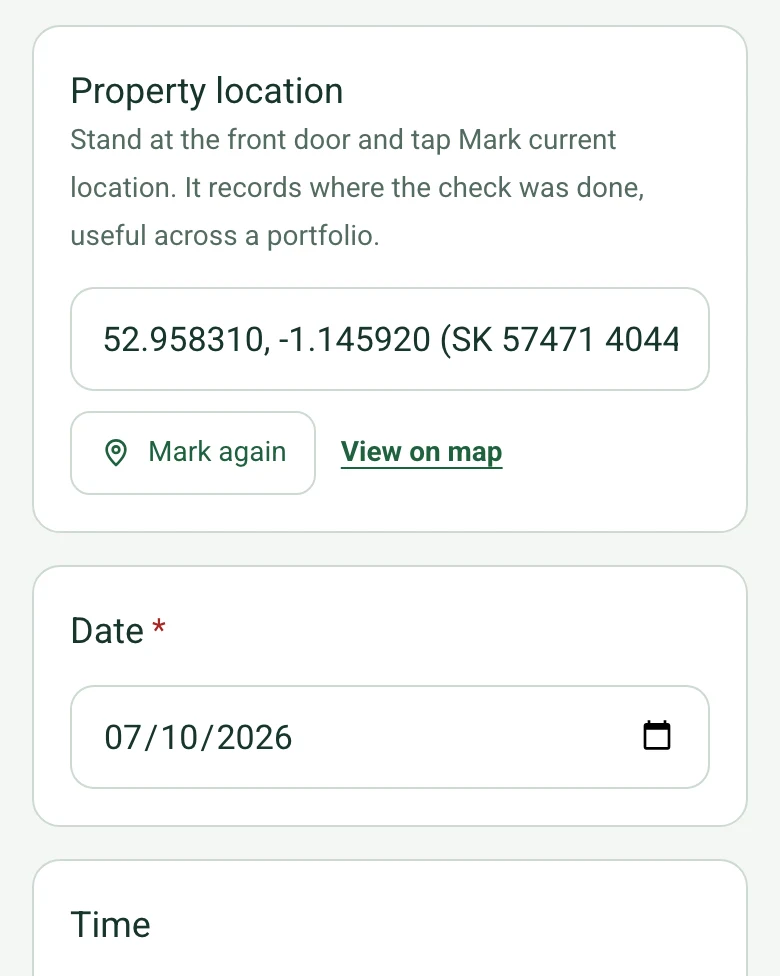
Mark the property, record how long ago the fire risk assessment was done, then check the common parts and each room. The form counts the checks OK and with a defect, and the detectors and room fire doors that failed. It is a routine check, not a fire risk assessment.
Tap Mark current location at the front door. Across a portfolio it records where each check was done. Mark current location works on web forms in any phone browser today, and the app version is on its way.
How GPS location works →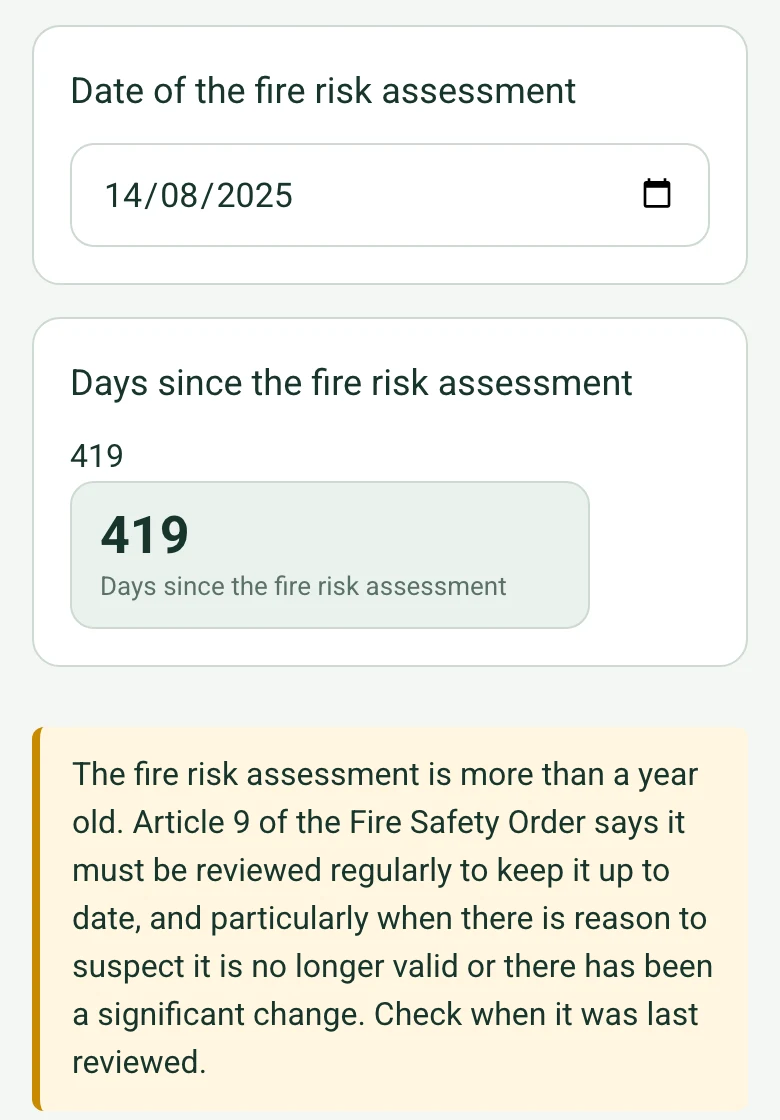
Enter the date of the fire risk assessment. Over a year old, the form reminds you that article 9 of the Fire Safety Order says it must be reviewed regularly, and asks you to check when it was last reviewed.
How calculated fields work →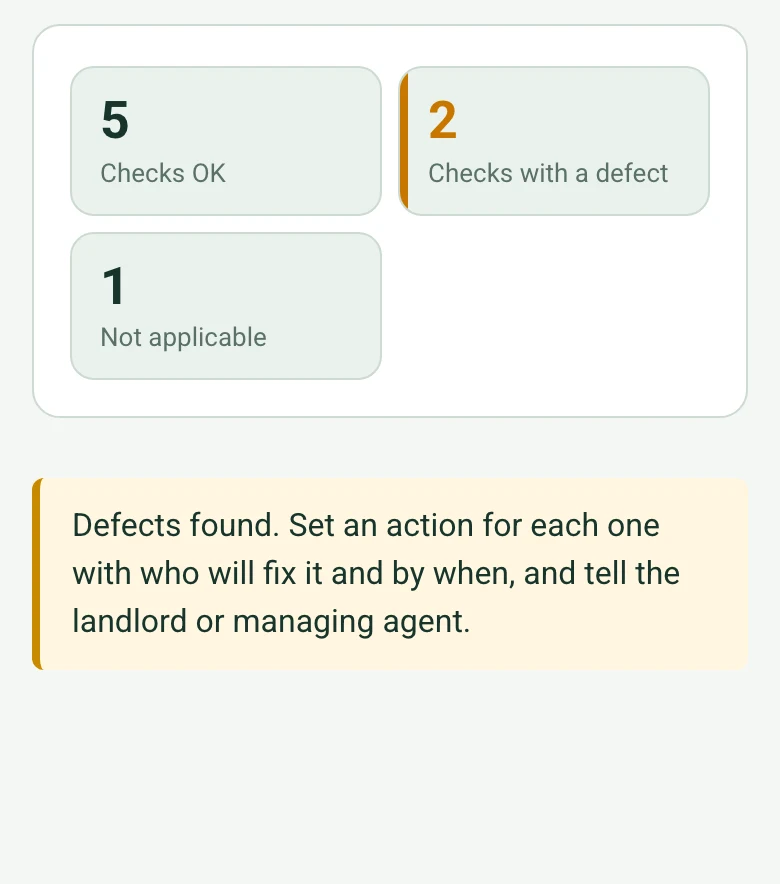
Each common part check is OK, a defect or not applicable. The form counts them and asks for an action for every defect.
How calculated fields work →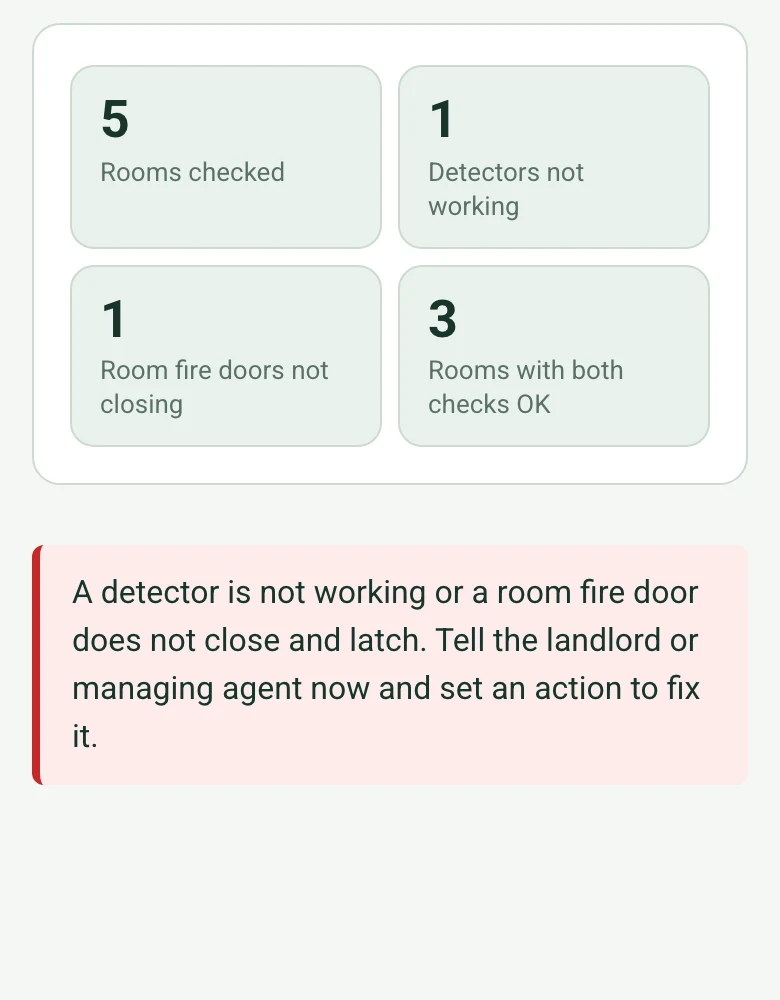
Each room is a space with its detector and fire door. The form counts the rooms, the detectors not working and the doors that do not close and latch, with a red note to act now.
How calculated fields work →A fictional three-storey bedsit house: a bicycle in the hall, the kitchen fire blanket off its hook, a room door that stops short of the latch and a heat alarm that did not sound, with a fire risk assessment 419 days old. Open it as a filled-in form, or switch to a blank copy and try it yourself.
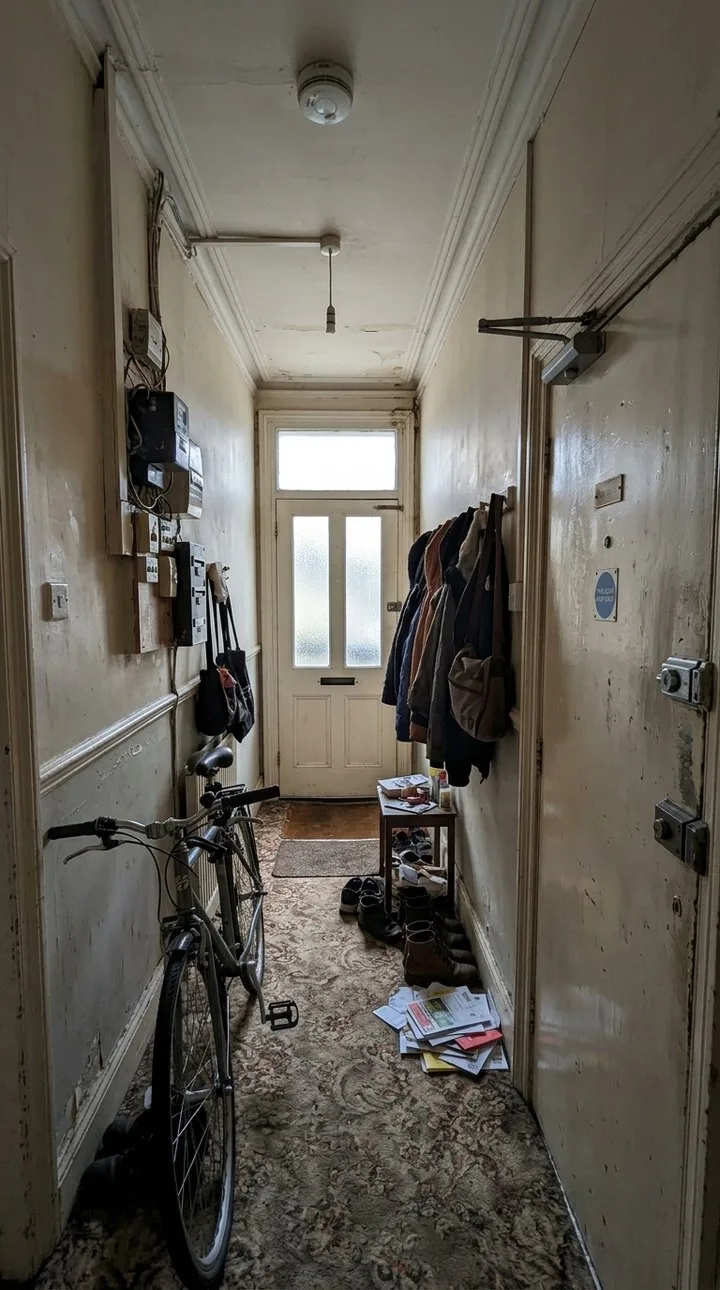
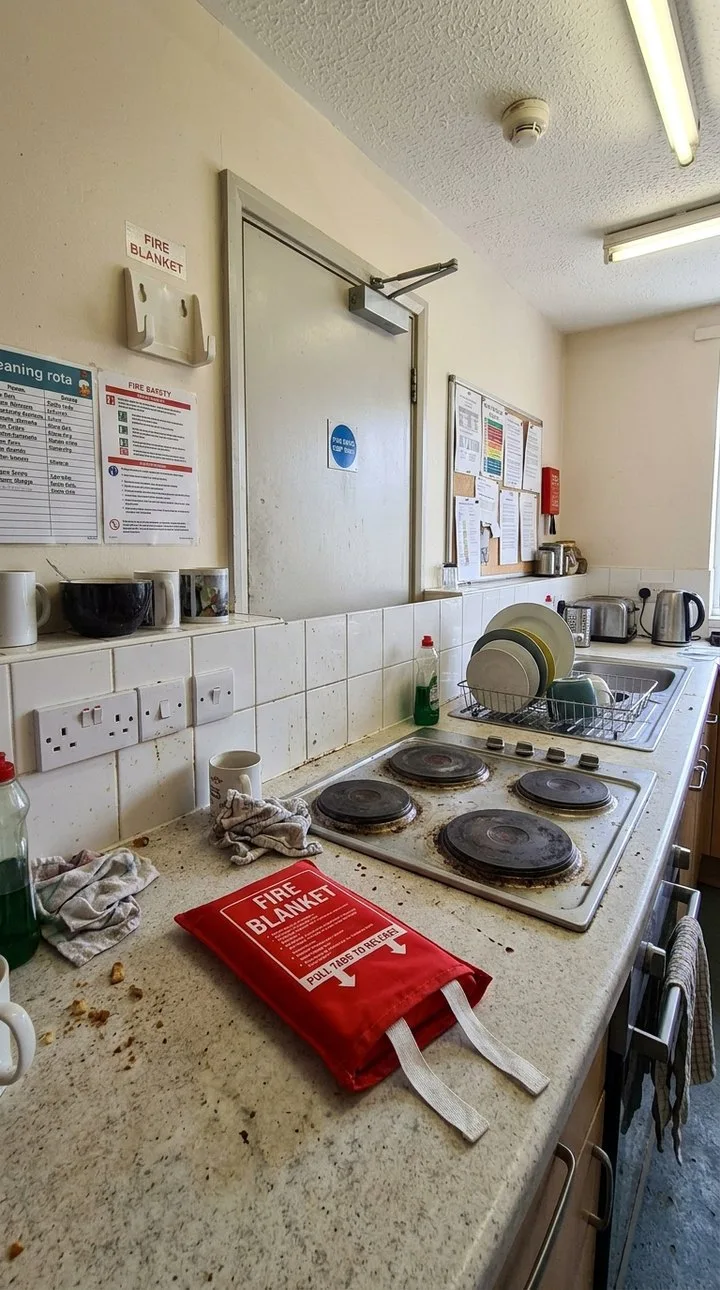
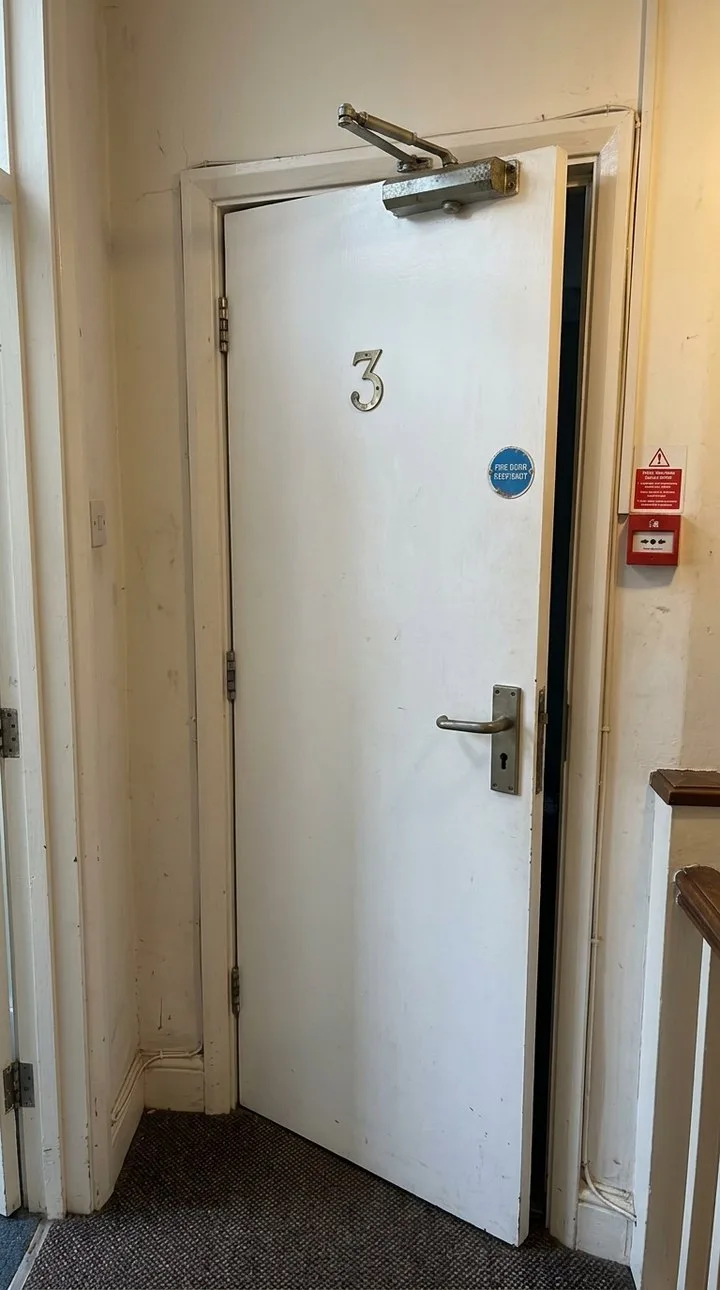
Answer a few questions and watch it adapt. Your answers are not saved, and any photos you add are deleted within the hour.
This is the real form as your team would use it: questions appear as you answer, scores work themselves out and you can add photos and signatures. No sign-up needed. Or open a completed example to see every answer, photo and score filled in.
Want to see one filled in? See a completed HMO fire safety report (PDF), made by SiteSurvey from a fictional site visit.
An HMO fire safety check against the LACORS housing fire safety guide: escape route, fire doors, detection and alarms, emergency lighting, fire-fighting equipment, kitchens, each room, and the fire risk assessment. 4 sections and 62 questions. Follow-up questions and guidance appear only when an answer calls for them, so the person on site never sees the ones that do not apply.
This is a starting point, not a fixed form. Once it is in your SiteSurvey account you can reword any question, add or remove questions, sections and answer options, and add your own logo, so it fits the way your team works and the jobs you do.
Add this form to a project in SiteSurvey and it fills in what the project already knows, so nobody on site retypes it and every form on the job uses the same names. Anything filled in can still be changed.
Stand at the front door and tap Mark current location. It records where the check was done, useful across a portfolio.
Optional. Film a guided walk-through on the SiteSurvey app; each clip keeps its spoken note.
Set by the fire risk assessment and the landlord's management plan.
A completed HMO fire safety report, made by SiteSurvey from a fictional site visit: every answer, the photos, the guidance that applied and the sign-off, ready to send as a PDF.
It applies to the common parts of most HMOs, so the responsible person must carry out a fire risk assessment. LACORS says it does not apply to a shared house let as a whole to occupants who have exclusive use of the whole house.
LACORS says that in most residential premises of average size and normal risk, fire safety signs and notices will not be needed, but larger or complicated premises are likely to need some. The form checks signs where the risk assessment calls for them.
In England, regulation 10 of the Fire Safety (England) Regulations 2022 requires fire door information for residents of buildings with two or more homes. In buildings over 11 metres, communal fire doors must be checked at least every 3 months, with best endeavours to check flat entrance doors every 12 months.
Yes. Each room becomes a space with its detector and fire door, and the form counts doors that do not close.
The HMO inspection checklist covers the wider management of the house. This check focuses on fire safety in more detail.
No. It is a routine check between assessments by HMO landlords, managing agents or student accommodation managers. Article 9 of the Fire Safety Order says the risk assessment must be reviewed regularly to keep it up to date, so the form records its date and flags one more than a year old for you to check when it was last reviewed.
Related templates
An HMO inspection against the HMO management regulations: licence details, the house pinned by GPS, fire safety and escape with the defects counted, gas and electrical safety dates, each room as a space with its floor area against the licence room sizes, and actions.
Fire risk assessment following the five steps in GOV.UK guidance: hazards, people at risk, fire precautions, emergency plan and training, findings with actions and review.
Fire door checks for blocks of flats under the Fire Safety (England) Regulations 2022: the building's top storey height, quarterly communal and annual flat entrance door checks, self-closers, gaps, seals and damage, counts of doors passed and needing repair, access attempts and resident information.
Add it from the form library in one click, change any question, and every completed form becomes a branded PDF report.
Start your trial →