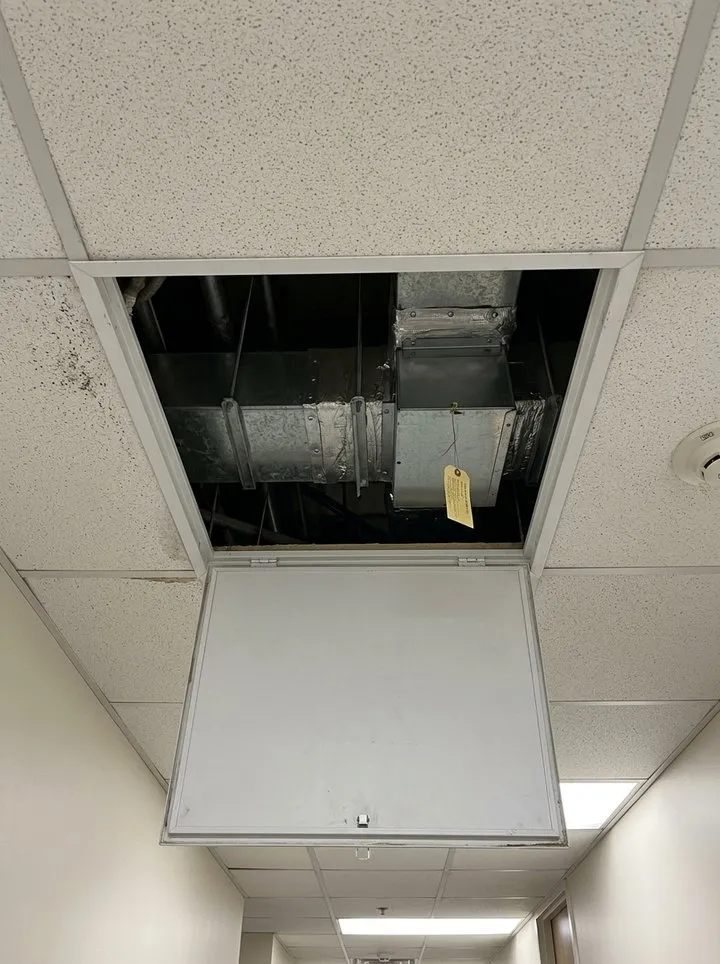
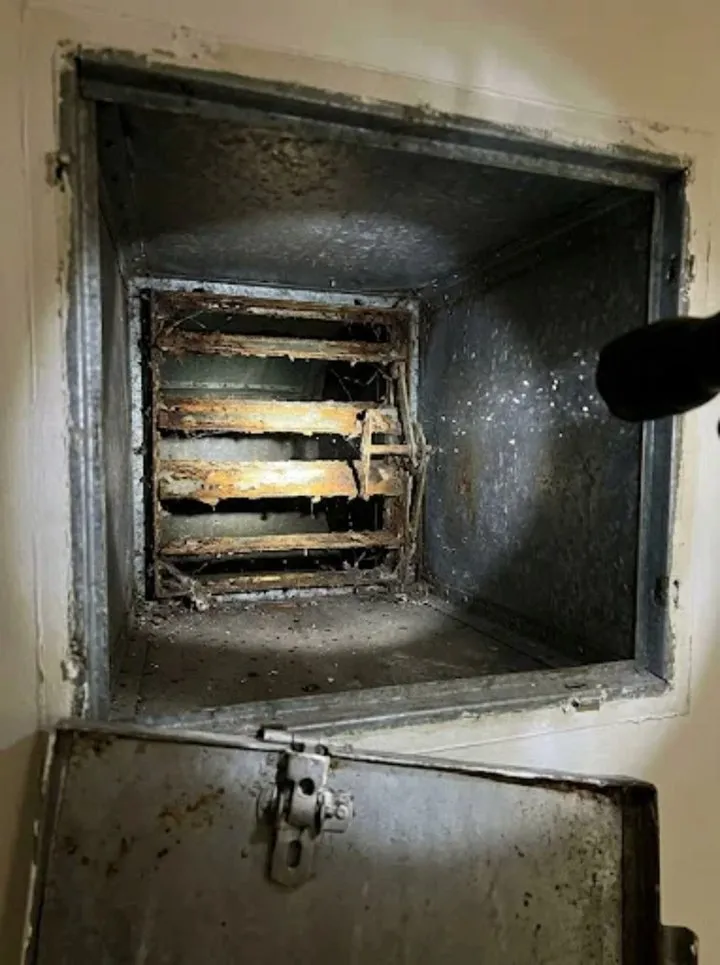
An inspection and drop test record for fire and smoke dampers. Record the damper schedule and the date of the last test, and the form shows the days since. Add each floor, then each damper on it: scan its label, record its location and type, access, the visual check, the drop test, reset and fusible link, the result and before and after photos. The form counts dampers passed, failed and with no access for each floor and the building, works out the pass rate, and records who will arrange the remedial work. Try the form below, see every question or open a completed example.
✎Every question is editable. Add this form to your account, then change the wording, add or remove questions and options, and make it fit your own jobs.
BESA's guidance on BS 9999 is that fire dampers should be tested by a competent person on completion of installation and at least annually after that, more often in dusty or polluted air. Article 17 of the Regulatory Reform (Fire Safety) Order 2005 requires fire safety equipment to be maintained in efficient working order and in good repair. A drop test checks the damper closes fully, and it is then reset.
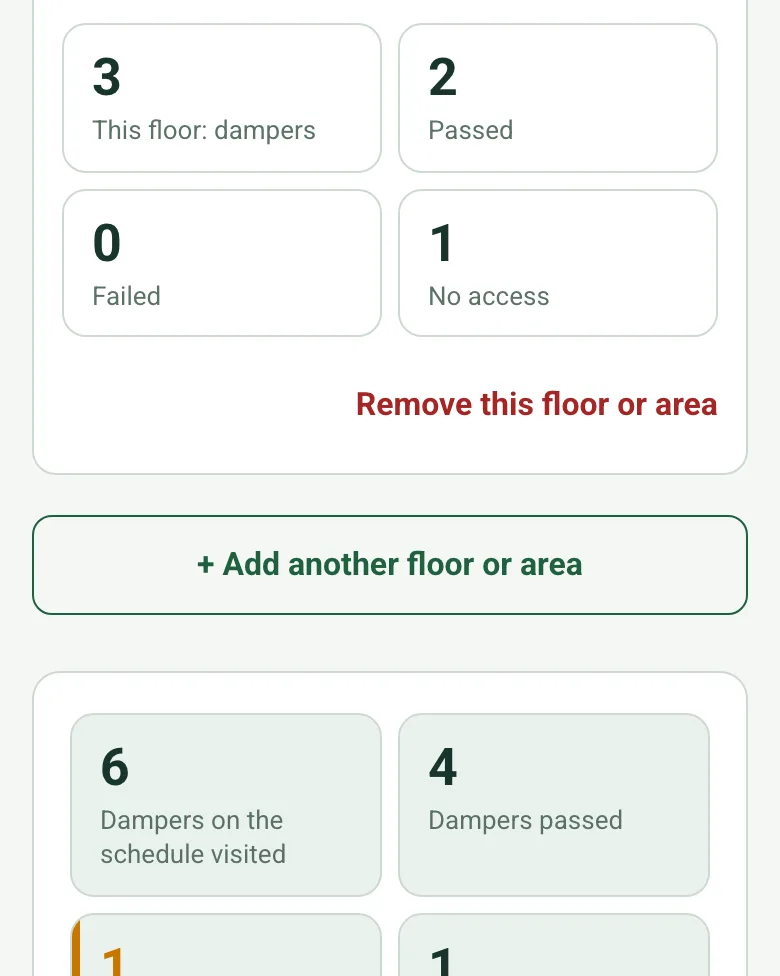
Add each floor, then each damper on it as you test it. The form counts the dampers passed, failed and with no access for each floor and the building, works out the pass rate, and shows how long it has been since the last test.
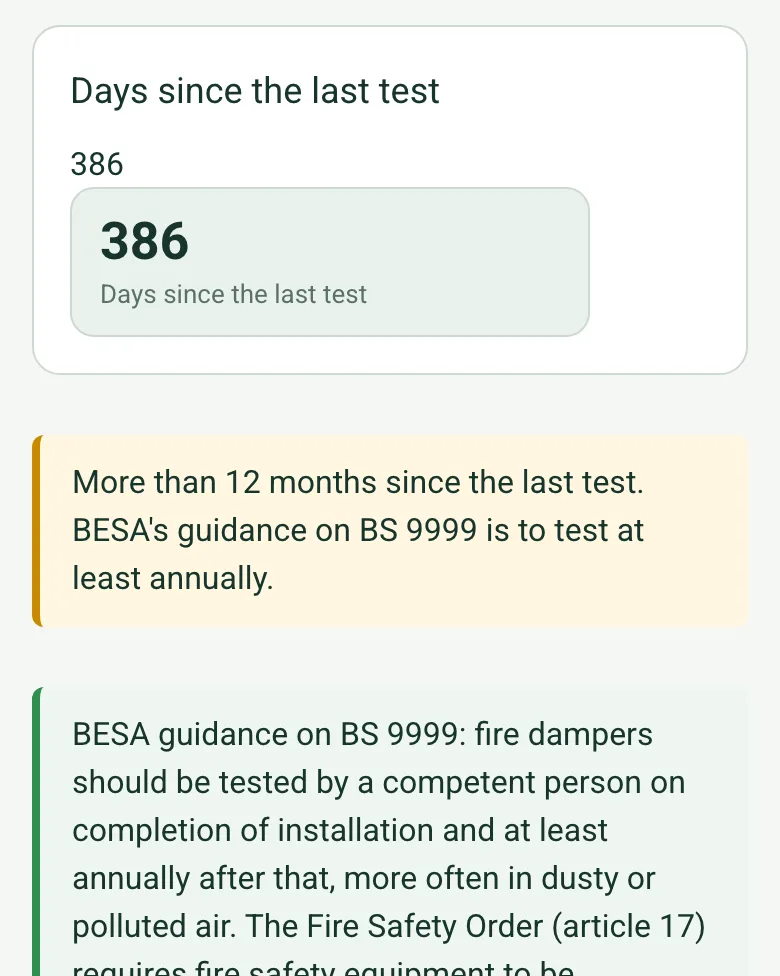
Time since the last test
Enter the date of the last test from the previous record. The form works out the days since, with a note when it is more than 12 months, as BESA's guidance on BS 9999 is to test at least annually.
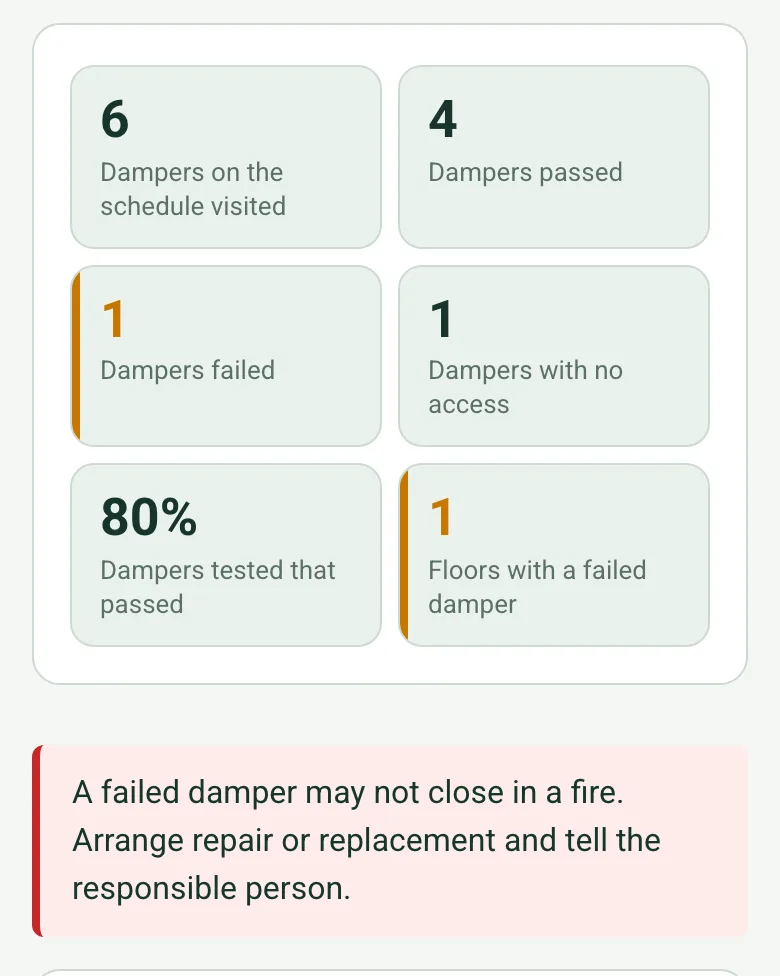
The form adds the floors up, works out the share of tested dampers that passed and counts the floors with a failed damper, with a red note to arrange repair and tell the responsible person.
A fictional office building over two floors, tested 386 days after the last test: four dampers passed, one seized by corrosion in the level 1 plant room, and one in a level 2 riser with no access until a panel is fitted. Open it as a filled-in form, or switch to a blank copy and try it yourself.
This is the real form as your team would use it: questions appear as you answer, scores work themselves out and you can add photos and signatures. No sign-up needed. Or open a completed example to see every answer, photo and score filled in.
Every question in the fire damper drop test template
A fire damper drop test record: each damper with its location, type and access, visual check, drop test, reset, result and photos, with failed dampers counted and the annual testing guidance. 3 sections and 43 questions. Follow-up questions and guidance appear only when an answer calls for them, so the person on site never sees the ones that do not apply.
✎
Make it your own: every question is editable
This is a starting point, not a fixed form. Once it is in your SiteSurvey account you can reword any question, add or remove questions, sections and answer options, and add your own logo, so it fits the way your team works and the jobs you do.
Details you only enter once
Add this form to a project in SiteSurvey and it fills in what the project already knows, so nobody on site retypes it and every form on the job uses the same names. Anything filled in can still be changed.
Project: the project name
Client: the project's customer
Site: the site, when the form is opened for a space or a product
Site address: the site address, from the space or the project
1
Visit
ProjectShort answer
Fills in from the project name
ClientShort answer
Fills in from the project's customer
Site*Short answer
Fills in from the site, when the form is opened for a space or a product
Site addressShort answer
Fills in from the site address, from the space or the project
Test date*Date
Engineer*Short answer
Damper schedule or drawing referenceShort answer
Date of the last testDate
From the previous test record, if there is one.
Days since the last testWorked out by the form
Shown when “Date of the last test” is answered and “Test date” is answered
CheckMore than 12 months since the last test. BESA's guidance on BS 9999 is to test at least annually.
Shown only when the answers above make it relevant
GuidanceBESA guidance on BS 9999: fire dampers should be tested by a competent person on completion of installation and at least annually after that, more often in dusty or polluted air. The Fire Safety Order (article 17) requires fire safety equipment to be maintained in efficient working order and in good repair.
2
Dampers
Floors and areas
Repeat for each entry. Each one asks:
Floor or area*Short answer
For example Level 2, plant room or roof.
Dampers on this floor
Repeat for each damper. Each one asks:
Damper reference*Short answer
Scan the damper labelScan a label: damper id, serial number
Optional. Scan the label or tag to capture its numbers.
LocationShort answer
TypeChoose one
Fusible link (spring)
Motorised fire damper
Fire and smoke damper
Access panel available?Yes or No
Visual check (clean, no corrosion, no obstruction)Choose one
OK
Defect
Shown when “Access panel available?” is Yes
Drop test: closed fullyChoose one
Pass
Fail
Shown when “Access panel available?” is Yes
Reset and left open?Yes or No
Shown when “Access panel available?” is Yes
Fusible link replaced with a correctly rated link?Yes or No
Shown when “Access panel available?” is Yes and “Type” is “Fusible link (spring)”
Result*Choose one
Pass
Fail
No access
Fault and actionShort answer
Shown only when the answers above make it relevant
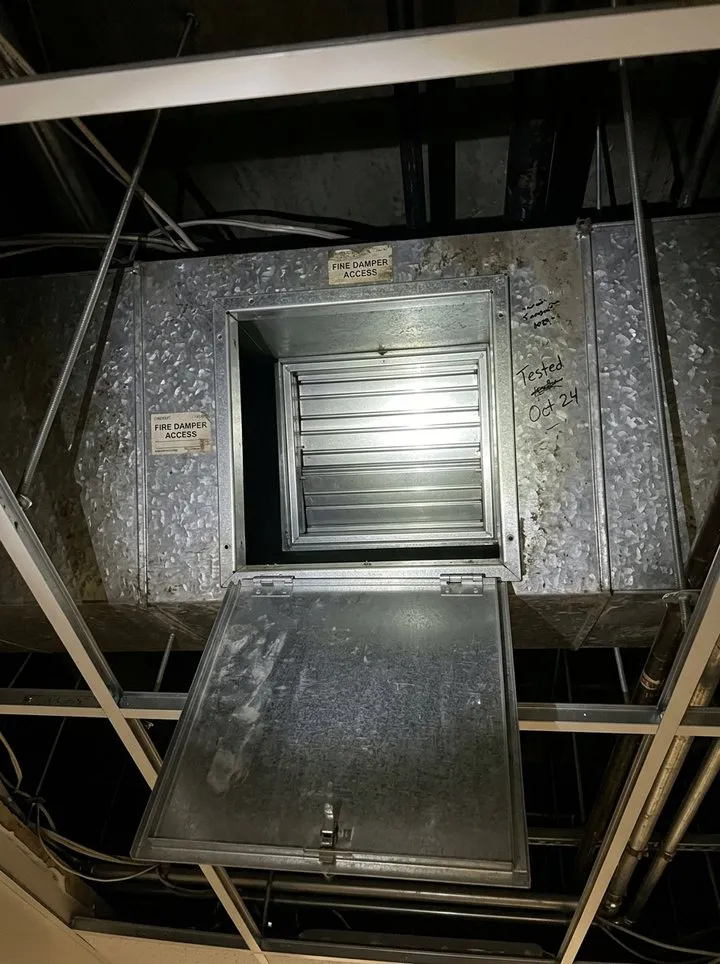
Photos (before and after the test)Photos
This floor: dampersWorked out by the form
PassedWorked out by the form
FailedWorked out by the form
No accessWorked out by the form
Dampers on the schedule visitedWorked out by the form
Dampers passedWorked out by the form
Dampers failedWorked out by the form
Dampers with no accessWorked out by the form
Dampers tested that passed (%)Worked out by the form
Floors with a failed damperWorked out by the form
WarningA failed damper may not close in a fire. Arrange repair or replacement and tell the responsible person.
Shown only when the answers above make it relevant
Actions
Repeat for each action. Each one asks:
Action*Notes
PriorityChoose one
Urgent
High
Medium
Low
OwnerShort answer
DueDate
StatusChoose one
Open
In progress
Completed
Next test dueDate
Days until the next testWorked out by the form
Shown when “Test date” is answered and “Next test due” is answered
CheckCheck the date. The next date is before the date of this visit.
Shown only when the answers above make it relevant
3
Sign-off
Responsible person or site contact nameShort answer
Responsible person or site contact signatureSignature
Completed byWorked out by the form
Engineer signatureSignature
See it filled in
A completed fire damper drop test report, made by SiteSurvey from a fictional site visit: every answer, the photos, the guidance that applied and the sign-off, ready to send as a PDF.
For a spring-operated damper, the fusible link is released by hand to check the blades close fully and seal, then the damper is reset with a new, correctly rated link. Motorised dampers are tested by simulating a loss of power. Before and after photos are the evidence.
What if there is no access?
Record the damper as no access and what is needed, such as an access panel. The form counts these so they are not forgotten.
What happens if a damper fails?
A failed damper may not close in a fire. Arrange repair or replacement and tell the responsible person. The form warns when any damper has failed and records who will arrange the work, and by when.
Can I scan damper labels?
Yes. Scan each damper's label on the SiteSurvey app so the record matches the damper schedule.
Do healthcare buildings differ?
Yes. HTM 03-01 says all fire and smoke dampers should be tested as part of the annual verification of critical healthcare ventilation, unless local policy says otherwise.
Who uses this?
Ductwork and ventilation contractors, fire safety contractors and facilities managers.