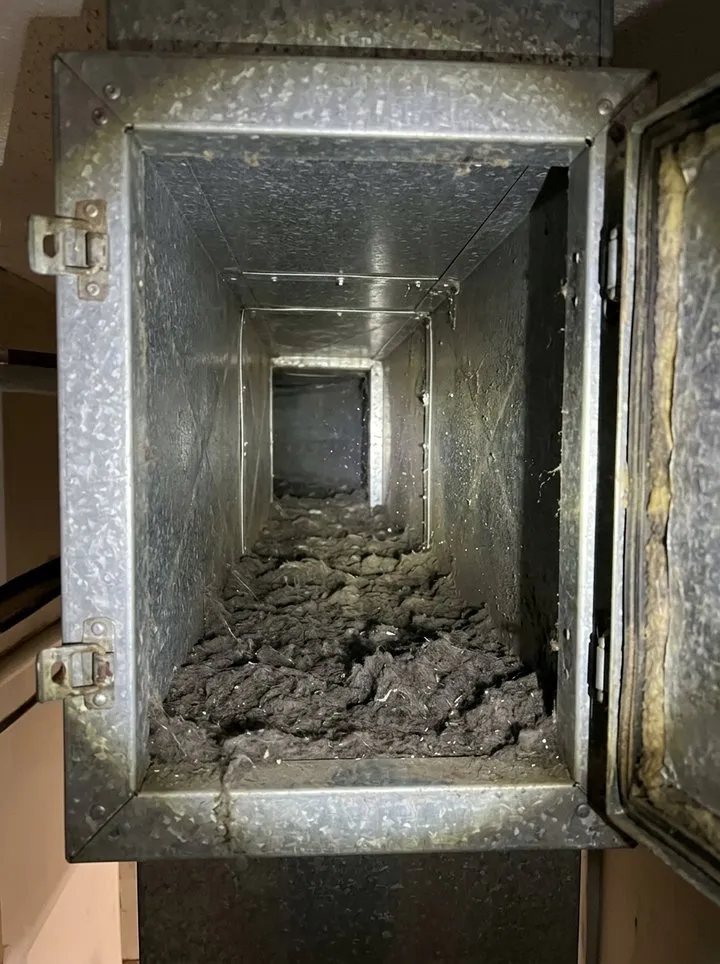
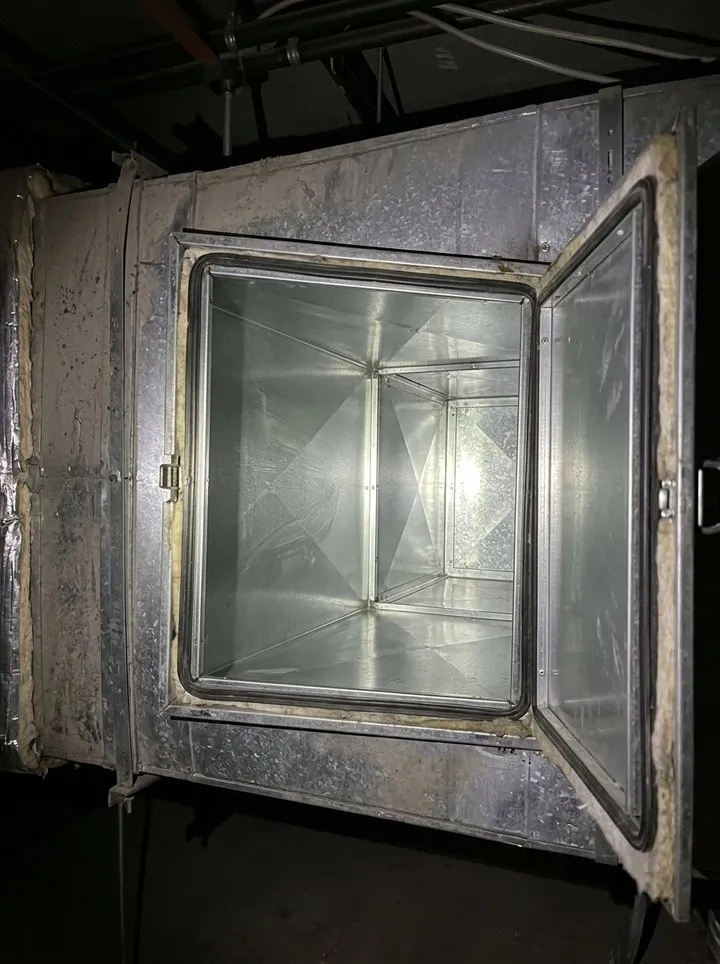
An inspection and cleaning record for ventilation ductwork. Record the system and its cleanliness class, the visual inspection, and the deposit tests before and after against the limit for the system: the form shows the reduction and whether each test is within the limit. Add each section cleaned with its length, method, duct size (measured with a tape or from a photo) and before and after photos, and the form totals the length and internal surface area cleaned. Record access panels, filters, fire dampers, defects and the next inspection. Try the form below, see every question or open a completed example.
✎Every question is editable. Add this form to your account, then change the wording, add or remove questions and options, and make it fit your own jobs.
TR19 Air is BESA's specification for the internal cleanliness and hygiene management of general ventilation systems, released in April 2024. It starts with a visual inspection to decide whether cleaning is needed, sets minimum inspection frequencies by system type, risk and use, and uses deposit tests to show whether surfaces are within acceptable limits. BESA says inspections should not go beyond 12-month intervals for any system.
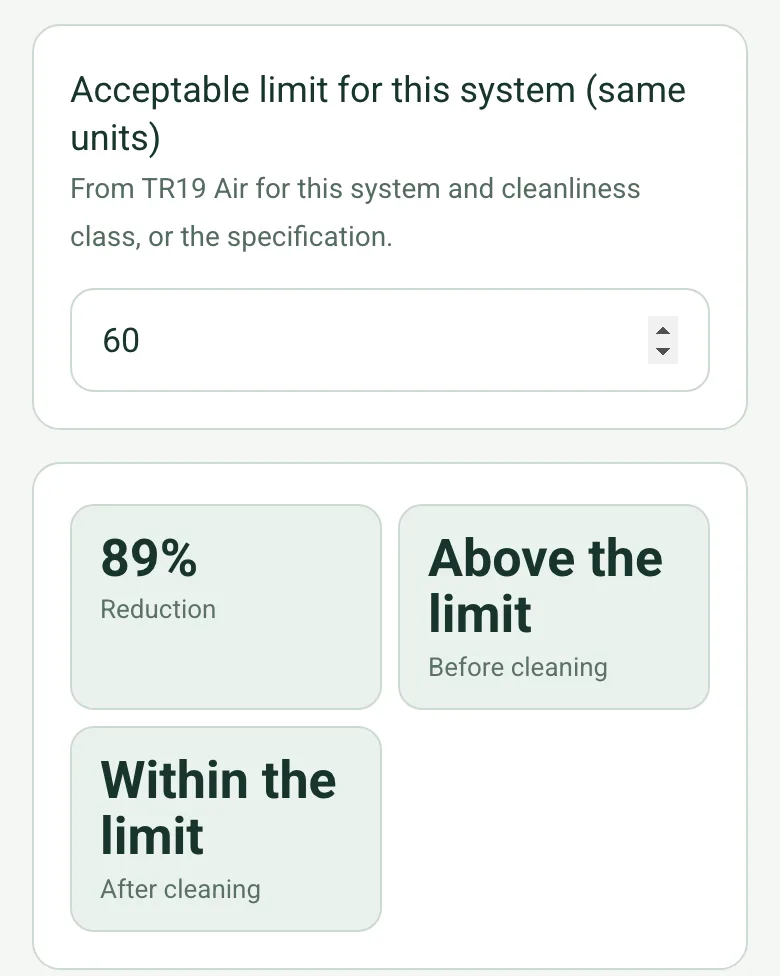
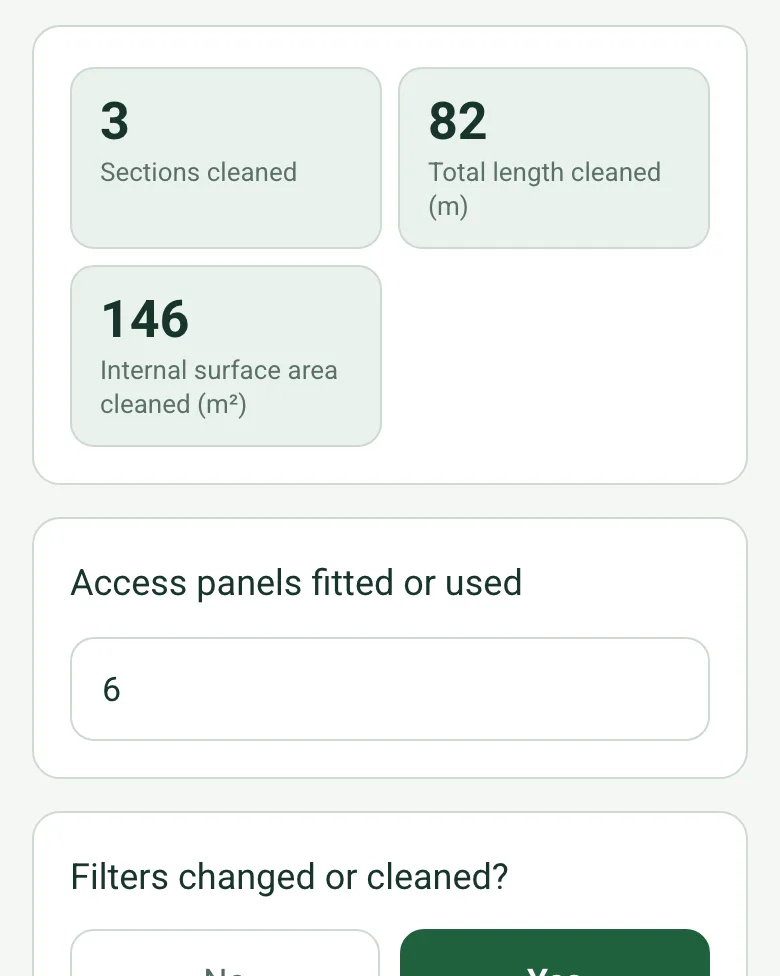
Enter the deposit tests and the limit for the system, and the form shows the reduction and whether each test is within the limit. Add each section with its length and duct size, measured from a photo if you cannot reach it, and the form totals the internal surface area cleaned.
Deposit tests against the limit
Enter the limit for the system from TR19 Air or the specification. The form works out the reduction and checks the before and after tests against the limit, with a note to clean again if the after test is still above it.
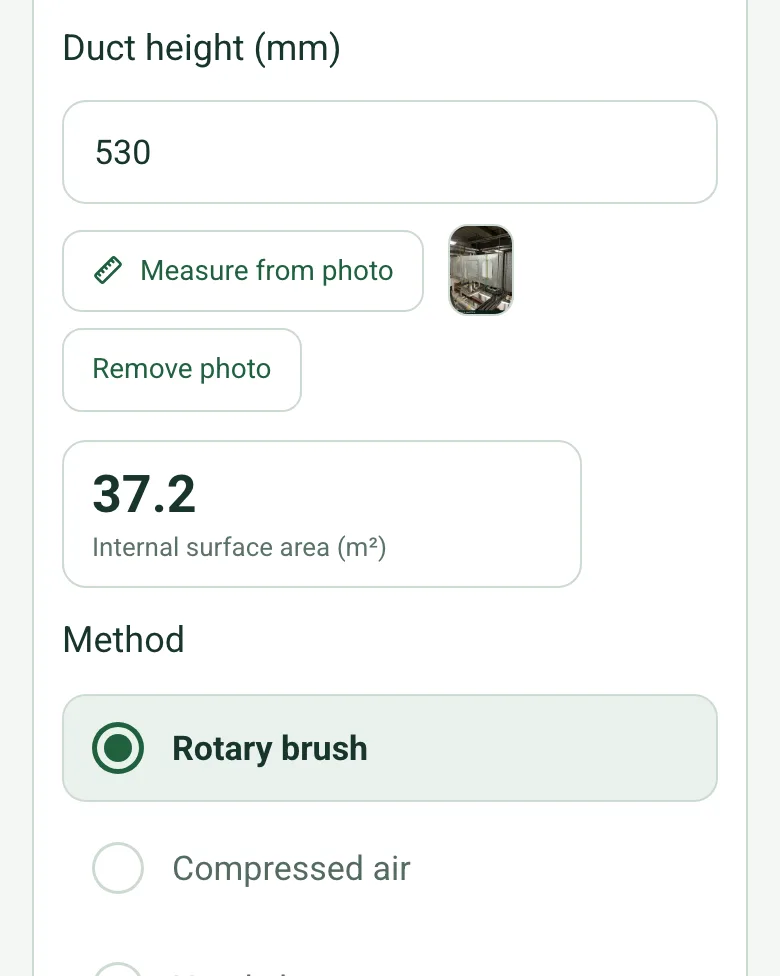
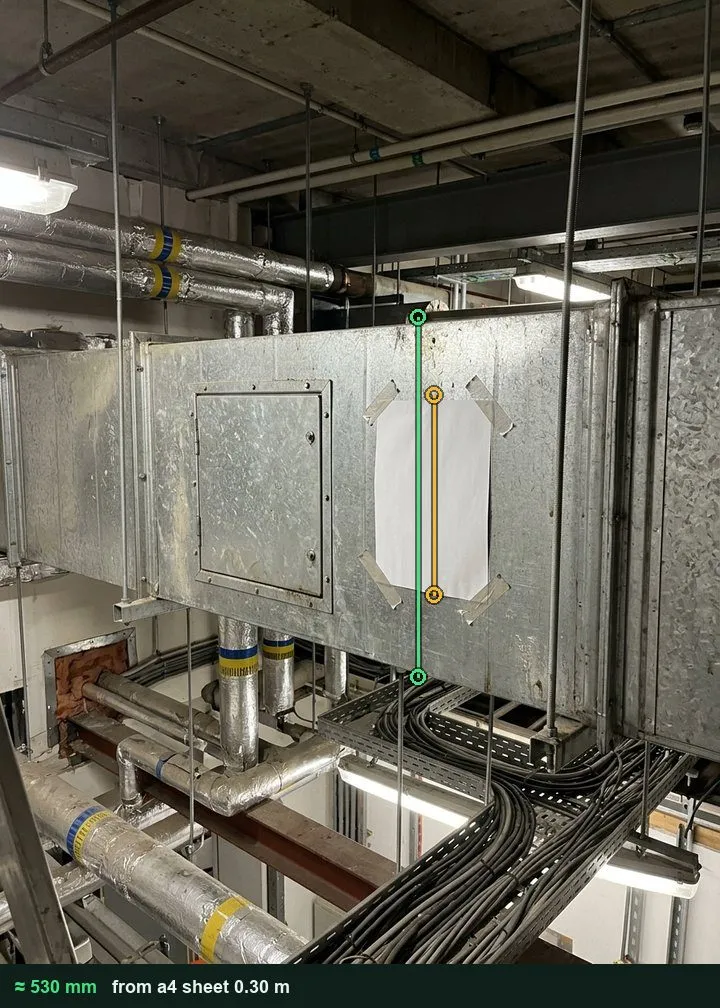
Tape an A4 sheet to the side of the duct and measure the height from a photo when the duct is out of reach. The form works out the internal surface area of each section from its size and length. It works on web forms in any phone browser today, and the app version is on its way.
A fictional office supply system: deposit tests of 180 microns before and 20 after against a 60 micron limit from the client's specification, three sections cleaned, and the riser duct measured at about 530 mm high from a photo. Open it as a filled-in form, or switch to a blank copy and try it yourself.
This is the real form as your team would use it: questions appear as you answer, scores work themselves out and you can add photos and signatures. No sign-up needed. Or open a completed example to see every answer, photo and score filled in.
A ventilation ductwork inspection and cleaning record (TR19 Air): system and hygiene grade, visual inspection, deposit tests before and after, sections cleaned, access panels, filters, fire dampers, photos and report. 3 sections and 43 questions. Follow-up questions and guidance appear only when an answer calls for them, so the person on site never sees the ones that do not apply.
✎
Make it your own: every question is editable
This is a starting point, not a fixed form. Once it is in your SiteSurvey account you can reword any question, add or remove questions, sections and answer options, and add your own logo, so it fits the way your team works and the jobs you do.
Details you only enter once
Add this form to a project in SiteSurvey and it fills in what the project already knows, so nobody on site retypes it and every form on the job uses the same names. Anything filled in can still be changed.
Project: the project name
Client: the project's customer
Site: the site, when the form is opened for a space or a product
Site address: the site address, from the space or the project
1
System
ProjectShort answer
Fills in from the project name
ClientShort answer
Fills in from the project's customer
Site*Short answer
Fills in from the site, when the form is opened for a space or a product
Site addressShort answer
Fills in from the site address, from the space or the project
Date*Date
Technician*Short answer
CompanyShort answer
System (AHU or fan reference and area served)*Short answer
SystemChoose one
Supply
Extract
Recirculation
Cleanliness class (risk)Choose one
High (for example laboratories, hospital treatment areas)
Medium (for example offices, hotels, schools)
Low (for example storage and technical rooms)
GuidanceBESA TR19 Air, released in April 2024, is the specification for the internal cleanliness of general ventilation systems. Inspection starts with a visual check of whether cleaning is needed, and deposit tests show whether surfaces are within acceptable limits. Regulation 5 of the Workplace Regulations 1992 requires mechanical ventilation systems in workplaces to be maintained, including cleaned as appropriate. The Workplace (Health, Safety and Welfare) Regulations 1992 require enclosed workplaces to be ventilated by a sufficient quantity of fresh or purified air (regulation 6), and mechanical ventilation systems to be maintained, including cleaned as appropriate (regulation 5).
2
Inspection and clean
Visual inspection resultChoose one
Clean: no cleaning needed
Cleaning needed
Contaminated: specialist clean
Deposit test unitsChoose one
Microns (deposit thickness test)
g/m² (weight of dust)
Deposit test beforeNumber
Deposit test afterNumber
Acceptable limit for this system (same units)Number
From TR19 Air for this system and cleanliness class, or the specification.
Reduction (%)Worked out by the form
Shown only when the answers above make it relevant
Before cleaningWorked out by the form
Shown only when the answers above make it relevant
After cleaningWorked out by the form
Shown only when the answers above make it relevant
CheckThe deposit test after cleaning is still above the limit. Clean the section again and repeat the test before handing over.
Shown only when the answers above make it relevant
Sections cleaned
Repeat for each entry. Each one asks:
Section or run*Short answer
Length (m)Number
Duct width (mm)Number
Rectangular duct. With a tape, or measured from a photo with an A4 sheet taped to the duct.
Duct height (mm)Number
Internal surface area (m²)Worked out by the form
Shown only when the answers above make it relevant
MethodChoose one
Rotary brush
Compressed air
Hand clean
Vacuum
Before photosPhotos
After photosPhotos
Sections cleanedWorked out by the form
Total length cleaned (m)Worked out by the form
Internal surface area cleaned (m²)Worked out by the form
Access panels fitted or usedNumber
Filters changed or cleaned?Yes or No
Fire dampers checked and reset?Yes or No
3
Report
Defects found
Repeat for each entry. Each one asks:
Defect and action needed*Notes
PriorityChoose one
Urgent
High
Medium
Low
OwnerShort answer
DueDate
PhotosPhotos
Next inspection dueDate
Take the interval from the TR19 Air inspection frequency table for this system and cleanliness class.
Days to the next inspectionWorked out by the form
Shown when “Date” is answered and “Next inspection due” is answered
CheckThe next due date is before the date of this visit. Check the date.
Shown only when the answers above make it relevant
Site manager nameShort answer
Site manager signatureSignature
Completed by*Short answer
SignatureSignature
See it filled in
A completed ductwork cleaning report, made by SiteSurvey from a fictional site visit: every answer, the photos, the guidance that applied and the sign-off, ready to send as a PDF.
With deposit tests on representative internal surfaces before and after cleaning, measured as a deposit thickness in microns or as a weight of dust in g/m². Record the units and both readings so the improvement is clear.
What are the cleanliness classes?
BESA explains that TR19 Air aligns with the three classes in BS EN 15780: low (for example storage and technical rooms), medium (for example offices, hotels and schools) and high (for example laboratories and hospital treatment areas).
Is ductwork cleaning a legal duty?
Regulation 5 of the Workplace Regulations 1992 requires mechanical ventilation systems in workplaces to be maintained in an efficient state, including cleaned as appropriate. TR19 Air is the industry specification for how.
Is this for kitchen extract ductwork?
No. Kitchen extract systems follow TR19 Grease. Use the TR19 kitchen extract cleaning record for those.
Can I photograph each section?
Yes. BESA says before and after photos are part of TR19 evidence, and each section in the form has its own before and after photos.
Who uses this?
Ductwork cleaning and ventilation hygiene contractors, HVAC engineers and facilities managers.