A post-clean record for a commercial kitchen extract system to TR19 Grease. Choose the kitchen's usage and enter the previous clean, and the form shows the months since it against the TR19 minimum frequency and flags a longer interval. Add a deposit thickness test at each position, before and after the clean, and it works out the mean before and after and the highest reading, warning on a mean over 200 microns and any reading of 500 or more. Record what was cleaned, before and after photos, defects, the certificate reference and the next clean. Try the form below, see every question or open a completed example.
✎Every question is editable. Add this form to your account, then change the wording, add or remove questions and options, and make it fit your own jobs.
How often should kitchen extract ductwork be cleaned under TR19?
BESA's TR19 Grease sets minimum cleaning frequencies by use: heavy use (12 to 16 hours a day) every 3 months, moderate use (6 to 12 hours) every 6 months, and light use (2 to 6 hours) every 12 months. Grease should not exceed a mean of 200 microns between cleans, and areas at 500 microns or more need immediate spot cleaning. The contractor provides a post-clean report after each clean.
Record the clean on a phone as you go. The form compares the months since the last clean with the TR19 Grease minimum for the kitchen's usage, and takes a deposit thickness test at each position before and after, working out the means and the highest reading with warnings at 200 and 500 microns. It records the clean and the post-clean report; it does not set the cleaning frequency for you.
Deposit tests at every position
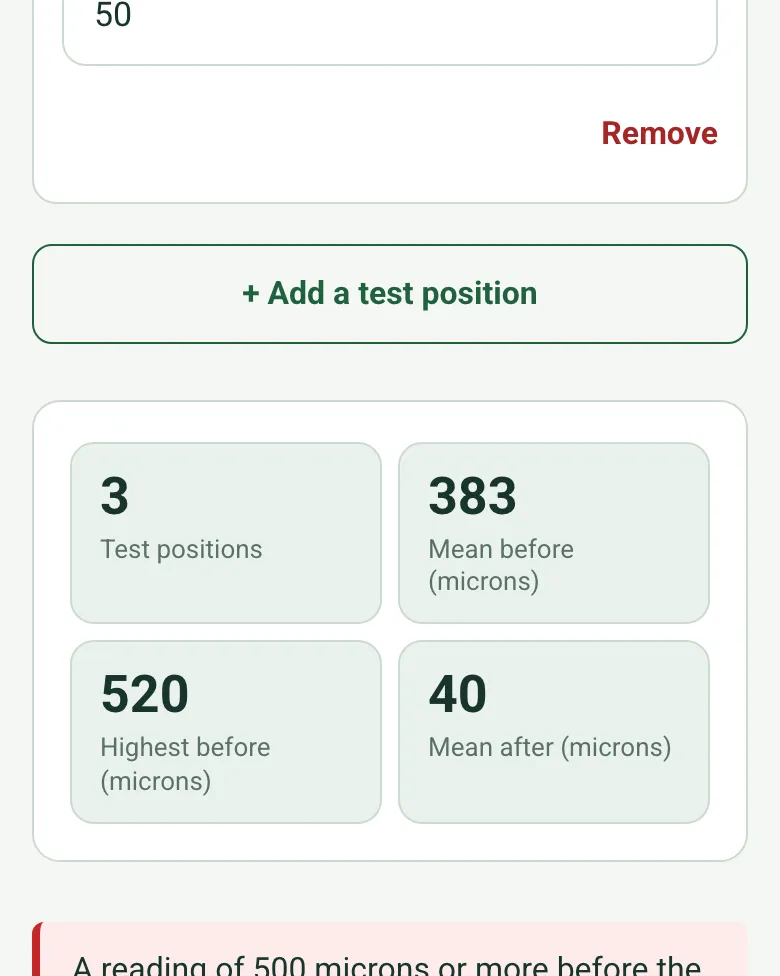
Add each test position with its readings before and after. The form works out the mean before and after and the highest reading, and warns on a mean over 200 microns and on any reading of 500 or more.
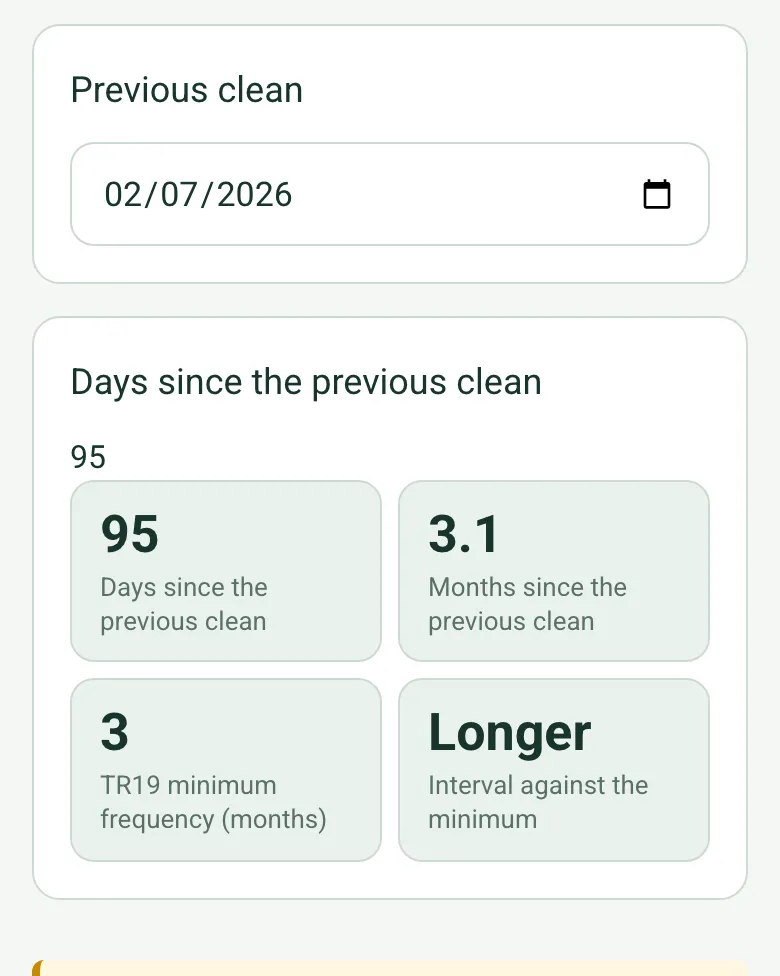
Choose the kitchen's usage and enter the previous clean. The form shows the days and months since, against 3, 6 or 12 months, and flags a longer interval for the post-clean report.
A fictional restaurant kitchen in heavy use: cleaned 3.1 months after the last visit, three test positions averaging 383 microns before and 40 after, and 520 microns at the roof fan inlet, spot cleaned first. Open it as a filled-in form, or switch to a blank copy and try it yourself.
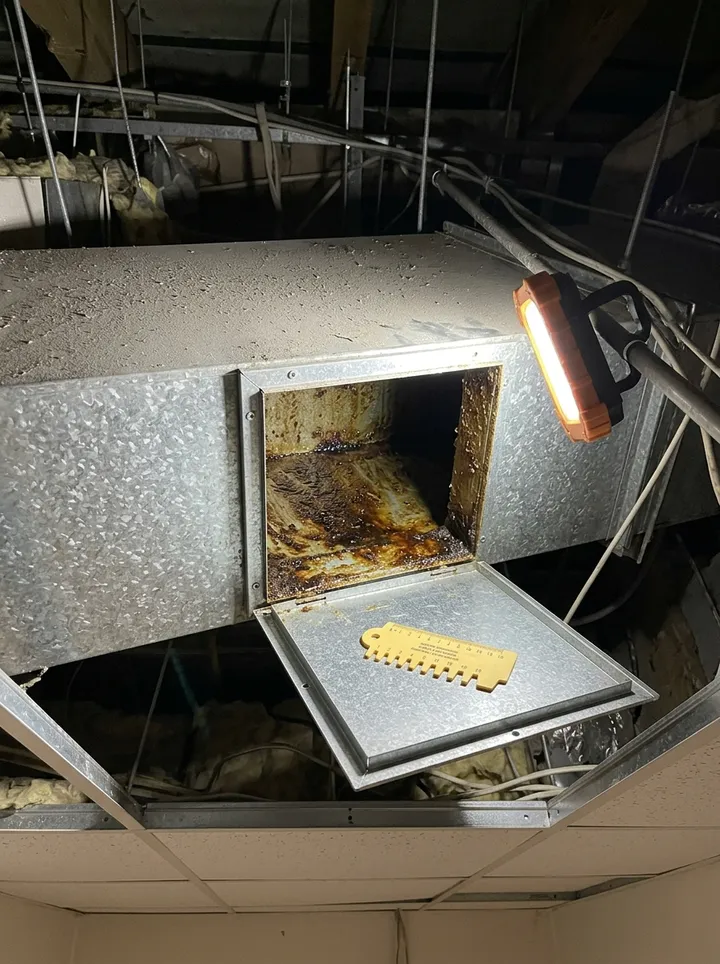
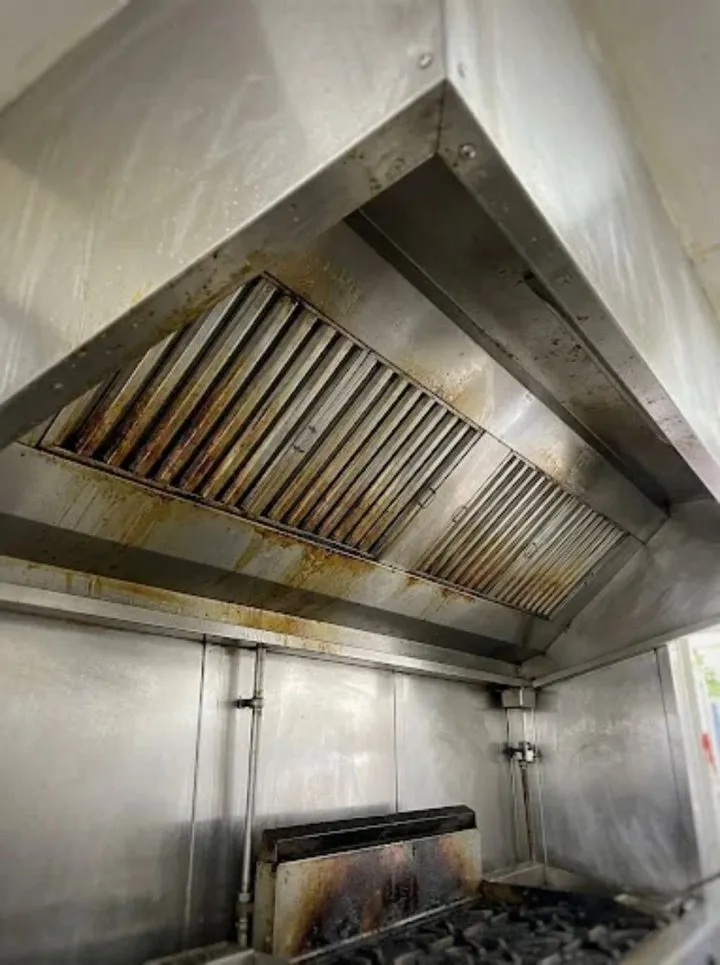
Riser access panel · deposit test position 2Canopy before the cleanCanopy after the clean, same position
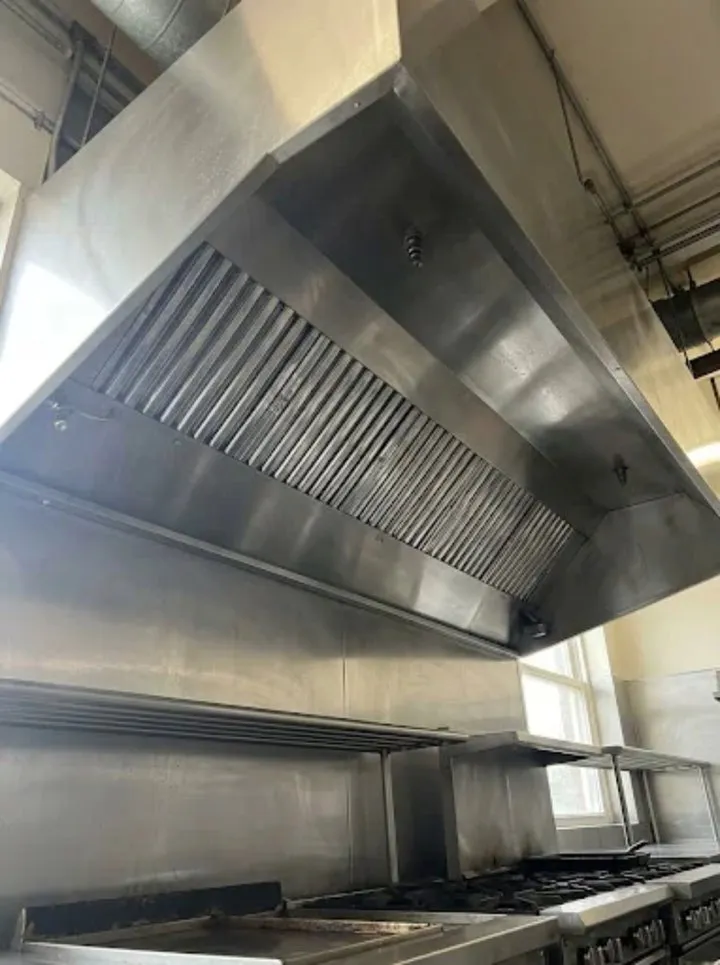
A commercial kitchen under its extract canopy
Try the TR19 kitchen extract cleaning form live
Answer a few questions and watch it adapt. Your answers are not saved, and any photos you add are deleted within the hour.
Live form: Kitchen Extract Cleaning Record (TR19 Grease)Open full screen ↗
Fill it in right here
This is the real form as your team would use it: questions appear as you answer, scores work themselves out and you can add photos and signatures. No sign-up needed. Or open a completed example to see every answer, photo and score filled in.
Every question in the TR19 kitchen extract cleaning template
A kitchen extract cleaning record to TR19 Grease: usage band and frequency, canopy, filters, ductwork and fan, deposit thickness tests before and after, access panels, photos and the post-clean report. 3 sections and 42 questions. Follow-up questions and guidance appear only when an answer calls for them, so the person on site never sees the ones that do not apply.
✎
Make it your own: every question is editable
This is a starting point, not a fixed form. Once it is in your SiteSurvey account you can reword any question, add or remove questions, sections and answer options, and add your own logo, so it fits the way your team works and the jobs you do.
Details you only enter once
Add this form to a project in SiteSurvey and it fills in what the project already knows, so nobody on site retypes it and every form on the job uses the same names. Anything filled in can still be changed.
Project: the project name
Client: the project's customer
Site: the site, when the form is opened for a space or a product
Site address: the site address, from the space or the project
1
System
ProjectShort answer
Fills in from the project name
ClientShort answer
Fills in from the project's customer
Site*Short answer
Fills in from the site, when the form is opened for a space or a product
Site addressShort answer
Fills in from the site address, from the space or the project
Clean date*Date
Technician*Short answer
CompanyShort answer
System and location (canopy reference and duct route)*Short answer
Kitchen use*Choose one
Heavy (12 to 16 hours a day)
Moderate (6 to 12 hours a day)
Light (2 to 6 hours a day)
CheckTR19 Grease minimum: clean every 3 months.
Shown when “Kitchen use” is “Heavy (12 to 16 hours a day)”
CheckTR19 Grease minimum: clean every 6 months.
Shown when “Kitchen use” is “Moderate (6 to 12 hours a day)”
CheckTR19 Grease minimum: clean every 12 months.
Shown when “Kitchen use” is “Light (2 to 6 hours a day)”
Previous cleanDate
Days since the previous cleanWorked out by the form
Shown only when the answers above make it relevant
Months since the previous cleanWorked out by the form
Shown only when the answers above make it relevant
TR19 minimum frequency (months)Worked out by the form
Shown when “Kitchen use” is answered
Interval against the minimumWorked out by the form
Shown only when the answers above make it relevant
CheckThe time since the previous clean is longer than the TR19 Grease minimum frequency for this usage. Record it in the post-clean report and agree the schedule with the client.
Shown only when the answers above make it relevant
CheckThe previous clean is after this clean date. Check both dates.
Shown only when the answers above make it relevant
2
Clean
Cleaned*Tick all that apply
Canopy
Filters
Plenum
Ductwork
Fan
Discharge
Access panels usedNumber
Areas not cleaned and whyShort answer
Deposit thickness tests
Repeat for each test. Each one asks:
Test positionShort answer
For example canopy plenum, duct riser at the first floor, fan inlet.
Before (microns)Number
After (microns)Number
Test positionsWorked out by the form
Mean before (microns)Worked out by the form
Highest before (microns)Worked out by the form
Mean after (microns)Worked out by the form
WarningA reading of 500 microns or more before the clean. TR19 Grease: grease deposits should not exceed a mean of 200 microns between cleans, and 500 microns or more needs immediate spot cleaning.
Shown only when the answers above make it relevant
CheckThe mean before this clean is over 200 microns. TR19 Grease limits the mean to 200 microns between cleans, so a shorter cleaning interval may be needed.
Shown only when the answers above make it relevant
GuidanceTR19 Grease post-clean reports include before and after photos taken from matching positions.
Before photosPhotos
After photosPhotos
3
Post-clean report
Defects found
Repeat for each defect. Each one asks:
Location*Short answer
DefectChoose one
Fire damper fault
Missing or blocked access panel
Damaged ductwork
Fan fault
Filter missing or damaged
Other
DetailsNotes
PriorityChoose one
Urgent
High
Medium
Low
Who will put it rightShort answer
Due byDate
PhotosPhotos
Defects recordedWorked out by the form
UrgentWorked out by the form
GuidanceBESA says many insurance policies require cleaning to TR19 Grease. The post-clean report includes a hygiene certificate with the date of the clean, the system location and the name of the competent technician.
Hygiene certificate or report referenceShort answer
Next clean dueDate
Days to the next cleanWorked out by the form
Shown when “Clean date” is answered and “Next clean due” is answered
CheckThe next clean date is before this clean date. Check the date.
Shown only when the answers above make it relevant
CheckThe gap to the next clean is longer than the TR19 Grease minimum frequency for this kitchen use. Check the date with the client.
Shown only when the answers above make it relevant
Site manager nameShort answer
Site manager signatureSignature
Completed byWorked out by the form
Technician signatureSignature
See it filled in
A completed TR19 kitchen extract cleaning report, made by SiteSurvey from a fictional site visit: every answer, the photos, the guidance that applied and the sign-off, ready to send as a PDF.
BESA lists before and after photos from matching positions, deposit test results, a written summary of the work, notes on access limits, and a hygiene certificate with the date, system location and the name of the competent technician.
Do insurers require TR19?
BESA says many insurance policies now require adherence to TR19, and that insurers may deny claims when a fire is traced back to poor maintenance. Keep the post-clean report and certificate as evidence.
Is there a legal duty?
Article 9 of the Regulatory Reform (Fire Safety) Order 2005 requires the responsible person to assess fire risks. BESA says for kitchen extracts this means identifying grease build-up as a hazard and setting a cleaning schedule.
What is a deposit thickness test?
A measurement of grease on internal duct surfaces, in microns. Add each test position with its reading before and after the clean; the form works out the means and the highest reading, and warns on a mean over 200 microns and on any reading of 500 or more.
Does it track the interval?
Yes. Enter the previous clean and the form shows the days and months since, against the TR19 Grease minimum frequency for the kitchen's usage (3, 6 or 12 months), and flags a longer interval. Record fire dampers without access or damaged ductwork as defects.
Who uses this?
Kitchen extract cleaning contractors, restaurant and pub operators, contract caterers and facilities managers.