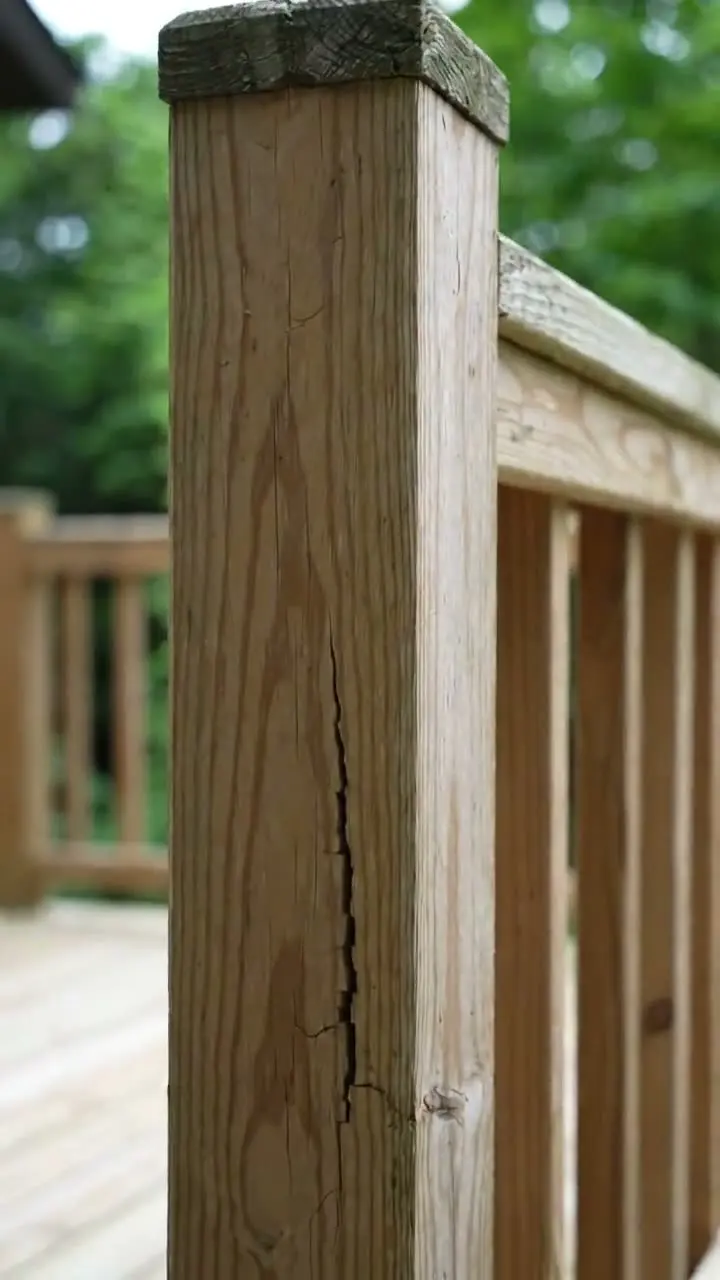
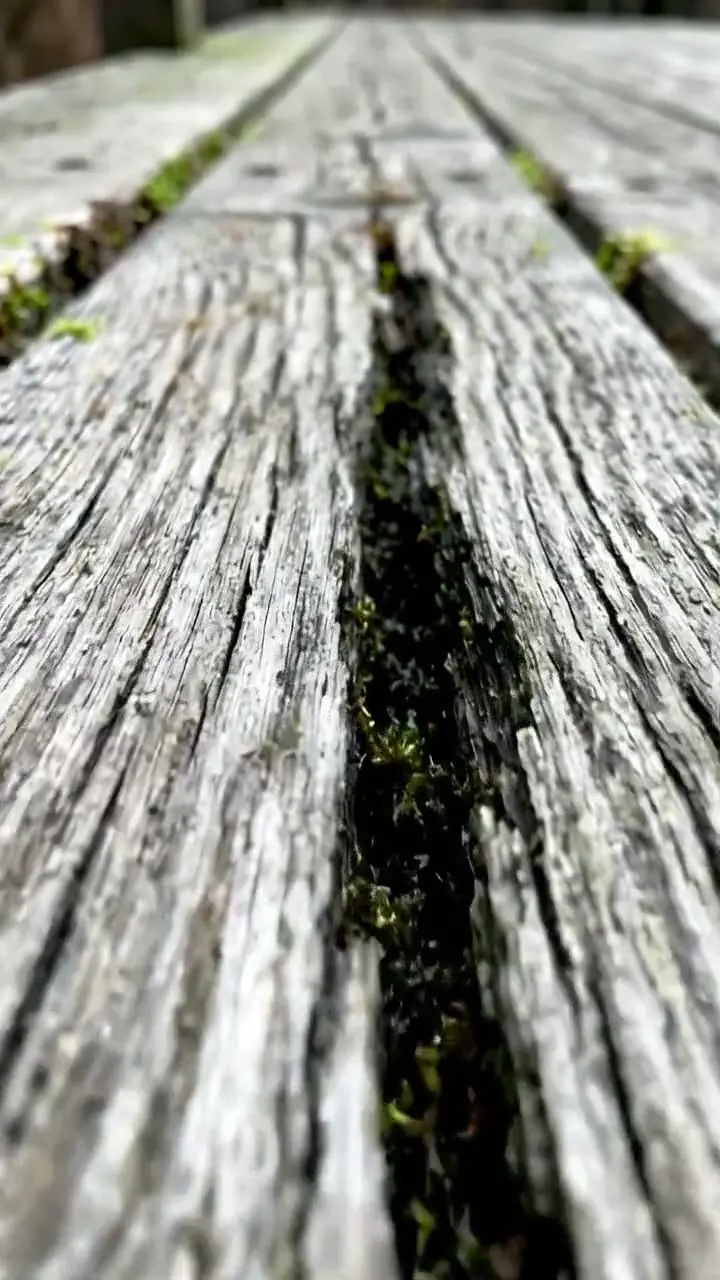
Boards: no splits, rot, soft spots or loose boardsChoose one
What is wrong?Short answer
Shown when “Boards: no splits, rot, soft spots or loose boards” is “Defect”
Fixings: no raised, missing or corroded screws or nailsChoose one
What is wrong?Short answer
Shown when “Fixings: no raised, missing or corroded screws or nails” is “Defect”
Surface: not slippery, algae and moss clearedChoose one
What is wrong?Short answer
Shown when “Surface: not slippery, algae and moss cleared” is “Defect”
Steps and treads firm and evenChoose one
What is wrong?Short answer
Shown when “Steps and treads firm and even” is “Defect”
Balustrade posts, rails and spindles firmChoose one
What is wrong?Short answer
Shown when “Balustrade posts, rails and spindles firm” is “Defect”
Handrail secureChoose one
What is wrong?Short answer
Shown when “Handrail secure” is “Defect”
Joists and bearers sound, where visibleChoose one
What is wrong?Short answer
Shown when “Joists and bearers sound, where visible” is “Defect”
Posts and footings sound, no rot at ground contactChoose one
What is wrong?Short answer
Shown when “Posts and footings sound, no rot at ground contact” is “Defect”
Fixing to the building sound, where attachedChoose one
What is wrong?Short answer
Shown when “Fixing to the building sound, where attached” is “Defect”
Water drains away, no ponding under the deckChoose one
What is wrong?Short answer
Shown when “Water drains away, no ponding under the deck” is “Defect”
Checks OKWorked out by the form
Checks with a defectWorked out by the form
Not applicableWorked out by the form
Height of the guarding above the deck (mm)Number
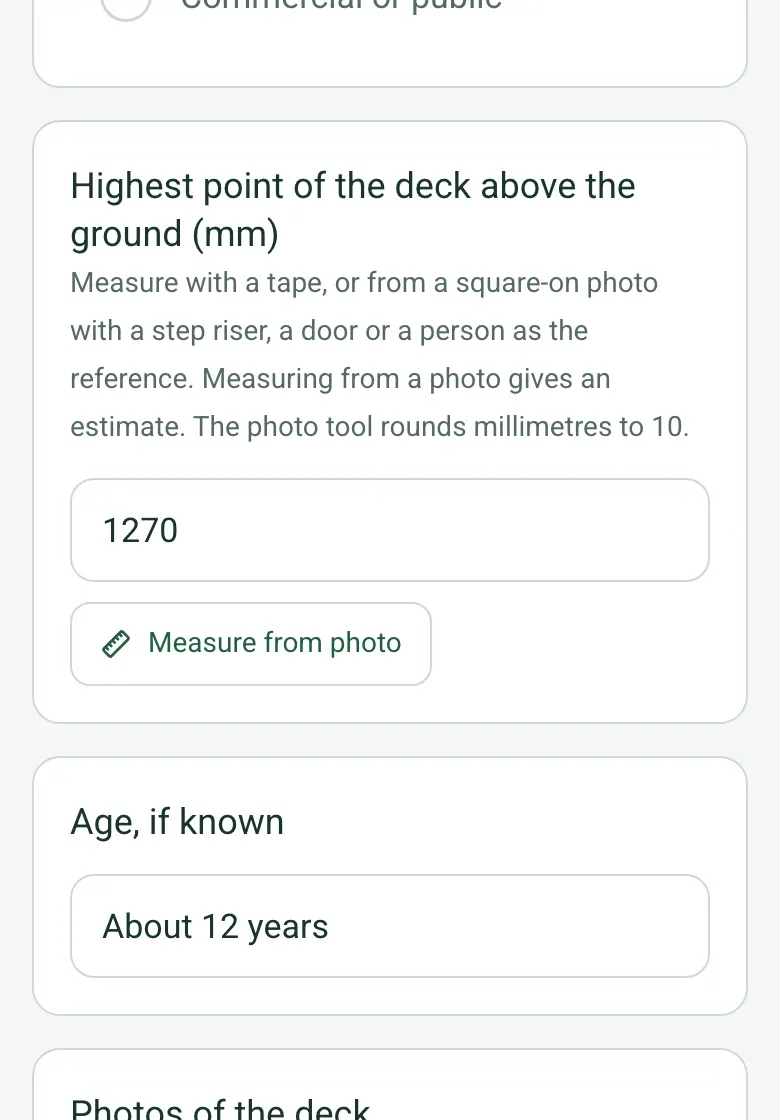
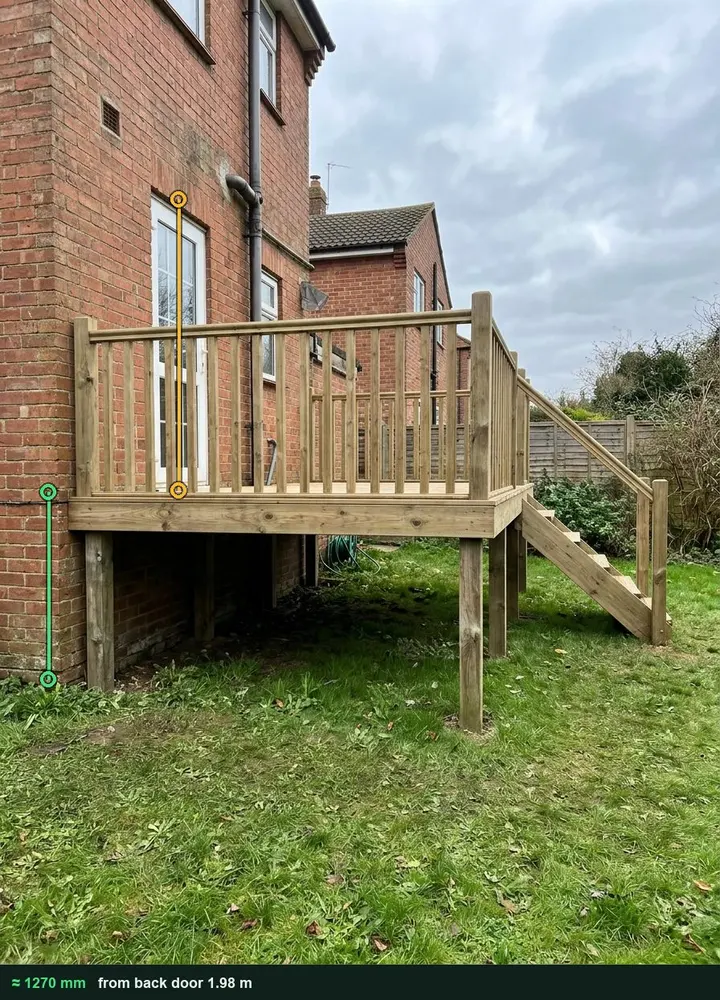
Measure with a tape from the deck surface to the top of the rail, or from a square-on photo. Measuring from a photo gives an estimate.
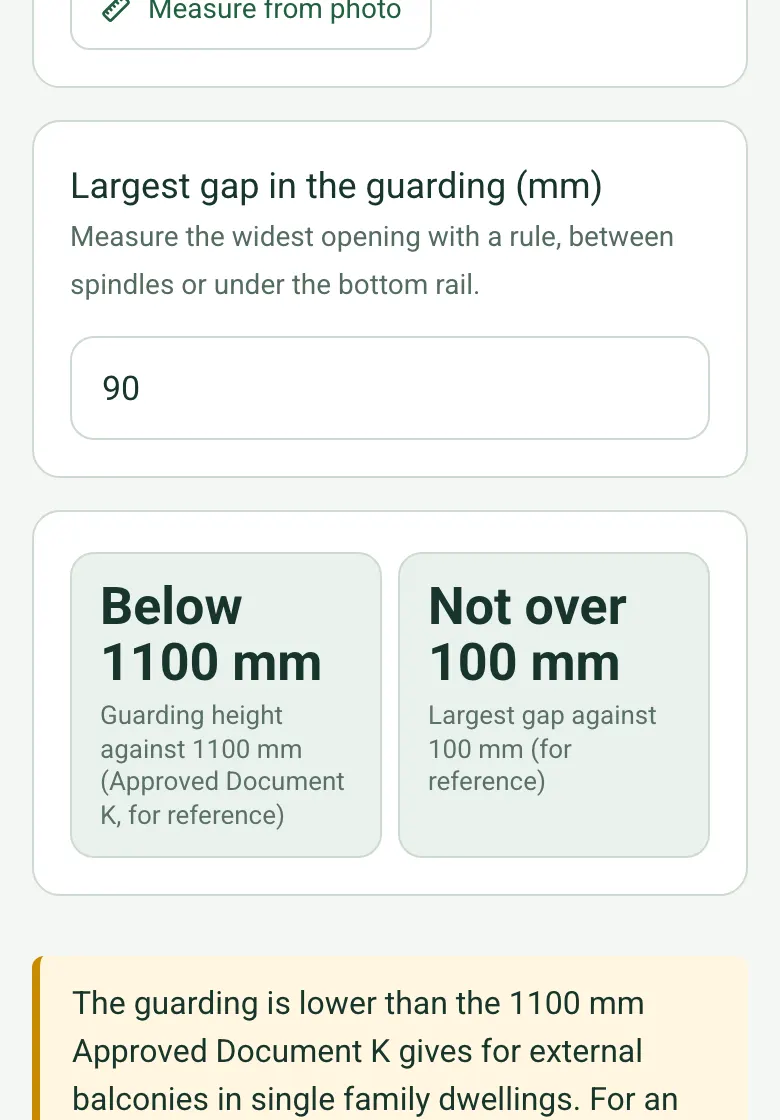
Largest gap in the guarding (mm)Number
Measure the widest opening with a rule, between spindles or under the bottom rail.
Guarding height against 1100 mm (Approved Document K, for reference)Worked out by the form
Shown only when the answers above make it relevant
Largest gap against 100 mm (for reference)Worked out by the form
Shown only when the answers above make it relevant
- CheckThe guarding is lower than the 1100 mm Approved Document K gives for external balconies in single family dwellings. For an existing deck this is a reference, not a requirement: record it and say whether a higher rail is recommended.
Shown only when the answers above make it relevant
- CheckThe largest gap is over 100 mm. Approved Document K says a 100 mm sphere should not pass through any opening where children under five may use the building. Record whether they may.
Shown only when the answers above make it relevant
- CheckApproved Document K gives guidance for building work in England. In dwellings, guarding should stop people falling from a height of more than 600 mm. Diagram 3.1 gives 1100 mm for external balconies and edges of roofs in single family dwellings, and where children under five may use the building a 100 mm sphere should not pass through any opening. For an existing deck, use these figures as a reference.
Shown only when the answers above make it relevant
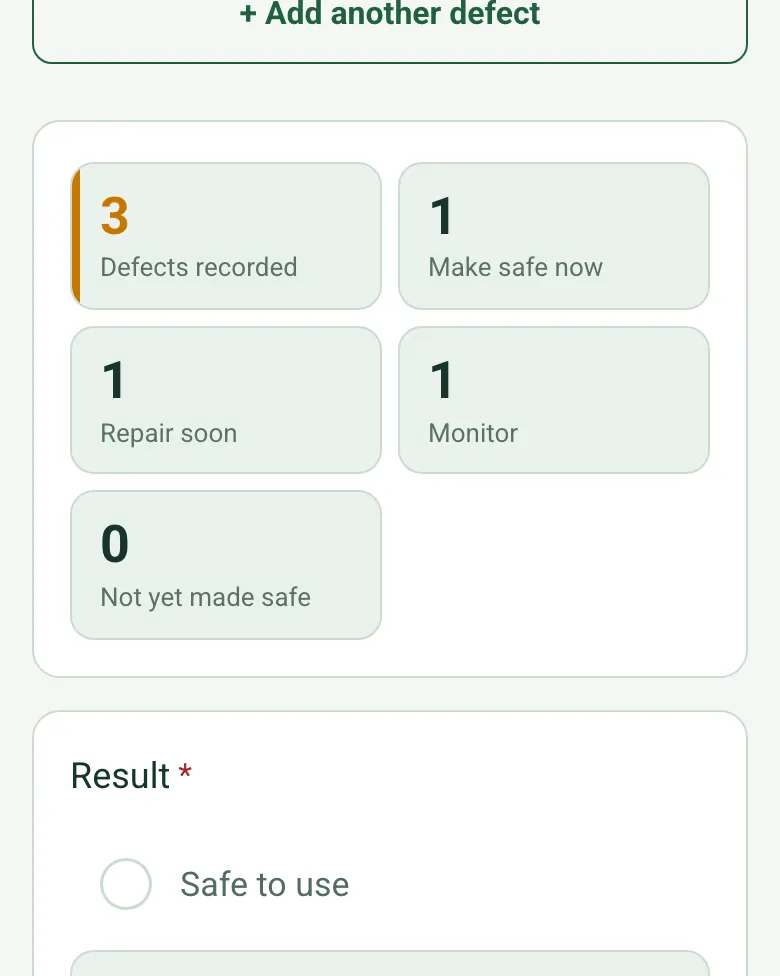
Defects
Repeat for each defect. Each one asks:
Defects recordedWorked out by the form
Make safe nowWorked out by the form
Repair soonWorked out by the form
MonitorWorked out by the form
Not yet made safeWorked out by the form
Result*Choose one
- CheckThe result is safe to use, but defects or failed checks are recorded. Check the result, or say why no repair is needed.
Shown only when the answers above make it relevant
- CheckA defect needs making safe and has not been, but the deck is not recorded as do not use. Close the affected part or change the result.
Shown only when the answers above make it relevant
- WarningClose the deck or the affected part and tell the owner or manager until it is repaired.
Shown when “Result” is “Do not use until repaired”
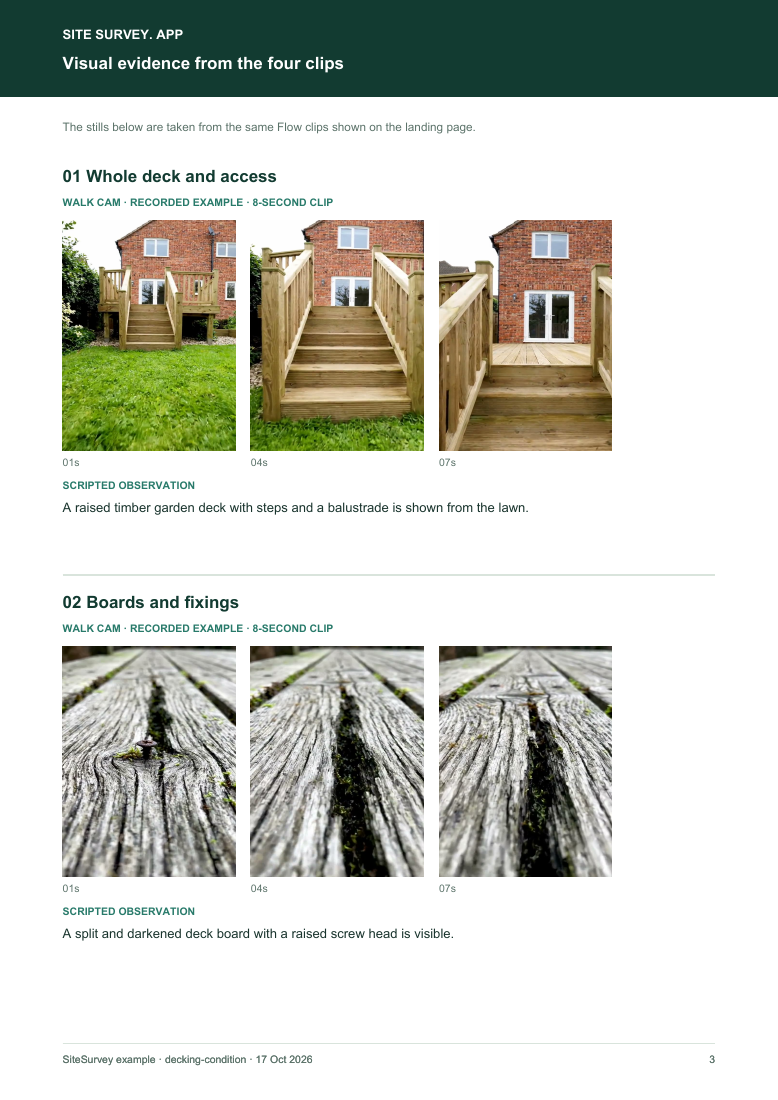
Walk Cam: decking inspectionWalk Cam video with voice-to-text
Optional. Film the four guided points on the SiteSurvey app; each clip keeps its spoken note.