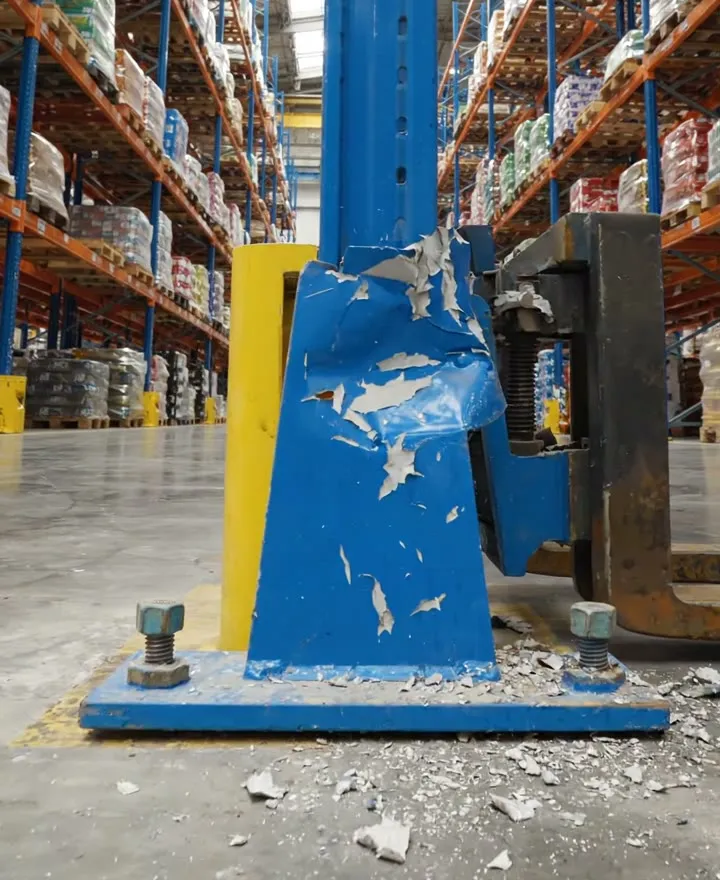
A regular in-house pallet racking inspection. Record each damaged component by aisle, bay and beam level, rate it green, amber or red, photograph it and set who repairs it and by when. Amber damage asks whether the rack is labelled so it is not reloaded, and red damage asks whether it has been offloaded and isolated. General checks cover load notices, floor fixings, beam locks, column guards and loads. Every question is listed below, and you can fill the live form in on this page.
✎Every question is editable. Add this form to your account, then change the wording, add or remove questions and options, and make it fit your own jobs.
What should a pallet racking inspection checklist include?
A pallet racking inspection checklist should record each damaged component by location, its green, amber or red rating and the action taken, and check load notices, floor fixings, beam safety locks, column guards, upright alignment, loads and pallets, and that aisles are clear. It should also record who is responsible for racking safety and when the racking last had an inspection by a technically competent person.
Walk the aisles and record damage bay by bay. The form counts red, amber and green items, flags red damage still loaded and amber not labelled, and checks a sagging beam against span/200 from your measurement.
Beam sag against span/200
For a beam, enter its length and the sag at mid-span. The form works out span/200, the usual limit for a loaded beam, and shows a red note when the sag is more. Measure from photo can estimate the sag from a photo with a tape in shot; treat it as a guide and use the tape reading near the limit.
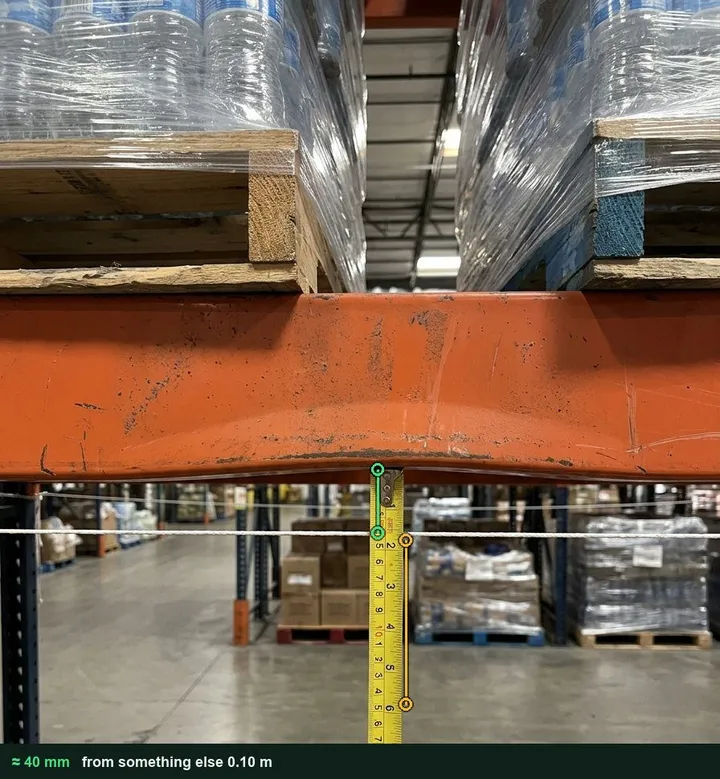
Run a string line under the beam, hold a tape at the gap and photograph it square on. Tap a length on the tape, then the gap. The estimate goes in with the marked-up photo, next to your tape reading. It works on web forms in any phone browser today, and the app version is on its way.
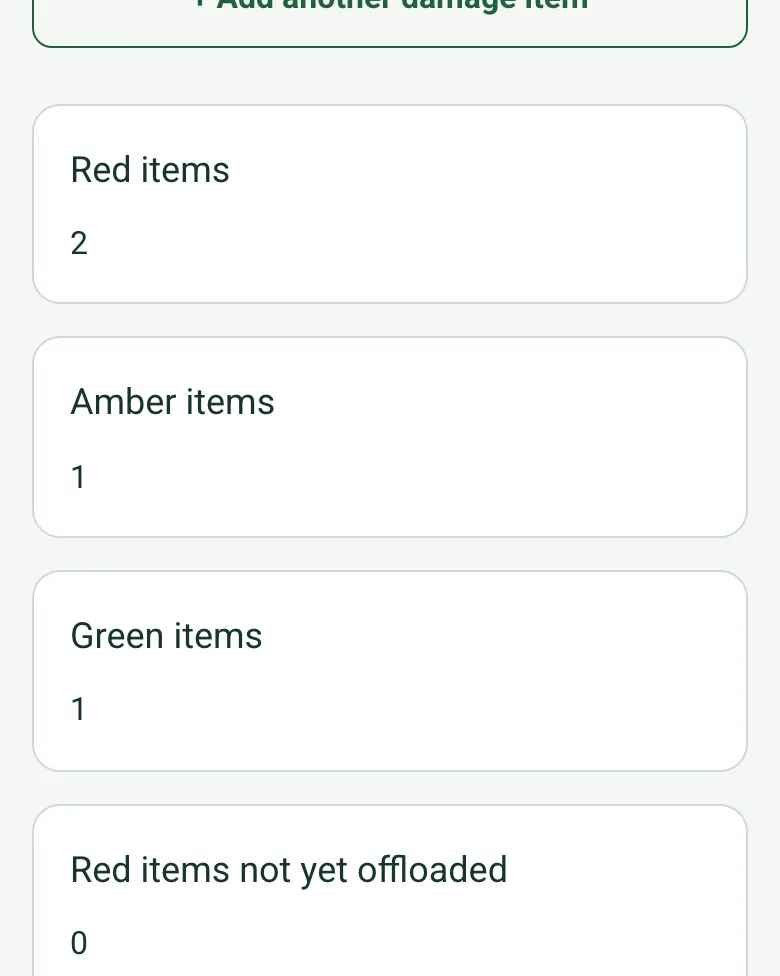
Every damage item adds to the counts: red, amber and green, red items not yet offloaded, amber items not labelled and beams over span/200, plus the general checks that are OK or defective.
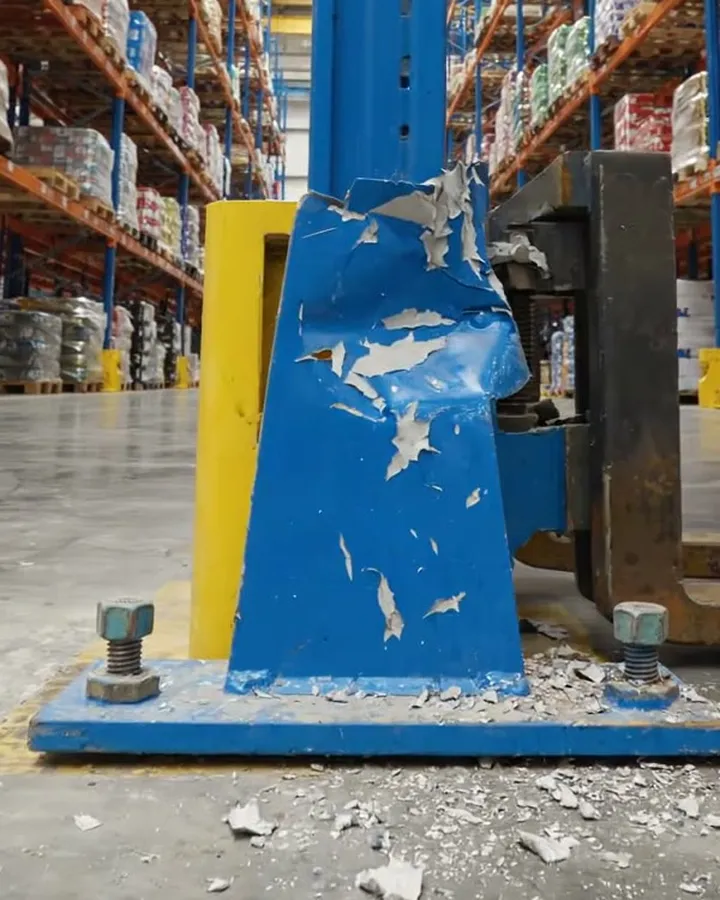
A fictional distribution warehouse's weekly inspection: a crushed upright offloaded (red), a dented upright labelled (amber), a guard to watch (green) and a beam sagging about 40 mm on a 2.7 m span, about three times span/200, offloaded while the loads are checked.
Aisle 5 bay 7 · sag about 40 mm · limit 13.5 mm · offloadedAisle 4 bay 12 · upright crushed at the base · red, offloadedAisle 2 bay 5 · dent beyond the green limit · amber, labelled
Try the racking inspection form live
Answer a few questions and watch it adapt. Your answers are not saved, and any photos you add are deleted within the hour.
This is the real form as your team would use it: questions appear as you answer, scores work themselves out and you can add photos and signatures. No sign-up needed. Or open a completed example to see every answer, photo and score filled in.
Record bay identity, upright and beam surfaces, then a wider location view for the racking safety process.
Record the aisle, bay and rack reference before filming from a safe authorised position. Move from wide context to visible upright or beam concerns. Do not enter restricted areas, climb or disturb loads. Send findings through the site racking safety process.
POINT 01
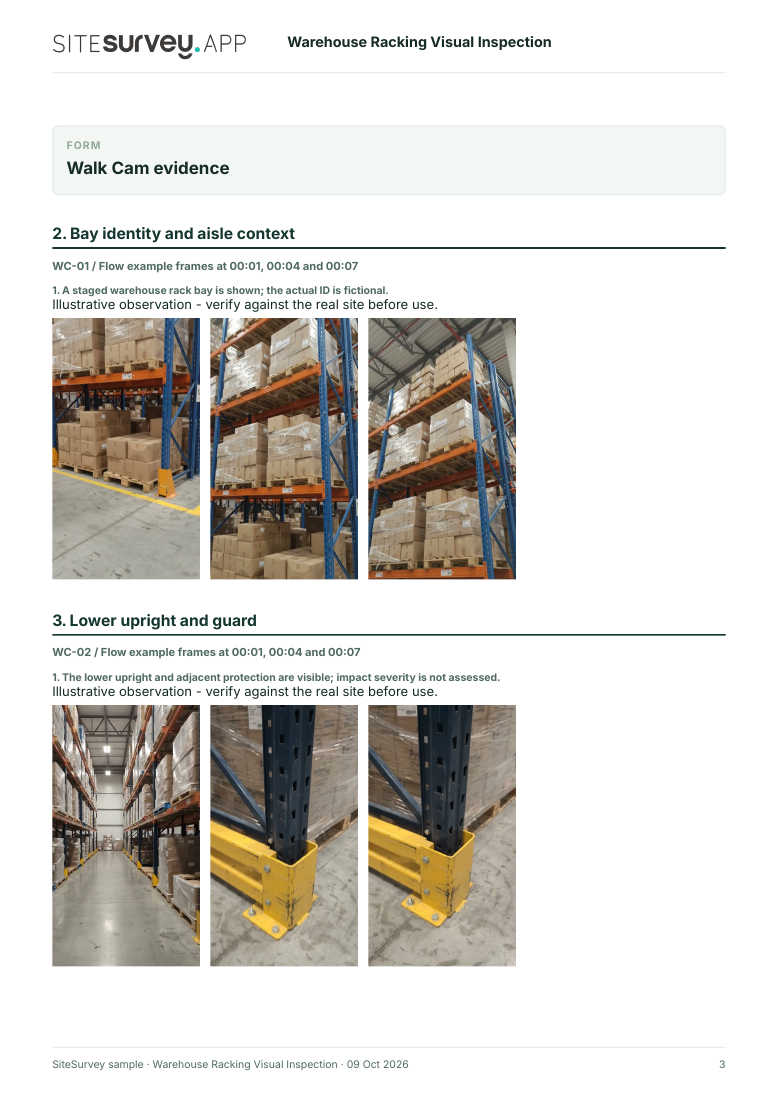
Bay identity and aisle context
From a safe position, show the aisle and bay reference so a trained reviewer can locate the rack.
A staged warehouse rack bay is shown; the actual ID is fictional.
POINT 02
Lower upright and guard
Show accessible lower upright and floor-level protection without measuring or touching it.
The lower upright and adjacent protection are visible; impact severity is not assessed.
POINT 03
Beam and connection area
From floor level, show accessible beam faces and connection location without approaching a suspect rack.
A beam junction is illustrated; locking and capacity are not established.
POINT 04
Wide location and escalation
Return to a wide bay view and note blind spots, loads or access restrictions.
A final staged bay view provides context but no safety classification.
See the footage in a report
A fictional six-page example with the four points, twelve stills from the clips, observations, follow-up actions and the limits of a visual record.
A phone clip is a location and condition record. It cannot measure damage tolerances, confirm loading, structural capacity or classify risk. Trained internal checks and competent expert inspection remain separate under the site regime. Example footage was generated in Google Flow and the observations are scripted; no real site is shown. Walk Cam works inside any form in the app. How Walk Cam works · All visual inspections
Every question in the racking inspection template
A pallet racking inspection: damage by aisle, bay and level with green, amber and red ratings, offload actions, general checks and the date of the last expert inspection. 4 sections and 67 questions. Follow-up questions and guidance appear only when an answer calls for them, so the person on site never sees the ones that do not apply.
✎
Make it your own: every question is editable
This is a starting point, not a fixed form. Once it is in your SiteSurvey account you can reword any question, add or remove questions, sections and answer options, and add your own logo, so it fits the way your team works and the jobs you do.
Details you only enter once
Add this form to a project in SiteSurvey and it fills in what the project already knows, so nobody on site retypes it and every form on the job uses the same names. Anything filled in can still be changed.
Project: the project name
Client: the project's customer
Site: the site, when the form is opened for a space or a product
Site address: the site address, from the space or the project
1
Inspection details
ProjectShort answer
Fills in from the project name
ClientShort answer
Fills in from the project's customer
Site*Short answer
Fills in from the site, when the form is opened for a space or a product
Site addressShort answer
Fills in from the site address, from the space or the project
Date of inspection*Date
Warehouse, area or aisles inspected*Short answer
Inspected by*Short answer
Person responsible for racking safety (PRRS)Short answer
The named person who manages racking safety on site and sets how often it is inspected.
Type of inspection*Choose one
Regular in-house inspection (weekly or as set by the PRRS)
After an impact or reported damage
Expert inspection by a technically competent person
Date of the last expert inspectionDate
Days since the expert inspectionWorked out by the form
Shown when “Date of the last expert inspection” is answered and “Date of inspection” is answered
GuidanceSources. HSE HSG76, Warehousing and storage: a guide to health and safety; BS EN 15635:2008, which sets out the PRRS role, regular in-house inspections and an expert inspection at intervals of not more than 12 months; and SEMA guidance on damage limits and the green, amber and red categories.
CheckMore than 12 months since the expert inspection. HSE warehousing guidance (HSG76) says a technically competent person should inspect racking at intervals of not more than 12 months, alongside regular in-house inspections like this one. BS EN 15635:2008 (application and maintenance of storage equipment) sets the same 12-month maximum for expert inspection and the role of the person responsible for racking safety (PRRS). SEMA (Storage Equipment Manufacturers' Association) guidance gives the damage limits used for the categories.
Shown only when the answers above make it relevant
2
Damage found
GuidanceDamage categories (HSE HSG76, table 11, based on SEMA guidance). Green: within the limit, safe for further service; record it and look at it again at later inspections. Amber: hazardous damage needing action as soon as possible; once the load is removed, do not reload it until repaired. Amber damage not repaired within 4 weeks should be treated as red. Red: very serious damage; offload and isolate the area immediately until repaired.
Did you find any damage?Yes or No
Damage
Repeat for each damage item. Each one asks:
Shown when “Did you find any damage?” is Yes
Aisle, bay and beam level*Short answer
Component*Choose one
Upright
Beam
Bracing (diagonal or horizontal)
Base plate or floor fixing
Beam connector or safety lock
Decking or pallet support
Column guard
Other
What is the damage?*Notes
Beam length between uprights (mm)Number
From the rack drawing or the beam label, or measure it.
Shown when “Component” is “Beam”
Sag at mid-span under load (mm)Number
Run a string line from end to end under the loaded beam and measure the gap at the middle. Measure from photo gives an estimate from a photo square on to the bay with a tape held at the gap: treat it as a guide, and use the tape reading if it is near the limit.
Shown when “Component” is “Beam”
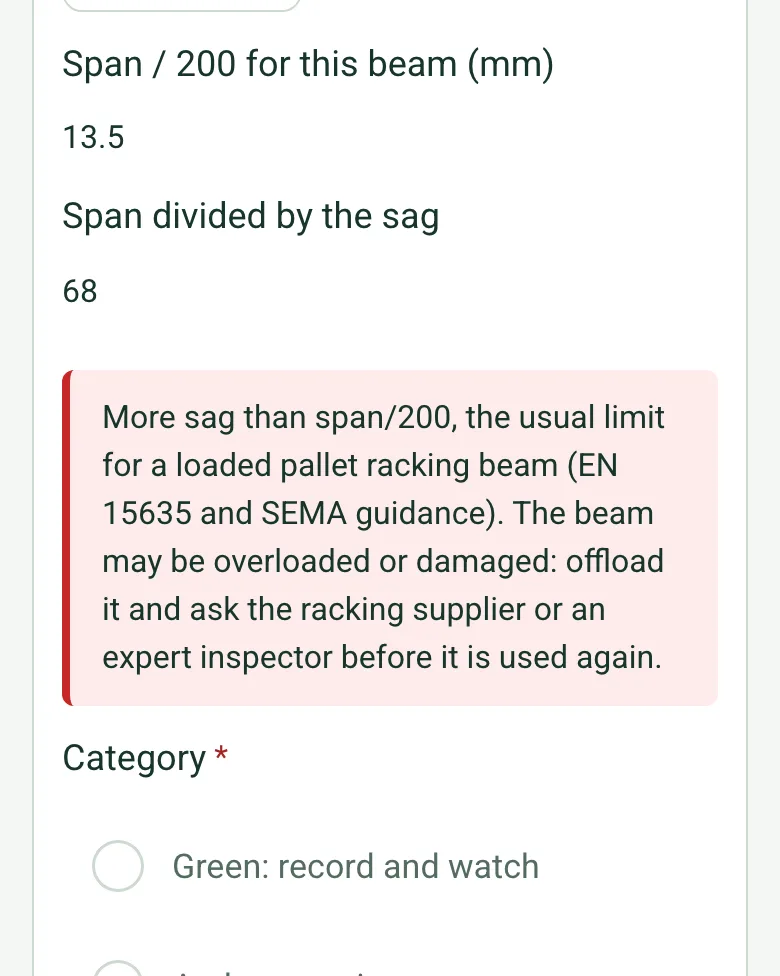
Span / 200 for this beam (mm)Worked out by the form
Shown only when the answers above make it relevant
Span divided by the sagWorked out by the form
Shown only when the answers above make it relevant
WarningMore sag than span/200, the usual limit for a loaded pallet racking beam (EN 15635 and SEMA guidance). The beam may be overloaded or damaged: offload it and ask the racking supplier or an expert inspector before it is used again.
Shown only when the answers above make it relevant
Category*Choose one
Green: record and watch
Amber: repair soon
Red: offload now
CheckAmber. Do not put new loads on this rack once it is emptied, and arrange a repair within 4 weeks.
Shown when “Category” is “Amber: repair soon”
Is it labelled so it is not reloaded until repaired?Yes or No
Shown when “Category” is “Amber: repair soon”
WarningRed. Offload the affected racking now and keep it out of use until it has been repaired.
Shown when “Category” is “Red: offload now”
Has it been offloaded and isolated?Yes or No
Shown when “Category” is “Red: offload now”
Repair by (who and date)Short answer
Shown only when the answers above make it relevant
PhotosPhotos
Red itemsWorked out by the form
Shown when “Did you find any damage?” is Yes
Amber itemsWorked out by the form
Shown when “Did you find any damage?” is Yes
Green itemsWorked out by the form
Shown when “Did you find any damage?” is Yes
Red items not yet offloadedWorked out by the form
Shown when “Did you find any damage?” is Yes
Amber items not labelledWorked out by the form
Shown when “Did you find any damage?” is Yes
Beams over span/200Worked out by the form
Shown when “Did you find any damage?” is Yes
WarningRed damage still loaded. Offload and isolate it now, before you leave the aisle.
Shown only when the answers above make it relevant
Walk Cam: racking damage visual inspectionWalk Cam video with voice-to-text
Optional. Film the four guided points on the SiteSurvey app; each clip keeps its spoken note.
3
General checks
Load notices displayed, readable and matching the configurationChoose one
OK
Defect
Not applicable
What is wrong?Short answer
Shown when “Load notices displayed, readable and matching the configuration” is “Defect”
Floor fixings in place, floor not cracked or unevenChoose one
OK
Defect
Not applicable
What is wrong?Short answer
Shown when “Floor fixings in place, floor not cracked or uneven” is “Defect”
Beam safety locks fitted on every beamChoose one
OK
Defect
Not applicable
What is wrong?Short answer
Shown when “Beam safety locks fitted on every beam” is “Defect”
Column guards and end-of-aisle protectors in place and undamagedChoose one
OK
Defect
Not applicable
What is wrong?Short answer
Shown when “Column guards and end-of-aisle protectors in place and undamaged” is “Defect”
Uprights plumb, no visible lean or bowingChoose one
OK
Defect
Not applicable
What is wrong?Short answer
Shown when “Uprights plumb, no visible lean or bowing” is “Defect”
Loads within the rated capacity, pallets sound and sitting squarelyChoose one
OK
Defect
Not applicable
What is wrong?Short answer
Shown when “Loads within the rated capacity, pallets sound and sitting squarely” is “Defect”
Decking, mesh and pallet supports in placeChoose one
OK
Defect
Not applicable
What is wrong?Short answer
Shown when “Decking, mesh and pallet supports in place” is “Defect”
Aisles clear, no items stored in flue spaces or on the floor in frontChoose one
OK
Defect
Not applicable
What is wrong?Short answer
Shown when “Aisles clear, no items stored in flue spaces or on the floor in front” is “Defect”
No unauthorised changes to beam levels or configurationChoose one
OK
Defect
Not applicable
What is wrong?Short answer
Shown when “No unauthorised changes to beam levels or configuration” is “Defect”
General checks OKWorked out by the form
DefectsWorked out by the form
Photos of general check defectsPhotos
4
Actions and sign-off
Overall result*Choose one
No damage needing action
Repairs needed (amber)
Areas offloaded and isolated (red)
Summary for the PRRSNotes
Next in-house inspection dueDate
Set by the PRRS. Often weekly, depending on how busy the area is.
Days to the next in-house inspectionWorked out by the form
Shown when “Date of inspection” is answered and “Next in-house inspection due” is answered
Next expert inspection dueDate
BS EN 15635:2008 and HSG76: no more than 12 months after the last expert inspection.
Days to the next expert inspectionWorked out by the form
Shown when “Date of inspection” is answered and “Next expert inspection due” is answered
CheckThe next expert inspection is more than 12 months after the last one. Check the date.
Shown only when the answers above make it relevant
CheckThe next in-house inspection date is before the date of this inspection. Check the date.
Shown only when the answers above make it relevant
Are further actions needed?Yes or No
Further actions
Repeat for each action. Each one asks:
Shown when “Are further actions needed?” is Yes
What needs doing?*Notes
PriorityChoose one
Urgent
High
Medium
Low
Who will do it?Short answer
Due dateDate
StatusChoose one
Open
In progress
Completed
Inspector nameWorked out by the form
Position or companyShort answer
Inspector signatureSignature
CheckSigning records what was found on the day. It is not a guarantee of condition and does not replace any examination, test, design check or repair needed from a competent person.
See it filled in
A completed racking inspection report, made by SiteSurvey from a fictional site visit: every answer, the photos, the guidance that applied and the sign-off, ready to send as a PDF.
What do green, amber and red mean in a racking inspection?
HSE's warehousing guidance (HSG76, table 11), based on SEMA guidance, rates damage by risk. Green is within the limit: the component can stay in service, but record it and look at it again at later inspections. Amber is hazardous damage needing action as soon as possible: once the load is removed, do not reload it until it is repaired. Red is very serious damage: offload and isolate the area immediately until it is repaired. The form counts the red, amber and green items on each inspection.
How quickly must amber damage be repaired?
HSG76 says racking with amber damage should be treated as red if it has not been repaired within four weeks. The form asks who will repair each amber or red item and by when, so the date sits next to the damage, and whether an amber rack is labelled so it is not reloaded.
How often should pallet racking be inspected?
HSG76 says the person responsible for racking safety should make sure inspections are made weekly or at other regular intervals based on risk assessment, with a written record, and that a technically competent person should inspect at intervals of not more than 12 months. The form records the date of the last expert inspection and shows a warning when more than a year has passed.
Who is the PRRS?
The person responsible for racking safety. HSG76 says this nominated person decides how often the racking is inspected to suit the warehouse, and that any damage should be reported to them straight away. The form records their name with each inspection and has a summary for them at the end.
What else should a racking inspection check?
Besides damage, the form checks that load notices are displayed, readable and match the configuration, floor fixings and the floor are sound, beam safety locks are fitted, column guards are in place, uprights are plumb, loads are within capacity and pallets sit squarely, decking is in place, aisles are clear, and no one has changed beam levels without approval.
Does this replace an expert racking inspection?
No. This is the regular in-house inspection. The form has an option to record an expert inspection, but an inspection by a technically competent person at least every 12 months, such as a SEMA approved rack inspector (SARI), is separate and produces its own report.