Form library · Construction and handover

Floor moisture test record

A moisture and readiness check before laying floor coverings. Record the base and its age, the covering and the manufacturer's maximum relative humidity, then each reading with its location and method. The form compares every hygrometer reading with the limit, shows the highest, counts the readings over and within it and gives the result, and checks the straightedge gap against the flatness limit in the specification. Record the damp-proof membrane, the result and the preparation needed. Try the form below, see every question or open a completed example.

Ready to use from the form library, and every question is yours to edit. Try it for a small trial fee, cancel any time.

Try it on your phone

Try it on this phone

Fill in the floor moisture test on your phone now

See how the floor moisture test looks on your phone

Scan the code with your phone camera. It opens the real form, no sign-up needed.

Open the live example and fill it in, just as your team would on site. No sign-up needed.

See it on this phone

Every question is editable. Add this form to your account, then change the wording, add or remove questions and options, and make it fit your own jobs.

Or start your trial with this form ready →
One email, and we won't add you to a mailing list.

How dry does a screed need to be for flooring?

Dry enough for the adhesive and floor covering being laid. The manufacturers give the maximum relative humidity, and where the adhesive and the covering differ the lower figure applies. BS 8203 is the British Standard code of practice for installing resilient floor coverings, and BS 8204-1 covers concrete bases and levelling screeds that receive floor coverings.

Last updated . Facts checked by the SiteSurvey team on 17 October 2026 against BSI: BS 8203, code of practice for installation of resilient floor coverings and BSI: BS 8204-1, concrete bases and cementitious levelling screeds to receive floorings.

Built for checking a floor is ready to lay

Take each reading with its location and method. Enter the limit from the adhesive and covering manufacturers and the form compares every hood reading with it, shows the highest relative humidity and gives the result, and checks the straightedge gap against the specification. The form sets no limits of its own.

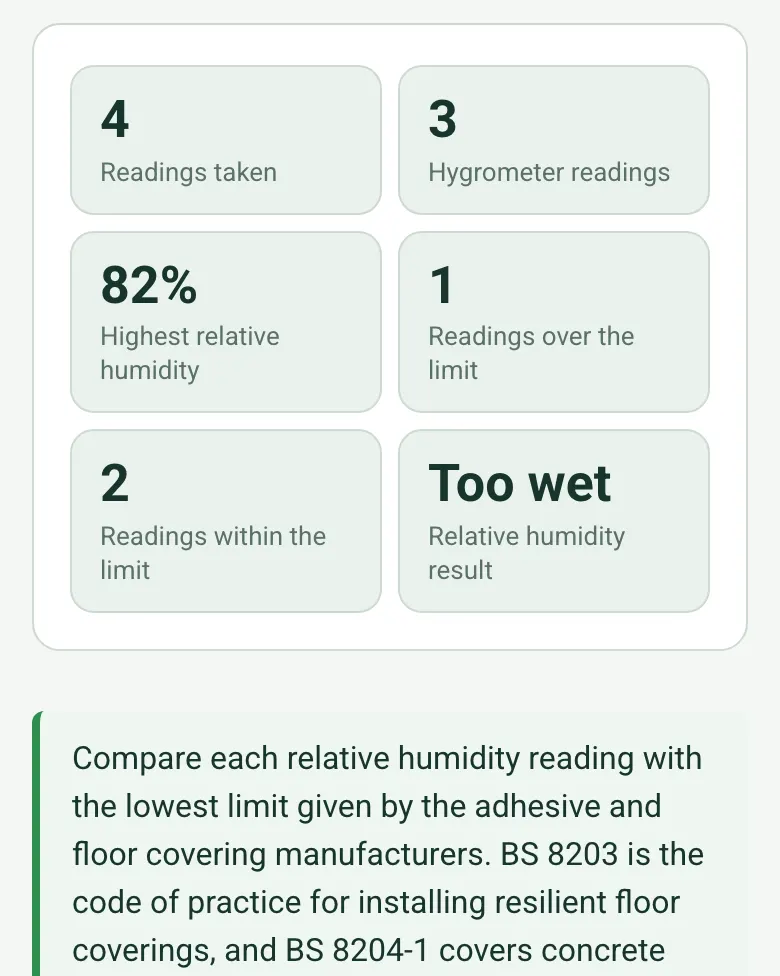
Counts worked out as 4 readings taken, 3 hygrometer readings, 82% highest relative humidity, 1 over the limit, 2 within the limit and a result of Too wet

Readings against the limit

The form counts the readings, shows the highest relative humidity, counts those over and within the manufacturer's limit and says whether the floor is too wet. Meter readings are recorded but not compared.

How calculated fields work →
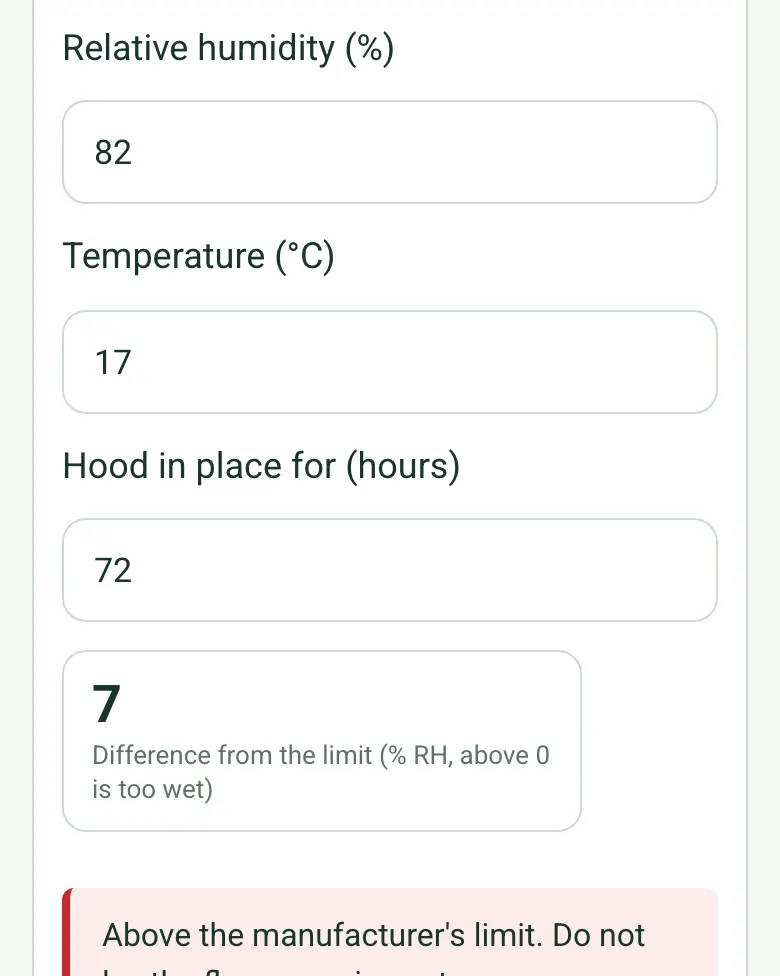
A reading of 82% RH at 17 °C after 72 hours under the hood, 7 above the limit, with a red note not to lay the covering yet

Each hood reading checked

Each hygrometer reading shows how far it is from the limit, with a red note when it is above, so the reason to wait is in the record.

How calculated fields work →

Flatness against the specification

Enter the worst gap under the straightedge and the limit from the specification, and the form says whether smoothing is needed first.

How calculated fields work →

A completed floor moisture test record

A fictional office fit-out before LVT: reception at 71% RH, office 2 at 74% and office 1 at 82% against a 75% limit, and a 4 mm straightedge gap against 3 mm, so the result is not ready until office 1 dries and reception is smoothed. Open it as a filled-in form, or switch to a blank copy and try it yourself.

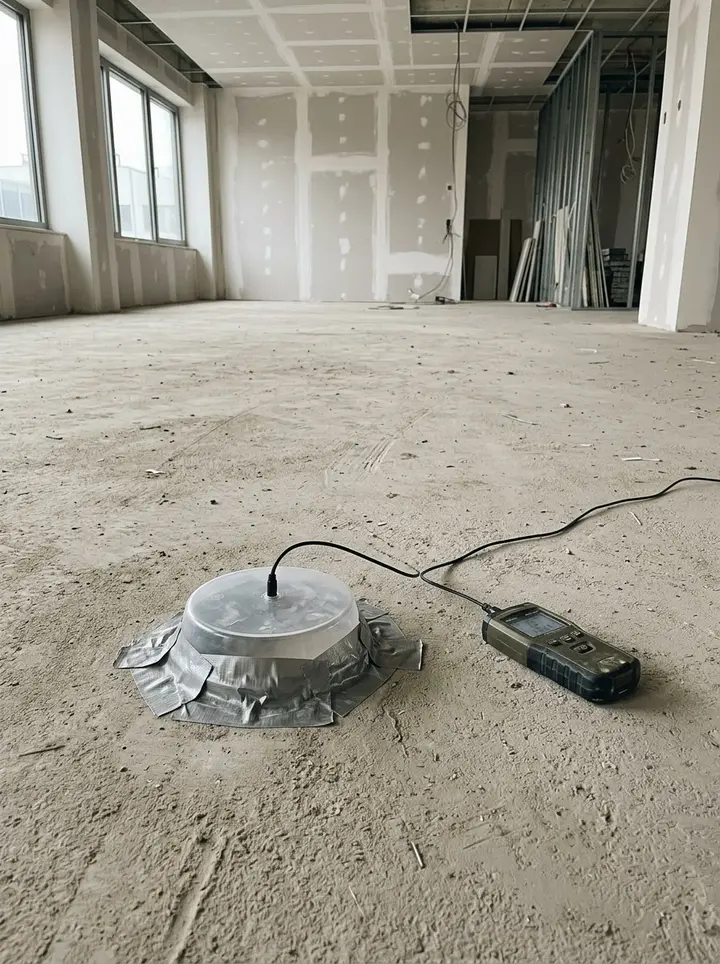
A hygrometer hood taped to a bare screed floor with a cable to a handheld humidity meter
Hood test · reception · 71% RH
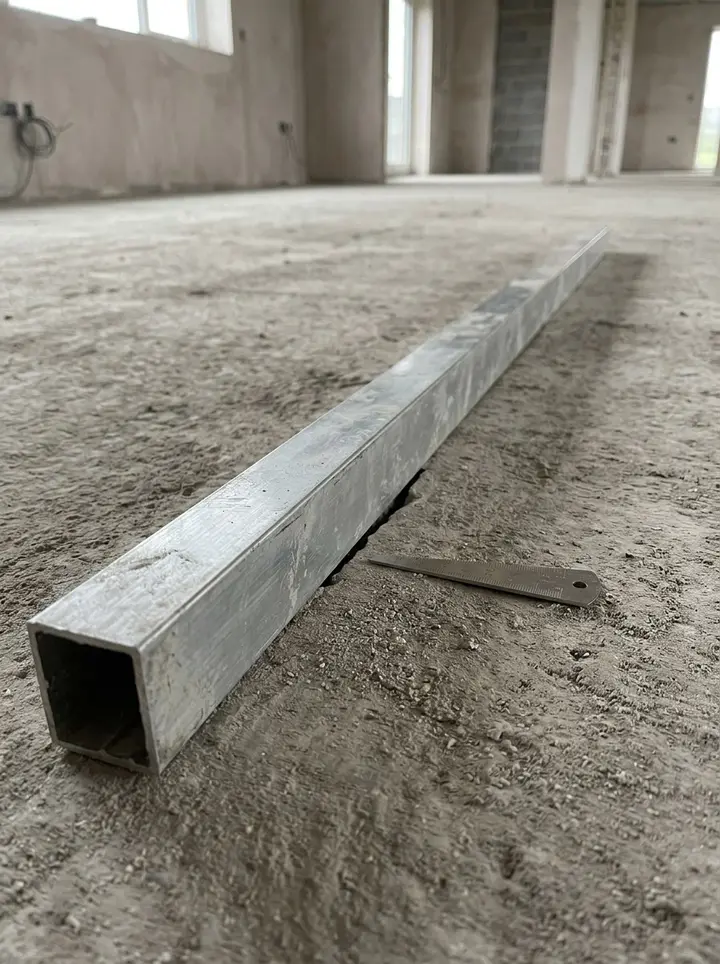
An aluminium straightedge on a screed floor with a gap gauge beside it
Straightedge · worst gap 4 mm

Try the floor moisture test form live

Answer a few questions and watch it adapt. Your answers are not saved, and any photos you add are deleted within the hour.

Live form: Floor Moisture and Pre-install SurveyOpen full screen ↗
Fill it in right here

This is the real form as your team would use it: questions appear as you answer, scores work themselves out and you can add photos and signatures. No sign-up needed. Or open a completed example to see every answer, photo and score filled in.

Want to see one filled in? See a completed floor moisture test report (PDF), made by SiteSurvey from a fictional site visit.

Every question in the floor moisture test template

A floor moisture and pre-installation survey: base type and age, conditions, relative humidity readings with a hygrometer hood, flatness, damp-proof membrane, the manufacturer's limit and whether flooring can go down. 3 sections and 36 questions. Follow-up questions and guidance appear only when an answer calls for them, so the person on site never sees the ones that do not apply.

Make it your own: every question is editable

This is a starting point, not a fixed form. Once it is in your SiteSurvey account you can reword any question, add or remove questions, sections and answer options, and add your own logo, so it fits the way your team works and the jobs you do.

Details you only enter once

Add this form to a project in SiteSurvey and it fills in what the project already knows, so nobody on site retypes it and every form on the job uses the same names. Anything filled in can still be changed.

  • Project: the project name
  • Client: the project's customer
  • Site: the site, when the form is opened for a space or a product
  • Site address: the site address, from the space or the project

Base

  • ProjectShort answer
    Fills in from the project name
  • ClientShort answer
    Fills in from the project's customer
  • Site*Short answer
    Fills in from the site, when the form is opened for a space or a product
  • Site addressShort answer
    Fills in from the site address, from the space or the project
  • Survey date*Date
  • Surveyor*Short answer
  • BaseChoose one
    • Sand and cement screed
    • Concrete slab
    • Calcium sulphate (anhydrite) screed
    • Timber or board
    • Existing floor covering
  • Age of the base (weeks)Number
  • Floor covering to be laid*Short answer
  • Manufacturer's maximum relative humidity (%)Number

    From the adhesive and floor covering manufacturers' data. Use the lower figure.

  • Was the building at its normal service temperature and humidity, with drying equipment off, before the readings were taken?Yes or No
  • CheckReadings taken while drying equipment is running may not show how wet the base will be in normal use. Say so under preparation.
    Shown when “Was the building at its normal service temperature and humidity, with drying equipment off, before the readings were taken?” is No

Readings

  • Readings
    Repeat for each reading. Each one asks:
    • Location*Short answer
    • MethodChoose one
      • Hygrometer hood (RH %)
      • Moisture meter (comparative)
      • Carbide or oven test
    • Relative humidity (%)Number
      Shown when “Method” is “Hygrometer hood (RH %)”
    • Meter reading and scaleShort answer
      Shown when “Method” is “Moisture meter (comparative)”
    • Moisture content (%)Number
      Shown when “Method” is “Carbide or oven test”
    • Temperature (°C)Number
    • Hood in place for (hours)Number

      Hood makers and BS 8203 practice: leave the sealed hood for at least 72 hours, then read until the value is stable, or as the hood maker states.

      Shown when “Method” is “Hygrometer hood (RH %)”
    • CheckThe hood has been in place for less than 72 hours. The reading may not have reached equilibrium yet.
      Shown only when the answers above make it relevant
    • Difference from the limit (% RH, above 0 is too wet)Worked out by the form
      Shown when “Relative humidity (%)” is answered and “Manufacturer's maximum relative humidity (%)” is answered
    • WarningAbove the manufacturer's limit. Do not lay the floor covering yet.
      Shown only when the answers above make it relevant
    • PhotosPhotos
  • Readings takenWorked out by the form
  • Hygrometer readingsWorked out by the form
  • Highest relative humidity (%)Worked out by the form
  • Readings over the limitWorked out by the form
    Shown when “Manufacturer's maximum relative humidity (%)” is answered
  • Readings within the limitWorked out by the form
    Shown when “Manufacturer's maximum relative humidity (%)” is answered
  • Relative humidity resultWorked out by the form
    Shown only when the answers above make it relevant
  • GuidanceCompare each relative humidity reading with the lowest limit given by the adhesive and floor covering manufacturers. BS 8203 is the code of practice for installing resilient floor coverings, and BS 8204-1 covers concrete bases and levelling screeds that receive them.

Flatness and result

  • Worst gap under a 2 m straightedge (mm)Number
  • Flatness limit from the specification (mm)Number

    The largest gap the specification or the covering manufacturer allows under the straightedge.

  • Flatness checkWorked out by the form
    Shown only when the answers above make it relevant
  • CheckThe gap is larger than the specification allows. Record the smoothing or grinding needed before the covering goes down.
    Shown only when the answers above make it relevant
  • Damp-proof membrane present?Yes or No
  • Result*Choose one
    • Ready to lay
    • Ready after preparation
    • Not ready: too wet
    • Not ready: other
  • Preparation needed (smoothing, priming, surface DPM, drying time)Notes
    Shown only when the answers above make it relevant
  • Client or main contractor nameShort answer
  • Client or main contractor signatureSignature
  • Completed byWorked out by the form
  • Surveyor signatureSignature

See it filled in

A completed floor moisture test report, made by SiteSurvey from a fictional site visit: every answer, the photos, the guidance that applied and the sign-off, ready to send as a PDF.

See completed form (PDF) ↗

Floor moisture test FAQs

Which test methods does it record?

Each reading records its method: relative humidity under a hygrometer hood, with the hours the hood was in place; a comparative moisture meter reading and its scale; or a carbide or oven moisture content. Only the relative humidity readings are compared with the limit.

What if the floor is too wet?

The form warns not to lay the covering yet. Record the preparation needed, such as more drying time and a retest, or a surface damp-proof membrane approved by the adhesive manufacturer.

Does it work out readings over the limit?

Yes. Enter the manufacturer's limit and each relative humidity reading, and the form shows how far each is from the limit and counts the readings over it.

Does it record flatness?

Yes. Record the worst gap under a 2 m straightedge. BS 8204-1 gives methods for assessing the levels and surface regularity of bases and screeds.

Who signs it?

The surveyor and the client or main contractor, so the readiness of the floor is agreed before work starts.

Who uses this?

Flooring contractors, fit-out contractors, main contractors and site managers.

Related

Use this floor moisture test form with your team

Add it from the form library in one click, change any question, and every completed form becomes a branded PDF report.

Start your trial →