A visual inspection for dry rot, wet rot and wood-boring insects. Record the moisture sources and the meter, and set the timber reading you treat as wet enough for decay. For each room or area add the timbers checked, the signs seen and the meter reading, which the form compares with your threshold, the suspected cause to be confirmed by a specialist, and the visible extent measured from a photo against a door or with a tape. The form counts the readings above the threshold and the areas by suspected cause, and totals the affected area. An optional Walk Cam route films the room, the joinery, the floor void and any exit holes. Try the form below, see every question or open a completed example.
✎Every question is editable. Add this form to your account, then change the wording, add or remove questions and options, and make it fit your own jobs.
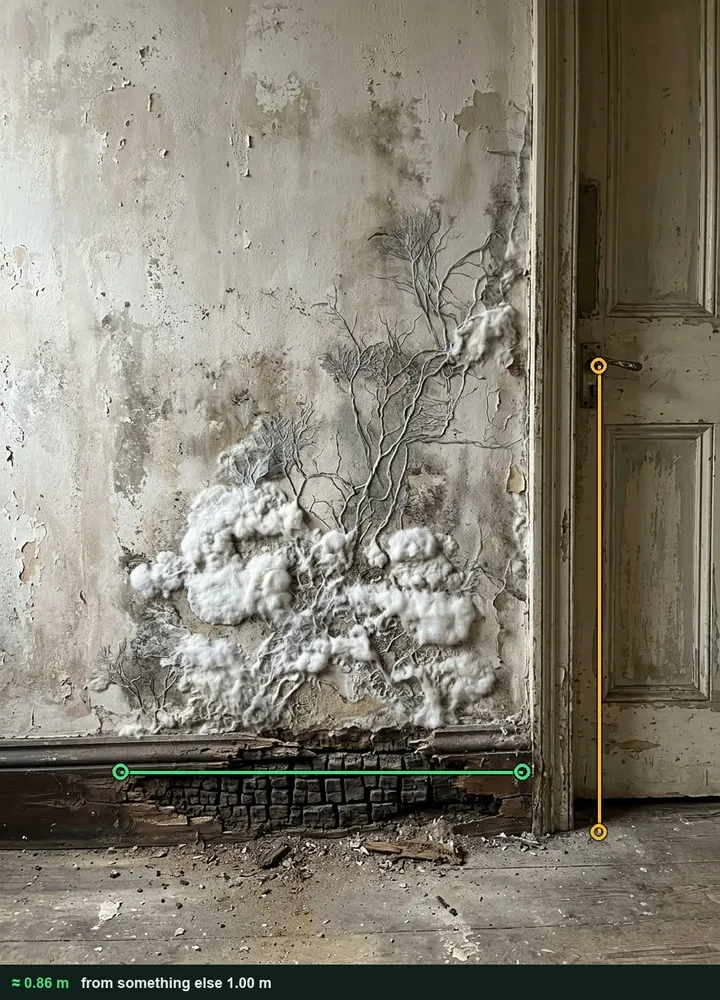
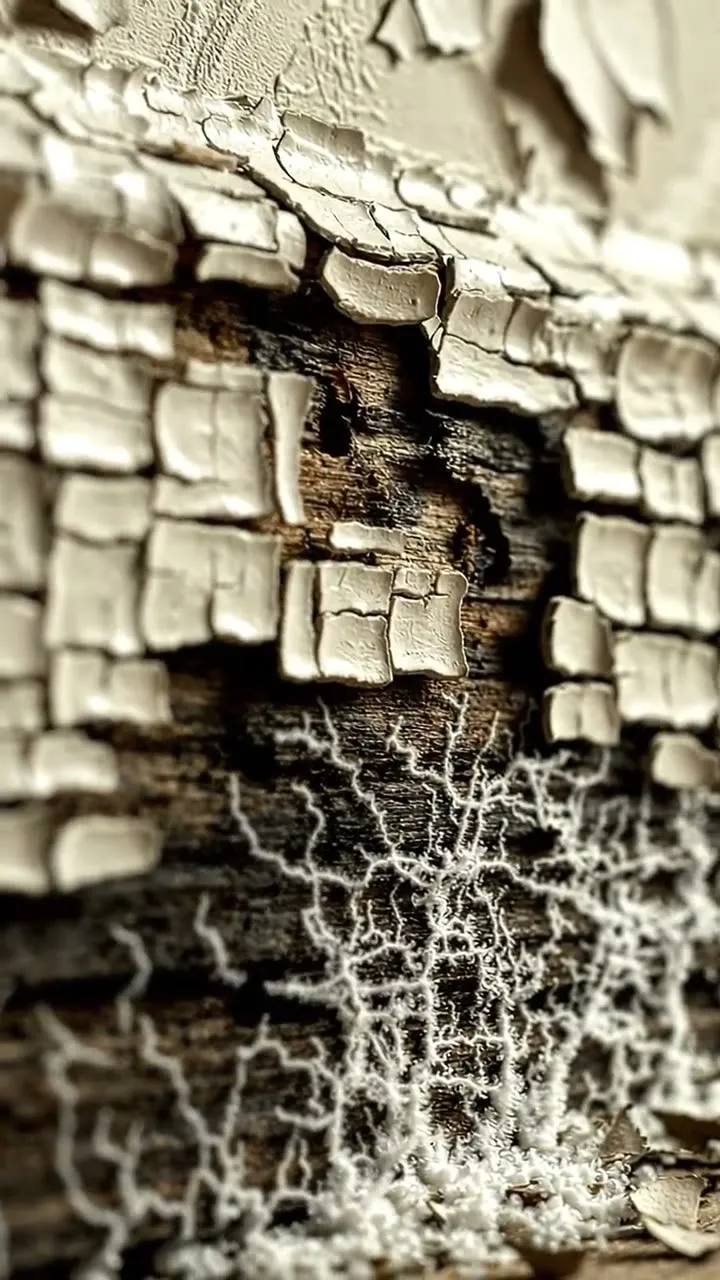
The Property Care Association says timber with dry rot may darken and shrink, developing square cracks, and in still, humid conditions it can produce a cotton wool-like growth on the surface. Dry rot can grow through masonry and very small cracks, away from the timber it is feeding on. It can only grow because the wood is wet, so the moisture source is found first. Where dry rot is suspected, the PCA says a specialist should survey the property, and opening up is often needed.
Inspect each room with the form on a phone. Set the timber reading you treat as wet enough for decay, and the form compares every reading with it. Measure the visible extent from a photo against a door, and the form counts the areas by suspected cause and totals the affected area. It is a visual inspection, not a specialist timber survey or an identification.
Readings against your threshold
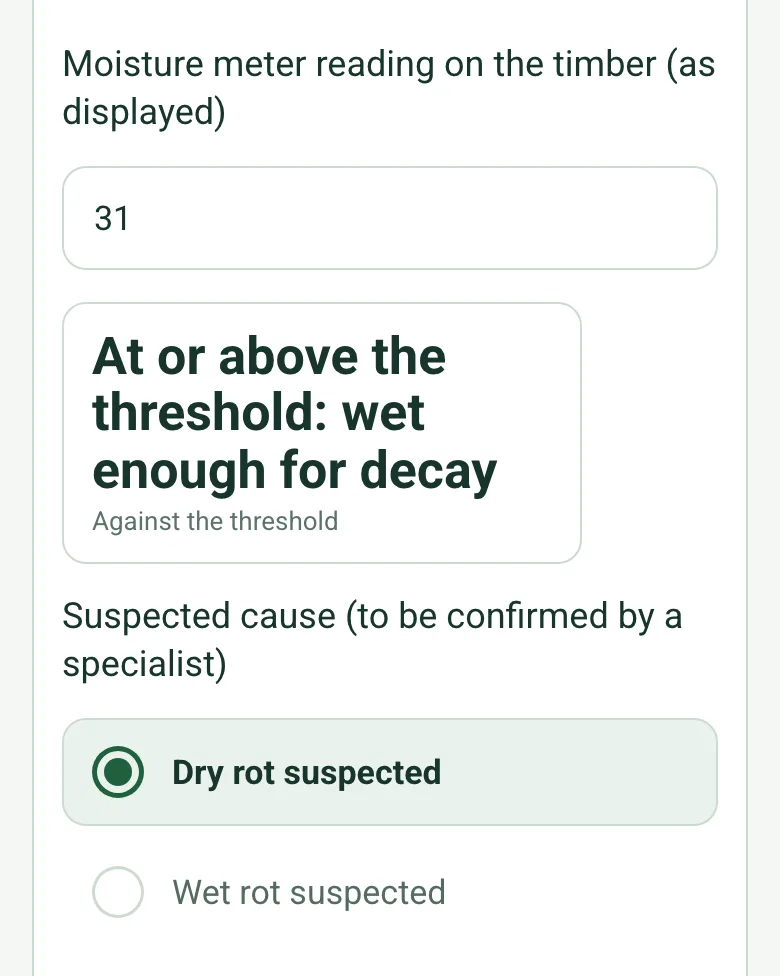
Enter the threshold you work to, often about 20% on a pin meter's timber scale, and each reading is compared with it. Timber kept wet is what lets rot grow, so the wet areas show up straight away.
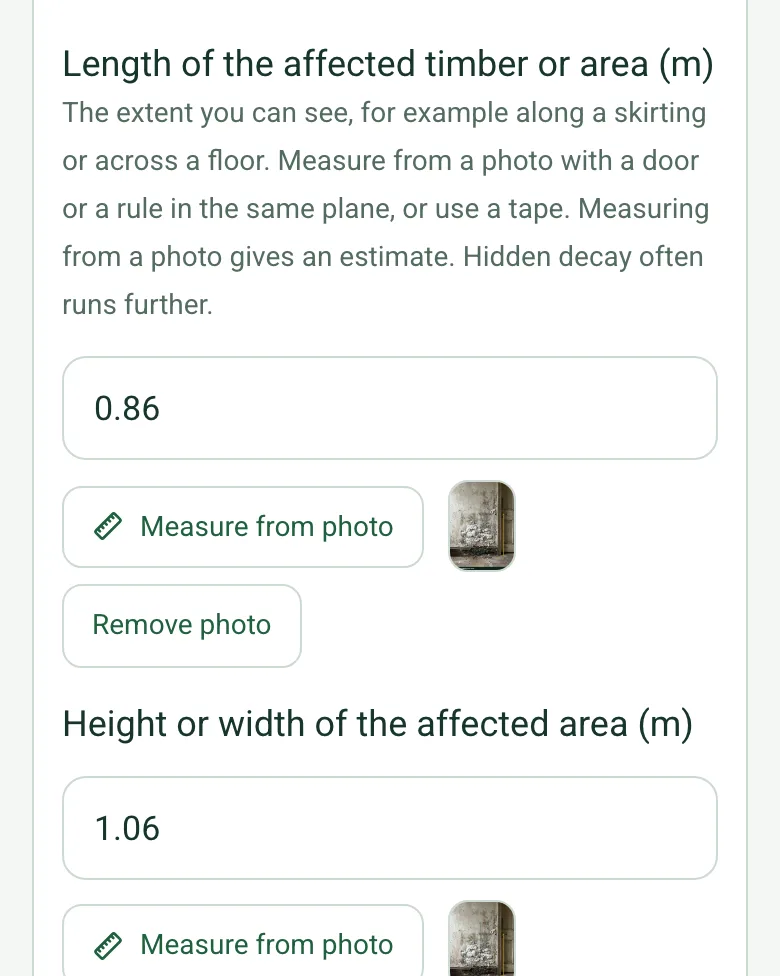
Photograph the wall square on and measure the length of the affected skirting and how far the growth reaches up the plaster. Hidden decay often runs further, so it records what you can see. It works on web forms in any phone browser today, and the app version is on its way.
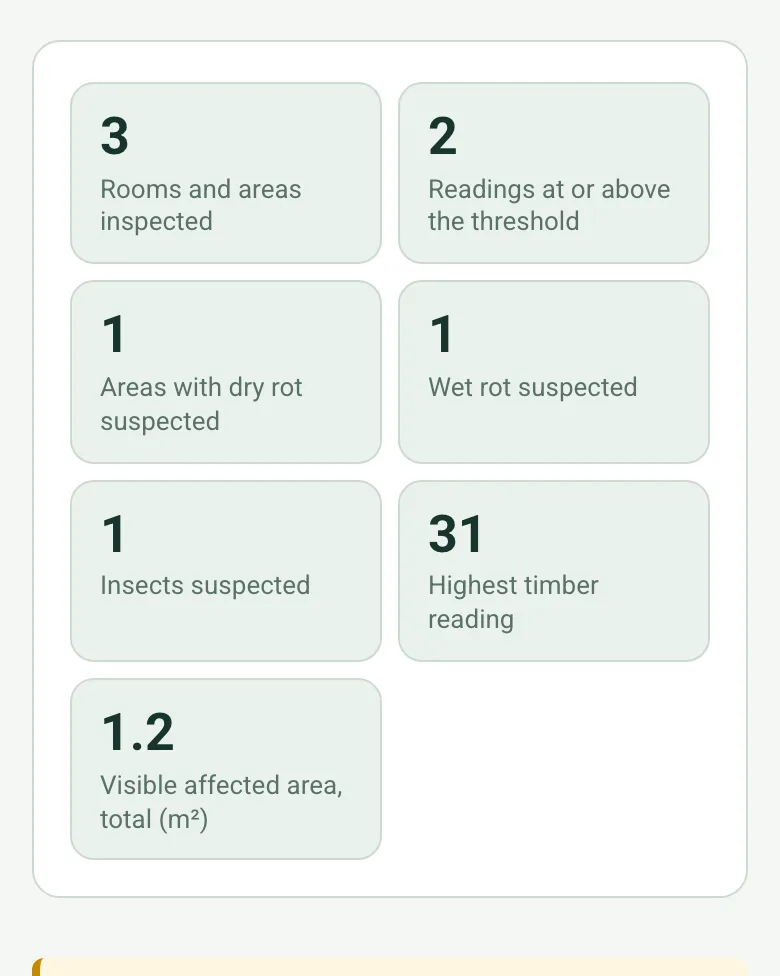
The form counts the areas inspected, the readings above your threshold and the areas where dry rot, wet rot or insects are suspected, and totals the visible affected area for the specialist's brief.
A fictional terraced house with a leaking gutter: suspected dry rot in the front room skirting at a reading of 31 against a threshold of 20, visible over about 0.86 by 1.06 m, wet rot in the hall and old exit holes in the loft. Open it as a filled-in form, or switch to a blank copy and try it yourself.
This is the real form as your team would use it: questions appear as you answer, scores work themselves out and you can add photos and signatures. No sign-up needed. Or open a completed example to see every answer, photo and score filled in.
Find the moisture first, then film the timber around it: skirting, joinery, the floor void and any woodworm holes.
Record the property, room, date and what was opened. Start with the likely source of damp, then show affected timber without lifting boards or cutting into anything for the camera. The four AI-generated clips illustrate one route, not a real property.
POINT 01
Room and moisture source
Show the room and any likely moisture source, such as a damp wall, a leak or blocked ventilation, before the timber.
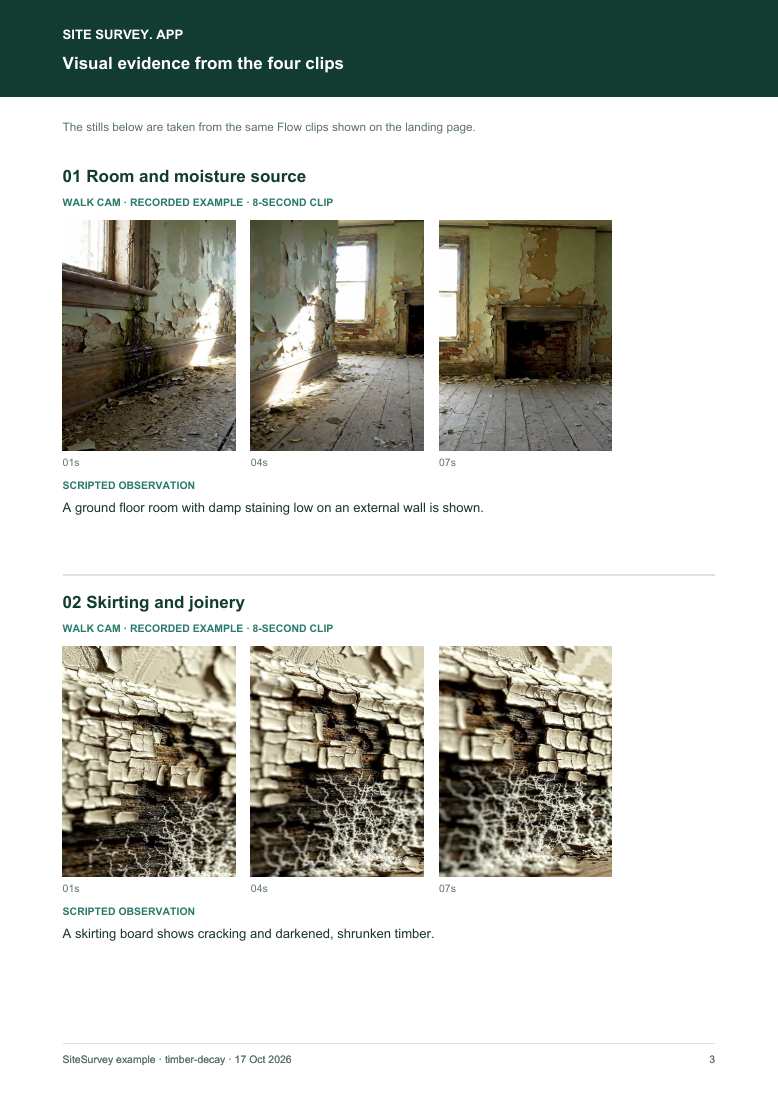
A ground floor room with damp staining low on an external wall is shown.
POINT 02
Skirting and joinery
Film skirting boards, door linings and other joinery near the damp area; stop on cracking, softness or distortion.
A skirting board shows cracking and darkened, shrunken timber.
POINT 03
Floor void through an opening
Where a hatch or lifted board is already open, film the joists from above. Do not lift boards just for the clip.
Floor joists below an open hatch show darkened timber near the wall.
POINT 04
Woodworm holes and frass
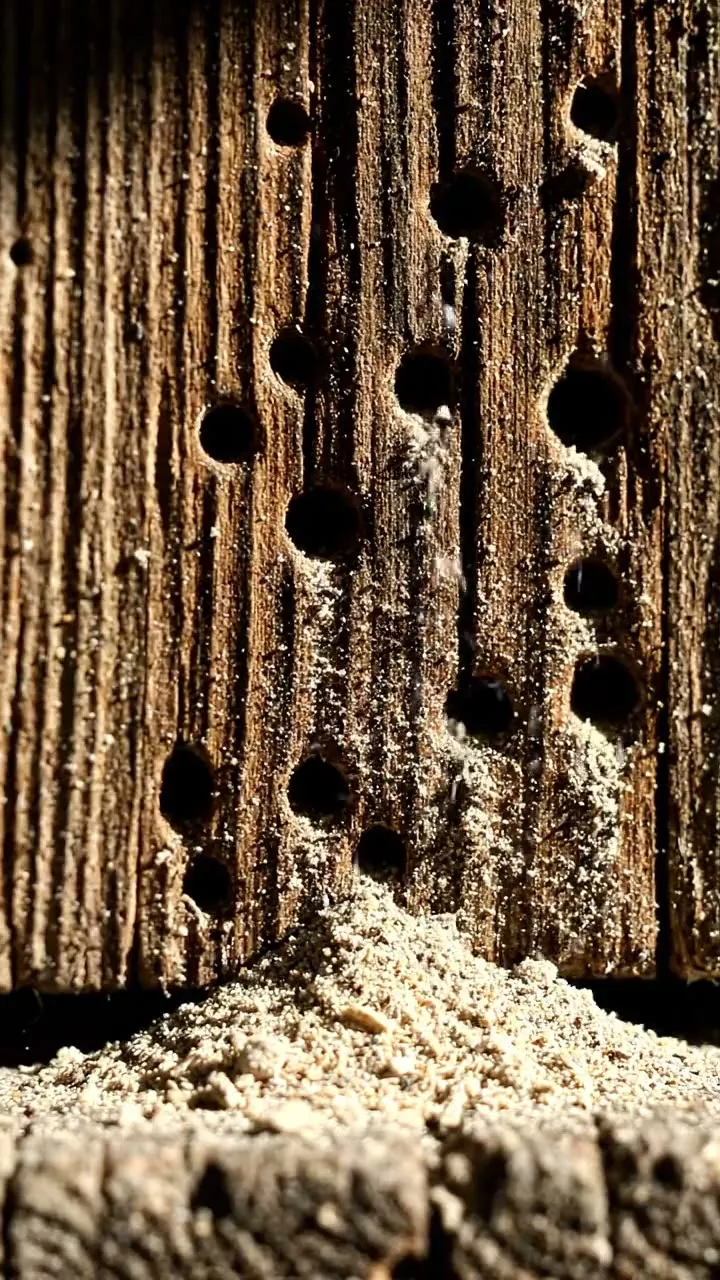
Film small round holes and any fresh dust (frass) on timber; fresh dust suggests activity but needs confirming.
Small round exit holes are visible in an old timber beam.
See the footage in a report
A fictional six-page example with the four points, twelve stills from the clips, observations, follow-up actions and the limits of a visual record.
Video records visible signs. It cannot identify dry rot, wet rot or woodworm species, measure moisture content or show how far decay has spread; that needs a specialist survey. Example footage was generated in Google Flow and the observations are scripted; no real site is shown. Walk Cam works inside any form in the app. How Walk Cam works · All visual inspections
Every question in the dry rot inspection template
A dry rot and timber decay inspection: moisture sources, each room or area with the timbers checked, signs of rot or wood-boring insects, meter readings, access limits, photos, and whether a specialist survey is needed. 3 sections and 44 questions. Follow-up questions and guidance appear only when an answer calls for them, so the person on site never sees the ones that do not apply.
✎
Make it your own: every question is editable
This is a starting point, not a fixed form. Once it is in your SiteSurvey account you can reword any question, add or remove questions, sections and answer options, and add your own logo, so it fits the way your team works and the jobs you do.
Details you only enter once
Add this form to a project in SiteSurvey and it fills in what the project already knows, so nobody on site retypes it and every form on the job uses the same names. Anything filled in can still be changed.
Project: the project name
Client: the project's customer
Site: the site, when the form is opened for a space or a product
Site address: the site address, from the space or the project
1
Property
ProjectShort answer
Fills in from the project name
ClientShort answer
Fills in from the project's customer
Site*Short answer
Fills in from the site, when the form is opened for a space or a product
Site addressShort answer
Fills in from the site address, from the space or the project
Inspection date*Date
Surveyor*Short answer
Weather on siteAnswer
Reason for the inspectionChoose one
Suspected decay reported
Follow-up from a survey
Damp investigation
Routine check
Moisture sources seenTick all that apply
Roof or gutter leak
Plumbing leak
Penetrating damp
Damp at low level on walls
Blocked or missing ventilation
Condensation
None seen
Moisture meter usedShort answer
Timber reading you treat as wet enough for decayNumber
On the meter's timber scale. Many surveyors use about 20%: timber kept below about 20% moisture content is generally too dry for fungal decay. Enter the figure you work to; readings at or above it are flagged.
GuidanceProperty Care Association: dry rot can only grow because the wood is wet, and wet rots affect timber kept excessively wet, often joist or beam ends and posts where they meet wet walls or the ground. Leaks, rising and penetrating damp, poor ventilation and poor weather protection all lead to wet rot. Find and record the moisture source first.
2
Rooms and timbers
Rooms and areas
Repeat for each area. Each one asks:
Room or area*Short answer
Timbers checkedTick all that apply
Skirting
Floorboards
Floor joists
Door or window linings
Roof timbers
Wall plates or lintels
Stairs
Other
Signs seenTick all that apply
Darkened timber
Cracking into squares
Shrinking or distortion
Soft or crumbling timber
Cotton wool-like growth
Strands on masonry
Fruiting body
Small round exit holes
Fresh bore dust (frass)
Musty smell
None seen
Moisture meter reading on the timber (as displayed)Number
Against the thresholdWorked out by the form
Shown when “Moisture meter reading on the timber (as displayed)” is answered and “Timber reading you treat as wet enough for decay” is answered
WetWorked out by the form
Suspected cause (to be confirmed by a specialist)Choose one
Dry rot suspected
Wet rot suspected
Wood-boring insects suspected
No decay seen
Not sure
WarningProperty Care Association: dry rot can grow through masonry and through very small cracks, away from the timber it is feeding on. Check timbers beyond this area, including in the next room, and get a detailed survey by a specialist.
Shown when “Suspected cause (to be confirmed by a specialist)” is “Dry rot suspected”
CheckProperty Care Association: the common furniture beetle leaves small round exit holes about 1 to 2 mm across. Bore dust (frass) around holes can suggest activity but can be misleading, so a qualified professional should confirm whether it is active before any treatment.
Shown when “Suspected cause (to be confirmed by a specialist)” is “Wood-boring insects suspected”
AccessChoose one
Seen in full
Seen through an existing opening
Not accessible
Length of the affected timber or area (m)Number
The extent you can see, for example along a skirting or across a floor. Measure from a photo with a door or a rule in the same plane, or use a tape. Measuring from a photo gives an estimate. Hidden decay often runs further.
Shown only when the answers above make it relevant
Height or width of the affected area (m)Number
Shown only when the answers above make it relevant
Visible affected area (m²)Worked out by the form
Shown only when the answers above make it relevant
PhotosPhotos
Rooms and areas inspectedWorked out by the form
Readings at or above the thresholdWorked out by the form
Shown when “Timber reading you treat as wet enough for decay” is answered
Areas with dry rot suspectedWorked out by the form
Wet rot suspectedWorked out by the form
Insects suspectedWorked out by the form
Highest timber readingWorked out by the form
Visible affected area, total (m²)Worked out by the form
CheckTimber at or above your threshold. Find and fix the moisture source first, then recheck the readings once the timber has had time to dry.
Shown only when the answers above make it relevant
GuidanceDo not name the fungus or insect from a photo or video alone. Record what you see; identification is for a specialist.
Limits of the inspection (floors not lifted, linings not removed, furniture)Notes
Walk Cam: dry rot and timber decay inspectionWalk Cam video with voice-to-text
Optional. Film the four guided points on the SiteSurvey app; each clip keeps its spoken note.
3
Actions and sign-off
Recommendation*Choose one
Specialist timber survey needed
Fix the moisture source and recheck
No decay seen
CheckProperty Care Association: where dry rot is suspected, the property should have a detailed survey by a specialist to find the cause of the water and the full extent of the damage, and opening up is often needed.
Shown when “Recommendation” is “Specialist timber survey needed”
Recheck dueDate
Set when the moisture source is fixed. Timber needs time to dry before a recheck means anything.
Shown only when the answers above make it relevant
Days to the recheckWorked out by the form
Shown only when the answers above make it relevant
Are further actions needed?Yes or No
Further actions
Repeat for each action. Each one asks:
Shown when “Are further actions needed?” is Yes
What needs doing?*Notes
PriorityChoose one
Urgent
High
Medium
Low
Who will do it?Short answer
Due dateDate
StatusChoose one
Open
In progress
Completed
Inspector nameWorked out by the form
Position or companyShort answer
Inspector signatureSignature
CheckSigning records what was found on the day. It is not a guarantee of condition and does not replace any examination, test, design check or repair needed from a competent person.
Scope and responsibility
This is a visual inspection record, not a specialist timber survey, a species identification or a treatment specification.
What a useful entry looks like
Signs seen and suspected cause
Describe the signs and the moisture source; leave identification of the fungus or insect to a specialist. Say what could not be seen.
Front room skirting darkened with square cracking and a musty smell, gutter leak above. Dry rot suspected; specialist timber survey booked.
Fictional example of record wording. Use the actual evidence and approved arrangements for your job; this is not a completed report or an instruction to carry out the work.
See it filled in
A completed dry rot inspection report, made by SiteSurvey from a fictional site visit: every answer, the photos, the guidance that applied and the sign-off, ready to send as a PDF.
What is the difference between dry rot and wet rot?
The Property Care Association says wet rot usually stays where the timber is in contact with excessive water, often joist or beam ends and posts at wet walls or the ground. Dry rot can spread away from the wet timber, through masonry and small cracks, to find new timber.
Can you identify dry rot from a photo or video?
No. The form records what you see and a suspected cause to be confirmed by a specialist. Identifying the fungus or insect needs a specialist inspection, and the PCA says opening up is often required to find the extent.
How do I know if woodworm is active?
The PCA says the common furniture beetle leaves small round exit holes about 1 to 2 mm across, and small piles of bore dust (frass) can suggest activity, though this can be misleading. A qualified professional should establish whether it is active or historic before any treatment.
What causes timber decay?
Moisture. The PCA lists leaking pipes, rising and penetrating damp, poor ventilation and poor weather protection as causes of wet rot. The form records the moisture sources first, then each room.
Do I need to lift floorboards?
Not for this inspection. Use existing hatches or openings, record what could not be seen in the limits of the inspection, and recommend a specialist survey where opening up is needed.
Who uses this?
Housing associations and councils, surveyors, letting agents, damp and timber contractors and property managers.