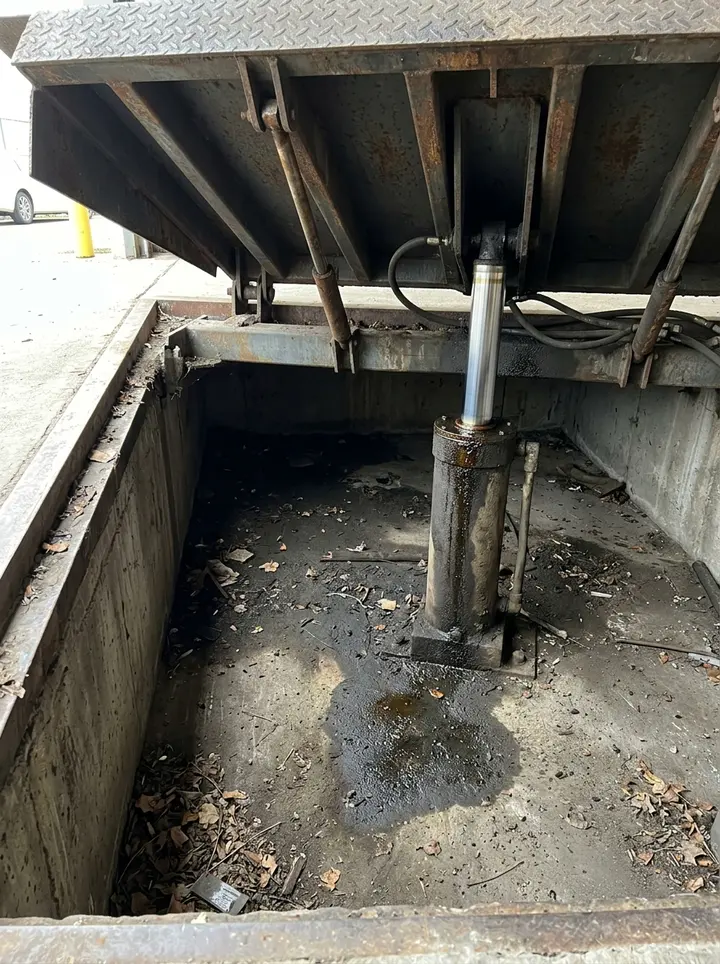
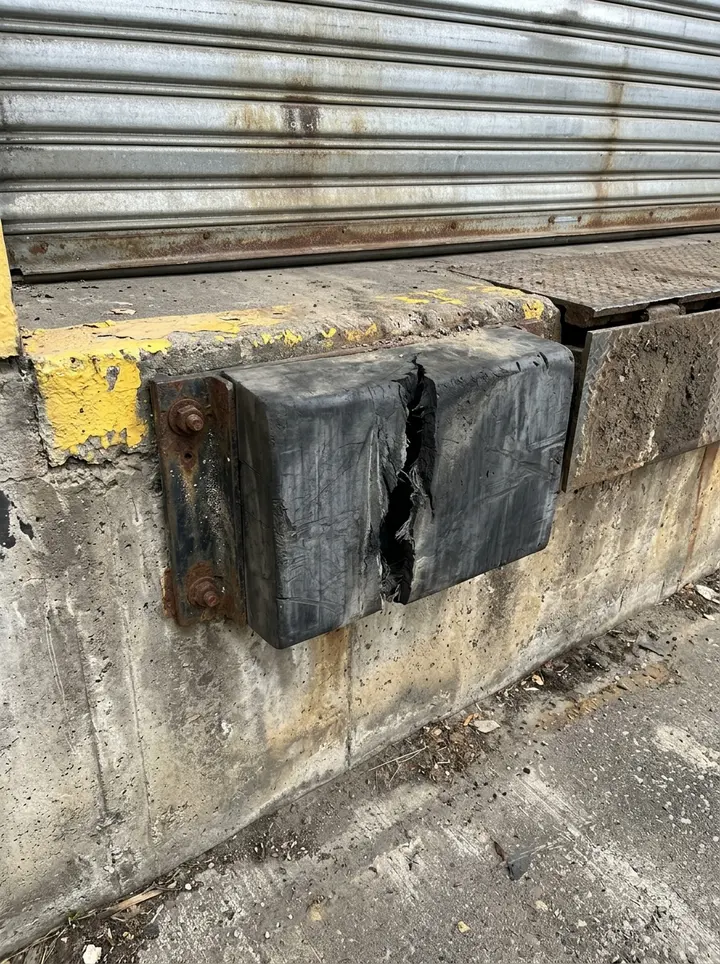
An inspection of loading bays and dock levellers. Record the date of the last engineer service and the service interval in your maintenance plan, and the form flags a service that is overdue. Add each bay, with its position on the yard by GPS if you want, and check the leveller deck and lip, hydraulics, toe guards and side skirts, dock door and shelter, vehicle restraint or chocks, traffic lights, bumpers and markings, with the result, defects and photos. Where there is no restraint, or it is faulty, record how driveaways are prevented. The form counts the defects on each bay, warns about a safe result that does not match, a toe guard defect on a bay still in use and a bay with nothing to stop a driveaway, and counts bays by result. Try the form below, see every question or open a completed example.
✎Every question is editable. Add this form to your account, then change the wording, add or remove questions and options, and make it fit your own jobs.
A dock leveller inspection checks the deck and lip, the hydraulics for leaks, toe guards and side skirts, the dock door and shelter, the vehicle restraint, chocks or interlock, traffic lights, dock bumpers and edge markings. HSE's HSG76 says defective safety features or twisted, cracked or misaligned platforms can cause serious accidents, and that you should have planned routine maintenance and a system to report and repair defects.
Enter the service interval in your maintenance plan and the form flags an overdue leveller service. For each bay it counts the defects, asks how driveaways are prevented where there is no restraint, goes red if nothing is in place or a toe guard is defective on a bay in use, and counts bays by result.
How driveaways are prevented
Where there is no vehicle restraint, or it is faulty, the form asks what stops a driveaway: key control, traffic lights, a marshal or nothing. Nothing in place on a bay in use brings up a red note.
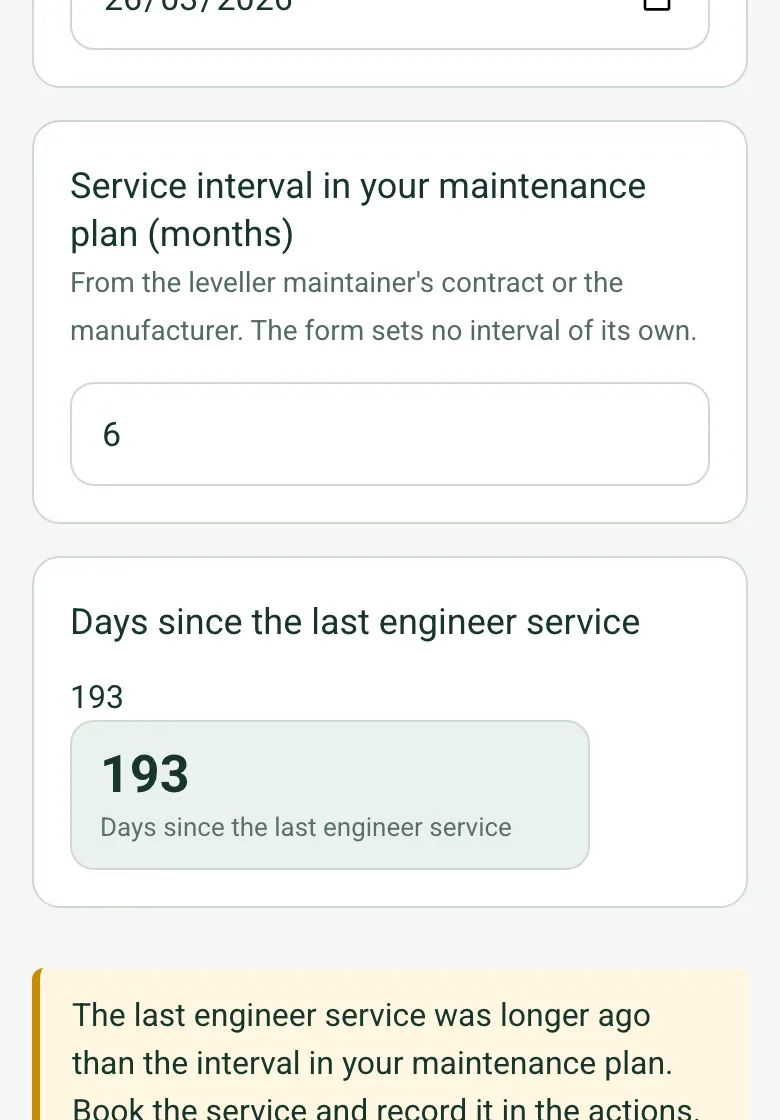
Enter the interval from the maintainer's contract or the manufacturer, and the form shows the days since the last engineer service and flags it when overdue.
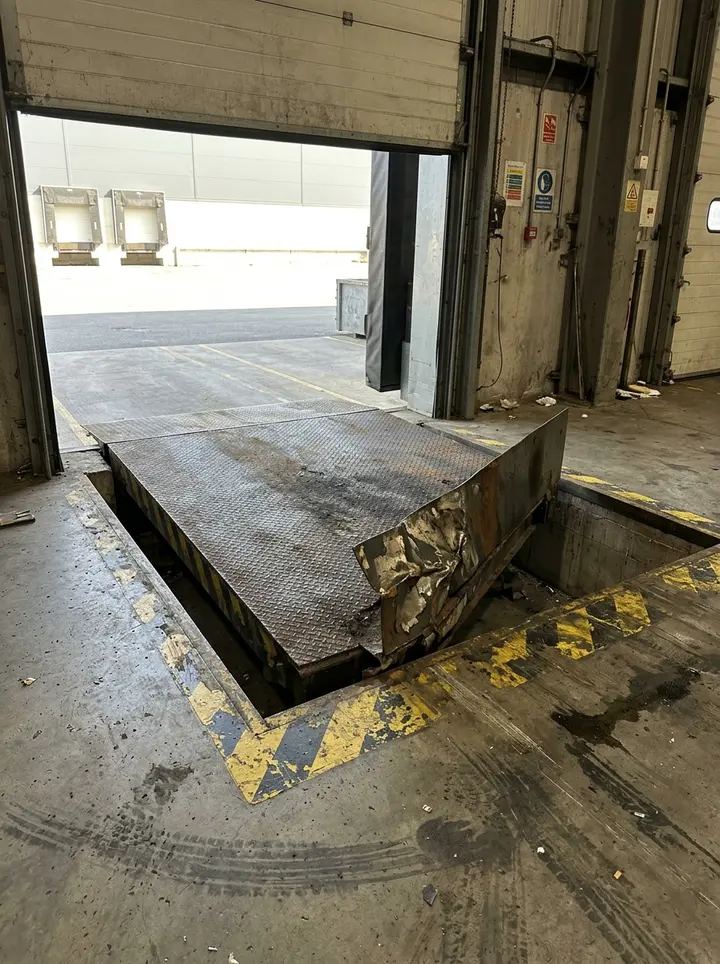
Add photos or a short video for each bay, so the engineer sees the defect before the visit.
A completed loading bay inspection
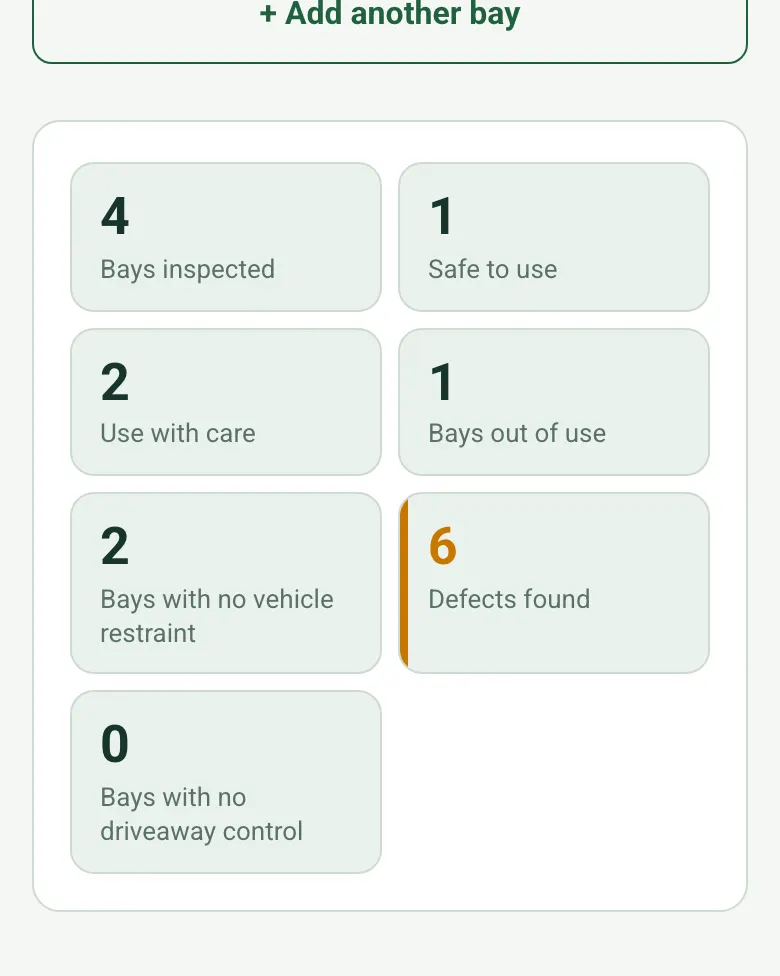
A fictional Doncaster distribution centre: four bays, the leveller service 193 days ago on a 6-month plan, a hydraulic leak and split bumper on bay 2, bay 3 out of use with a bent toe guard, and bay 4 with no restraint, run on key control.
This is the real form as your team would use it: questions appear as you answer, scores work themselves out and you can add photos and signatures. No sign-up needed. Or open a completed example to see every answer, photo and score filled in.
Every question in the dock leveller inspection template
A dock leveller and loading bay inspection: each bay's leveller, lip, hydraulics, toe guards, dock shelter and door, vehicle restraint or chocks, lights and signals, bumpers, markings, result and photos. 3 sections and 46 questions. Follow-up questions and guidance appear only when an answer calls for them, so the person on site never sees the ones that do not apply.
✎
Make it your own: every question is editable
This is a starting point, not a fixed form. Once it is in your SiteSurvey account you can reword any question, add or remove questions, sections and answer options, and add your own logo, so it fits the way your team works and the jobs you do.
Details you only enter once
Add this form to a project in SiteSurvey and it fills in what the project already knows, so nobody on site retypes it and every form on the job uses the same names. Anything filled in can still be changed.
Project: the project name
Client: the project's customer
Site: the site, when the form is opened for a space or a product
Site address: the site address, from the space or the project
1
Site
ProjectShort answer
Fills in from the project name
ClientShort answer
Fills in from the project's customer
Site*Short answer
Fills in from the site, when the form is opened for a space or a product
Site addressShort answer
Fills in from the site address, from the space or the project
Inspection date*Date
Inspector*Short answer
Last engineer service of the levellersDate
Service interval in your maintenance plan (months)Number
From the leveller maintainer's contract or the manufacturer. The form sets no interval of its own.
Days since the last engineer serviceWorked out by the form
Shown when “Last engineer service of the levellers” is answered and “Inspection date” is answered
CheckThe last engineer service was longer ago than the interval in your maintenance plan. Book the service and record it in the actions.
Shown only when the answers above make it relevant
GuidanceHSE HSG76: a vehicle moving before loading or unloading is finished (a driveaway) can cause serious accidents, so there must be a safe system of work, such as vehicle restraints, interlocks, key control or traffic lights. Dock levellers need toe guards, skirts to enclose trapping points, planned routine maintenance and a system to report and repair defects.
2
Bays
Bays
Repeat for each bay. Each one asks:
Bay number*Short answer
Bay position (GPS)Short answer
Optional. Useful on a large yard with several docks. Fixes close to the building can be rough. Tap Mark current location on site. It saves the coordinates, a grid reference and the accuracy.
Leveller deck and lipChoose one
OK
Defect
Hydraulics, no leaksChoose one
OK
Defect
Toe guards and side skirtsChoose one
OK
Defect
Dock door and shelterChoose one
OK
Defect
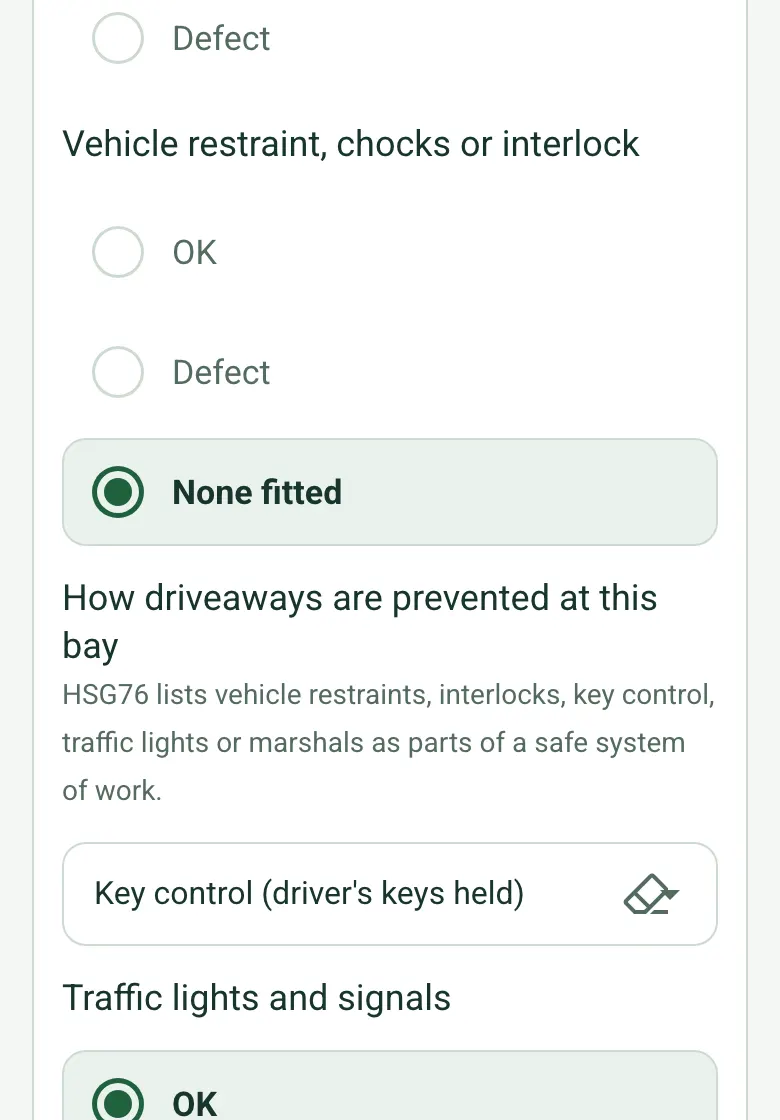
Vehicle restraint, chocks or interlockChoose one
OK
Defect
None fitted
How driveaways are prevented at this bayChoose one
HSG76 lists vehicle restraints, interlocks, key control, traffic lights or marshals as parts of a safe system of work.
Key control (driver's keys held)
Traffic lights with a procedure
Marshal or banksman
Bay not used for loading
Other
Nothing in place
Shown only when the answers above make it relevant
WarningNothing is in place to stop a driveaway at this bay. Take it out of use for loading until a safe system of work is in place.
Shown only when the answers above make it relevant
Traffic lights and signalsChoose one
OK
Defect
None fitted
Dock bumpersChoose one
OK
Defect
Markings and edge protectionChoose one
OK
Defect
Checks with a defectWorked out by the form
Result*Choose one
Safe to use
Use with care: repair booked
Out of use
DefectsShort answer
Shown only when the answers above make it relevant
CheckA check has a defect, but the bay is recorded as safe to use. Record the defect and the repair, or change the result.
Shown only when the answers above make it relevant
WarningThe toe guards or skirts are defective and the bay is still in use. HSG76 says feet can be trapped between the platform and the dock: take the bay out of use until it is repaired.
Shown only when the answers above make it relevant
PhotosPhotos
b_f_safeWorked out by the form
b_f_careWorked out by the form
b_f_noneWorked out by the form
Bays inspectedWorked out by the form
Safe to useWorked out by the form
Use with careWorked out by the form
Bays out of useWorked out by the form
Bays with no vehicle restraintWorked out by the form
Defects foundWorked out by the form
Bays with no driveaway controlWorked out by the form
Walk Cam: loading bay walk-roundWalk Cam video with voice-to-text
Optional. Film a guided walk-through on the SiteSurvey app.
3
Actions and sign-off
Are further actions needed?Yes or No
Further actions
Repeat for each action. Each one asks:
Shown when “Are further actions needed?” is Yes
What needs doing?*Notes
PriorityChoose one
Urgent
High
Medium
Low
Who will do it?Short answer
Due dateDate
StatusChoose one
Open
In progress
Completed
Next inspection dueDate
Set by the manufacturer and the site's own inspection regime.
Days until the next inspectionWorked out by the form
Shown when “Inspection date” is answered and “Next inspection due” is answered
CheckCheck the date. The next date is before the date of this visit.
Shown only when the answers above make it relevant
Inspector nameWorked out by the form
Position or companyShort answer
Inspector signatureSignature
CheckSigning records what was found on the day. It is not a guarantee of condition and does not replace any examination, test, design check or repair needed from a competent person.
See it filled in
A completed dock leveller inspection report, made by SiteSurvey from a fictional site visit: every answer, the photos, the guidance that applied and the sign-off, ready to send as a PDF.
HSG76 says a vehicle moving before loading or unloading is finished, a driveaway, can cause serious accidents. You must have a safe system of work, which may include vehicle restraints, interlocks, key control, traffic lights or marshals. The form counts bays with no restraint, asks how driveaways are prevented there and goes red if nothing is in place.
What are the main dock leveller hazards?
HSG76 lists trapping of feet between the platform and dock, overturning of handling equipment, trips and falls, and trapping under the leveller. It recommends toe guards, skirts and a device to stop the platform falling in an emergency.
Is there a legal duty to maintain levellers?
Dock levellers are work equipment. PUWER regulation 5 requires work equipment to be maintained in efficient working order and good repair, and regulation 6 requires inspection where it is exposed to deterioration, with the result recorded.
What if a bay is unsafe?
Take it out of use and cone it off. The form counts bays out of use.
Can I photograph each bay?
Yes. Each bay has its own photos, so defects are clear to the engineer.
Who uses this?
Warehouse and distribution managers, logistics operators and dock equipment engineers.