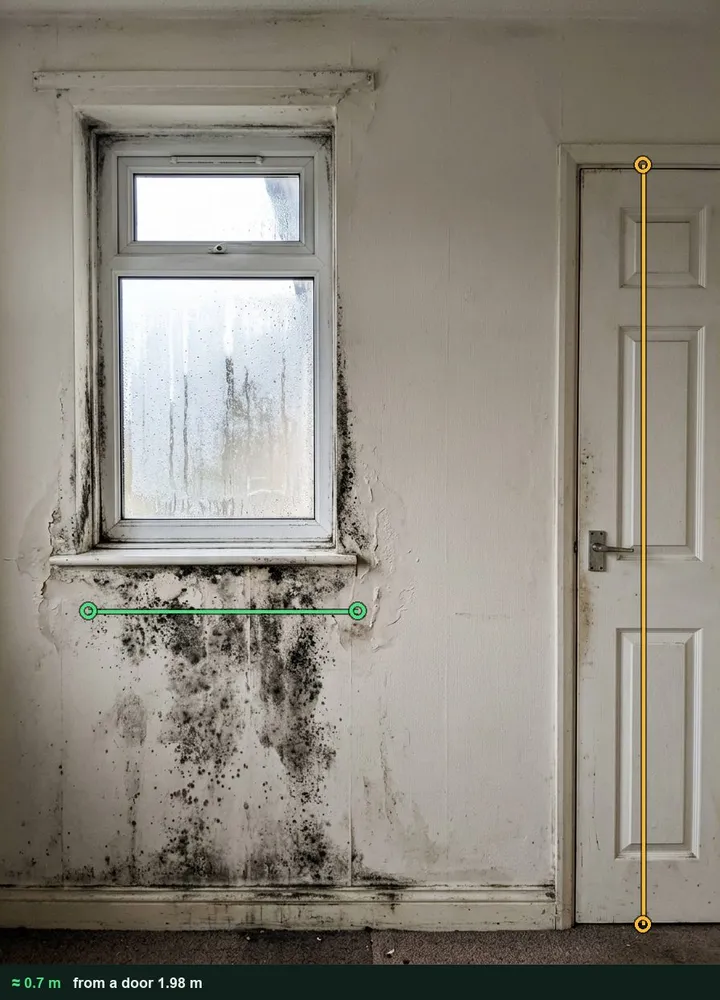
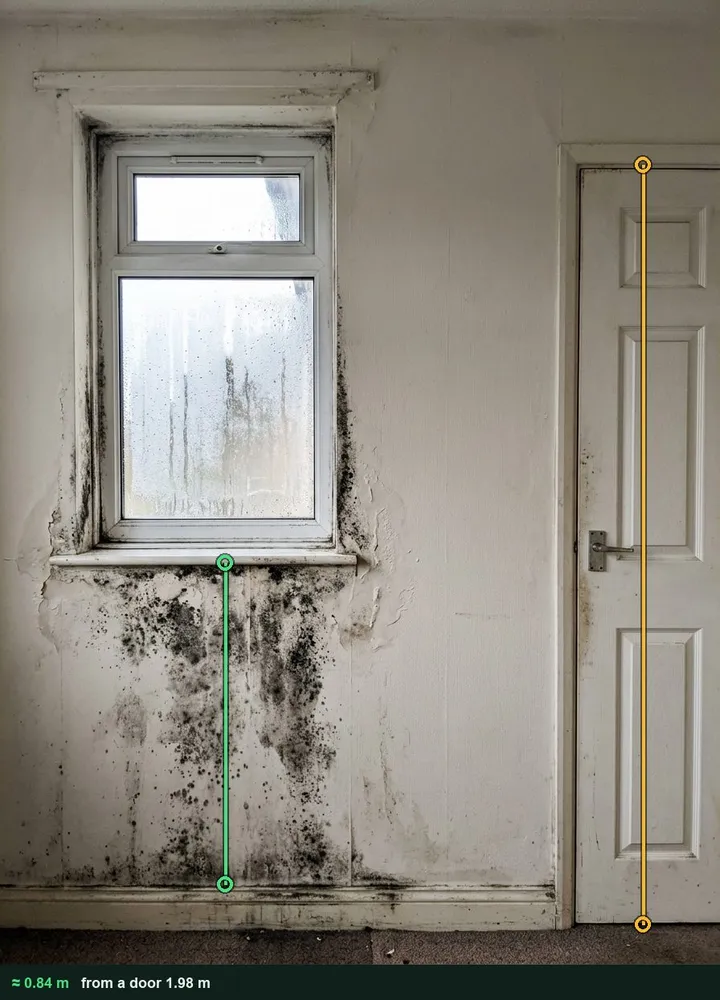
A record that follows a hazard report from the first call to closure under Awaab's Law. Log when the landlord became aware and pin the home with GPS, triage it, then record the investigation and each room affected with the measured size of the damp or mould, measured from a photo against the door or with a tape. The form counts the weekdays from becoming aware to the investigation, and from the investigation to the written summary, the safety work and the preventative work, and warns against the 10, 3 and 5 working day and 12 week timeframes; take off any bank holidays yourself. Try the form below, see every question or open a completed example.
✎Every question is editable. Add this form to your account, then change the wording, add or remove questions and options, and make it fit your own jobs.
Emergency hazards must be investigated and the relevant safety work completed within 24 hours. Significant hazards must be investigated within 10 working days of the landlord becoming aware, a written summary sent to the tenant within 3 working days of the investigation, and relevant safety work completed within 5 working days of it. For both, supplementary preventative work must begin, or steps be taken to begin it, within 5 working days, and it must begin within 12 weeks at the latest.
Follow a hazard from the first report to closure on one record. Log when the landlord became aware, record the investigation and each room with the damp or mould measured, then the written summary, the safety work and the preventative work. The form counts the weekdays between each step, with day one the working day after, and warns past the 10, 3 and 5 working day and 12 week timeframes. Bank holidays are not taken off, so check any that fall in the period.
Working days to the investigation
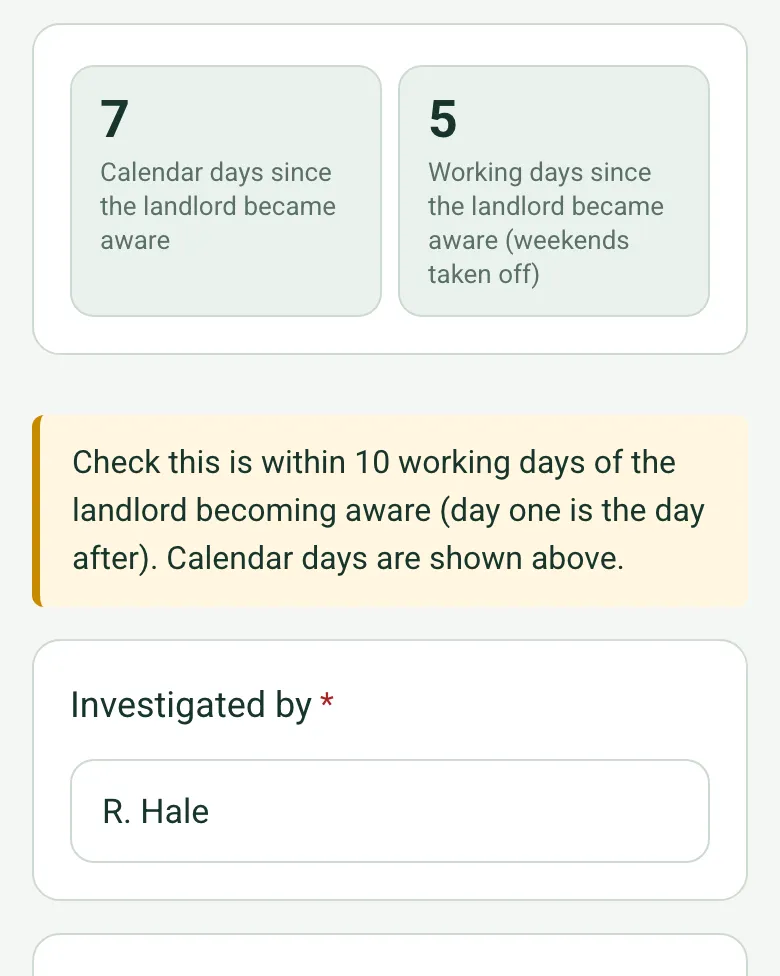
The form shows the calendar days and the weekdays from the day the landlord became aware to the investigation, and warns past 10 for a significant hazard. The same count runs to the written summary, the safety work and the start of the preventative work.
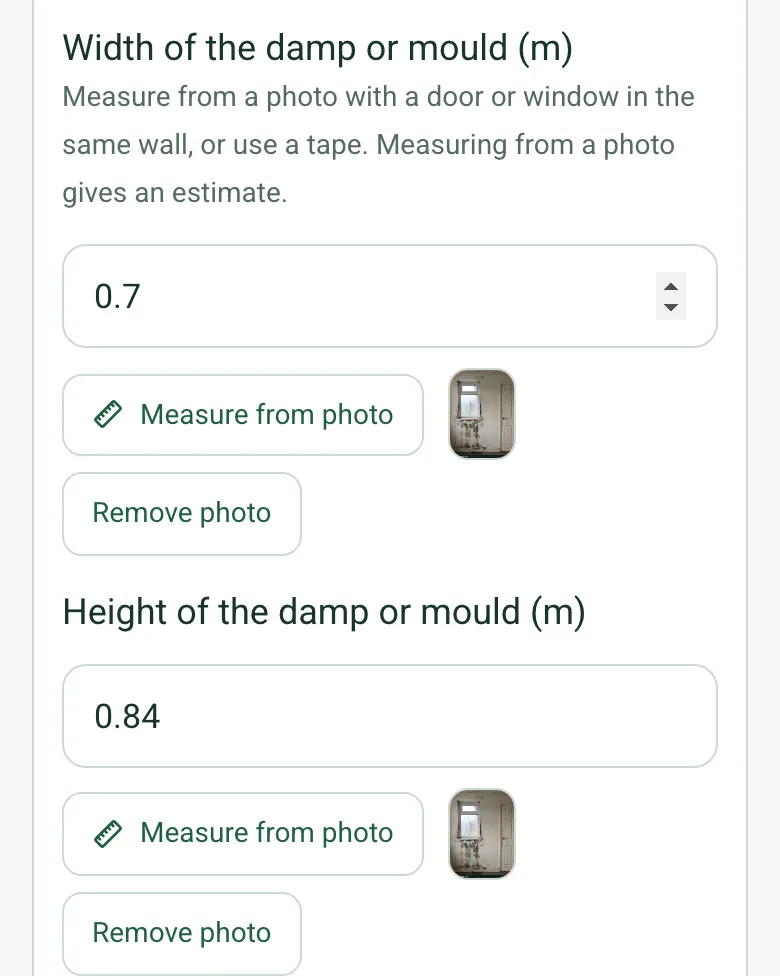
Photograph the wall square on with the door or window in it and measure the width and height of the mould, or use a tape. The form works out the area per room and the total, so the next visit can show whether it has spread. It works on web forms in any phone browser today, and the app version is on its way.
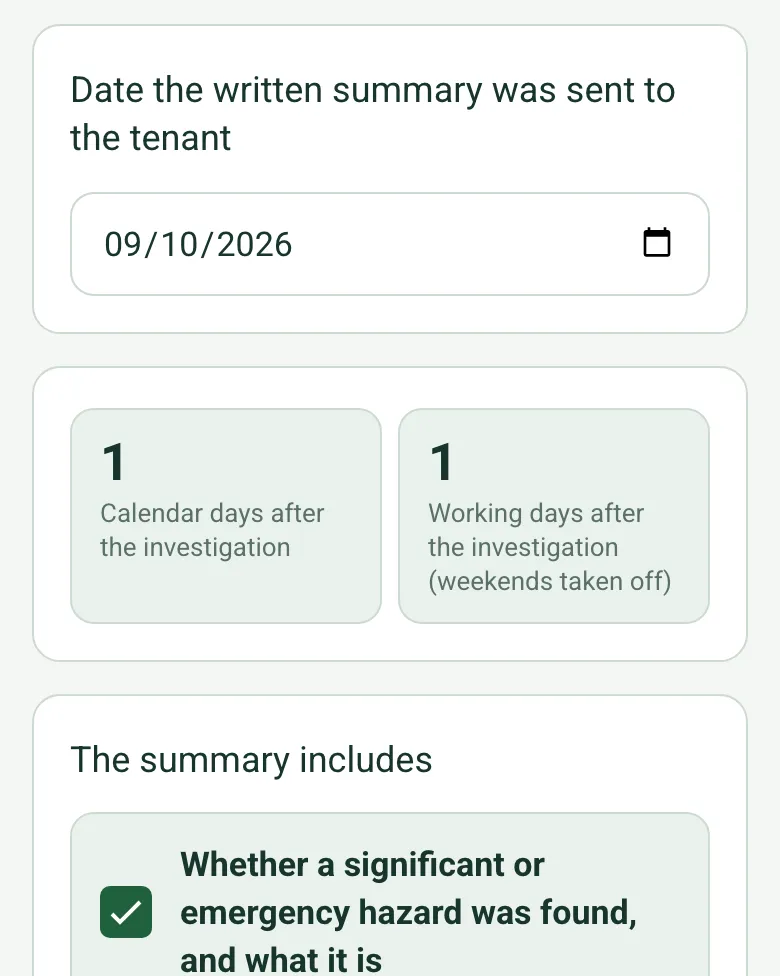
Enter the date the written summary went to the tenant and tick what it covered. The form shows the working days after the investigation and warns past 3.
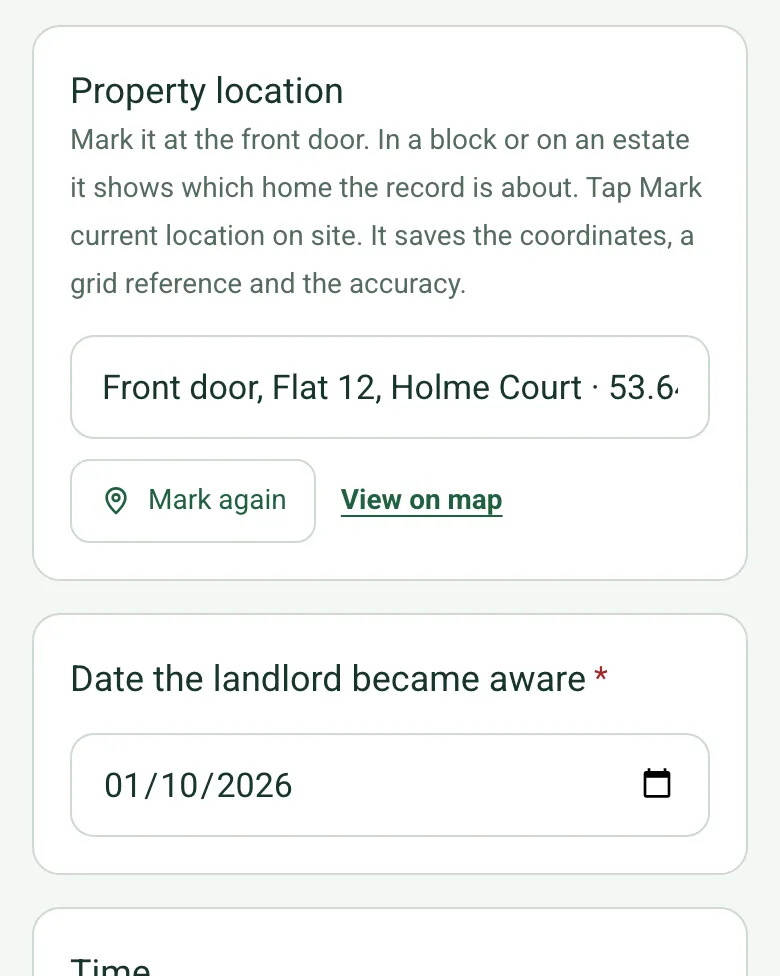
Mark current location at the front door. In a block or on an estate it shows which home the record is about. Mark current location works on web forms in any phone browser today, and the app version is on its way.
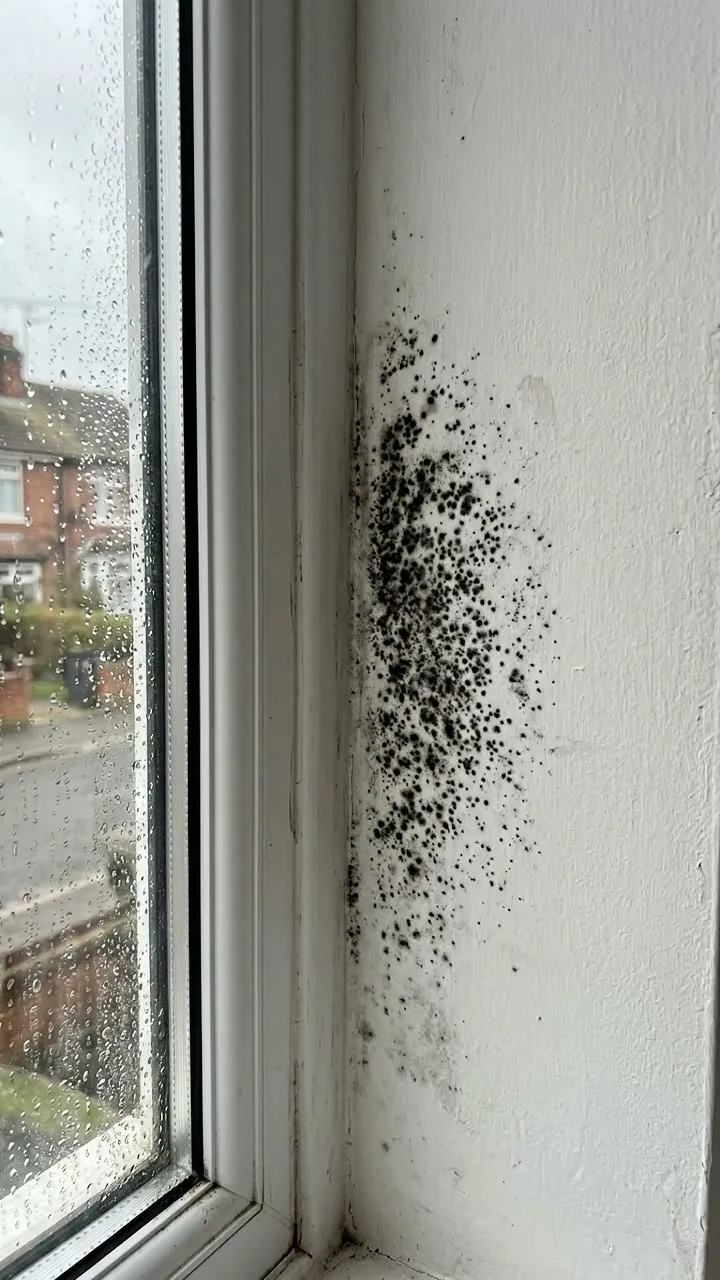
A fictional council flat with mould spreading below the bedroom window, measured at about 0.7 by 0.84 m, and mould on the bathroom ceiling: investigated 5 working days after the report, summary the next day, safety work 3 working days later and preventative work started on day 5. Open it as a filled-in form, or switch to a blank copy and try it yourself.
This is the real form as your team would use it: questions appear as you answer, scores work themselves out and you can add photos and signatures. No sign-up needed. Or open a completed example to see every answer, photo and score filled in.
Every question in the awaab's law repair record template
An Awaab's Law hazard record for social landlords: the report, triage, investigation, rooms affected with the measured damp or mould, the written summary, safety and preventative work and every update to the tenant, with working days counted against the fixed timeframes. 6 sections and 60 questions. Follow-up questions and guidance appear only when an answer calls for them, so the person on site never sees the ones that do not apply.
✎
Make it your own: every question is editable
This is a starting point, not a fixed form. Once it is in your SiteSurvey account you can reword any question, add or remove questions, sections and answer options, and add your own logo, so it fits the way your team works and the jobs you do.
Details you only enter once
Add this form to a project in SiteSurvey and it fills in what the project already knows, so nobody on site retypes it and every form on the job uses the same names. Anything filled in can still be changed.
Project: the project name
Client: the project's customer
Site: the site, when the form is opened for a space or a product
Site address: the site address, from the space or the project
1
Report
ProjectShort answer
Fills in from the project name
ClientShort answer
Fills in from the project's customer
Site*Short answer
Fills in from the site, when the form is opened for a space or a product
Site addressShort answer
Fills in from the site address, from the space or the project
Property locationShort answer
Mark it at the front door. In a block or on an estate it shows which home the record is about. Tap Mark current location on site. It saves the coordinates, a grid reference and the accuracy.
Date the landlord became aware*Date
TimeTime
Tenant*Short answer
Tenant phone or emailShort answer
Reported byChoose one
Tenant
Contractor or staff on a visit
Third party
Other
What was reported*Notes
Does anyone in the household have a health condition or vulnerability that raises the risk?Yes or No
What is it, and how does it affect the risk?Notes
UK GDPR places special restrictions on recording health information. Record only what the triage needs.
Shown when “Does anyone in the household have a health condition or vulnerability that raises the risk?” is Yes
GuidanceAwaab's Law timeframes. Emergency hazards: investigate and complete the relevant safety work within 24 hours. Significant hazards: investigate within 10 working days of becoming aware, send the tenant a written summary within 3 working days of the investigation concluding, and complete the relevant safety work within 5 working days of it. For both, begin (or take steps to begin) the supplementary preventative work within 5 working days of the investigation; if it cannot begin then, it must begin as soon as reasonably practicable and within 12 weeks. These requirements come from the Hazards in Social Housing (Prescribed Requirements) (England) Regulations 2025, made under section 10A of the Landlord and Tenant Act 1985, which implies them as a term of social housing tenancies in England. They apply to registered providers of social housing.
2
Triage
Initial view*Choose one
Potential emergency hazard
Potential significant hazard
Routine repair, not a significant hazard
HazardChoose one
Damp and mould growth
Excess cold
Excess heat
Falls (on the level, on stairs or between levels)
Structural collapse and falling elements
Fire and explosions
Electrical hazards
Domestic hygiene
Other
CheckPhase 1 (from 27 October 2025) covers all emergency hazards and significant damp and mould hazards. Phase 2, from 30 November 2026, extends the significant hazard requirements to excess cold, excess heat, falls, structural collapse, fire and explosions, electrical hazards and domestic hygiene. Until 30 November 2026 the Phase 2 duties are not yet in force for these hazards.
Shown only when the answers above make it relevant
WarningEmergency. The investigation and the safety work must both happen within 24 hours.
Shown when “Initial view” is “Potential emergency hazard”
Triaged byShort answer
3
Investigation
Investigation date*Date
TimeTime
Calendar days since the landlord became awareWorked out by the form
Shown when “Date the landlord became aware” is answered and “Investigation date” is answered
Working days since the landlord became aware (weekends taken off)Worked out by the form
Day one is the working day after the landlord became aware.
Shown only when the answers above make it relevant
CheckMore than 10 weekdays after the landlord became aware. A significant hazard must be investigated within 10 working days. Weekends are taken off; bank holidays, Christmas Day and Good Friday are not, so take off any in the period before deciding whether it was late.
Shown only when the answers above make it relevant
CheckThe investigation date is before the date the landlord became aware. Check the dates.
Shown only when the answers above make it relevant
WarningOver 24 hours for an emergency hazard.
Shown only when the answers above make it relevant
CheckThe investigation was the day after. Check the times are within 24 hours.
Shown only when the answers above make it relevant
CheckCheck this is within 10 working days of the landlord becoming aware (day one is the day after). Calendar days are shown above.
Shown when “Initial view” is “Potential significant hazard” and “Investigation date” is answered
Investigated by*Short answer
Investigator signatureSignature
Finding*Choose one
Emergency hazard
Significant hazard
No significant or emergency hazard
Rooms affected
Repeat for each room. Each one asks:
Shown only when the answers above make it relevant
Room*Short answer
What was found and the likely causeNotes
Moisture reading, as displayedNumber
On plaster most meters show a relative reading, not a moisture content. Compare it with a dry wall in the same home.
Reading on a dry wallNumber
Width of the damp or mould (m)Number
Measure from a photo with a door or window in the same wall, or use a tape. Measuring from a photo gives an estimate.
Height of the damp or mould (m)Number
Area affected (m²)Worked out by the form
Shown only when the answers above make it relevant
PhotosPhotos
Rooms affectedWorked out by the form
Shown only when the answers above make it relevant
Total area affected (m²)Worked out by the form
Shown only when the answers above make it relevant
4
Written summary
Date the written summary was sent to the tenantDate
Calendar days after the investigationWorked out by the form
Shown when “Investigation date” is answered and “Date the written summary was sent to the tenant” is answered
Working days after the investigation (weekends taken off)Worked out by the form
Shown only when the answers above make it relevant
CheckMore than 3 weekdays after the investigation. The written summary is due within 3 working days of the investigation concluding. Weekends are taken off; bank holidays, Christmas Day and Good Friday are not, so take off any in the period before deciding whether it was late.
Shown only when the answers above make it relevant
The summary includesTick all that apply
Whether a significant or emergency hazard was found, and what it is
The action to be taken, with target dates to begin and complete it
If no action, that none is required and why
How to contact the landlord
CheckThe written summary must say whether a significant or emergency hazard was found and what it is; the action to be taken with target dates to begin and complete it, or that no action is required and why; and how to contact the landlord. It is sent within 3 working days of the investigation concluding. It is not needed if all the work is finished within those 3 working days, but the tenant must be told the work is done.
Shown when “Date the written summary was sent to the tenant” is answered
5
Works
Relevant safety workNotes
Shown only when the answers above make it relevant
Safety work completed onDate
Shown only when the answers above make it relevant
Working days after the investigation (weekends taken off)Worked out by the form
Shown only when the answers above make it relevant
CheckMore than 5 weekdays after the investigation. Relevant safety work for a significant hazard must be completed within 5 working days of the investigation concluding, unless the household has been offered suitable alternative accommodation. Weekends are taken off; bank holidays, Christmas Day and Good Friday are not, so take off any in the period before deciding whether it was late.
Shown only when the answers above make it relevant
Could the safety work be done within the timeframe?Yes or No
Shown only when the answers above make it relevant
WarningIf safety work cannot be completed in time, the landlord must secure suitable alternative accommodation for the household, at its own expense.
Shown when “Could the safety work be done within the timeframe?” is No
Alternative accommodation arrangedShort answer
Shown when “Could the safety work be done within the timeframe?” is No
Supplementary preventative work to stop it coming backNotes
Shown only when the answers above make it relevant
Preventative work started onDate
Shown only when the answers above make it relevant
Working days after the investigation (weekends taken off)Worked out by the form
Shown only when the answers above make it relevant
Calendar days after the investigationWorked out by the form
Shown only when the answers above make it relevant
CheckMore than 5 weekdays after the investigation. Preventative work must begin within 5 working days unless that is not reasonably practicable, in which case steps to begin it must be taken in that time. Record those steps in the updates. Weekends are taken off; bank holidays, Christmas Day and Good Friday are not, so take off any in the period before deciding whether it was late.
Shown only when the answers above make it relevant
WarningMore than 12 weeks after the investigation. Where preventative work could not begin within 5 working days, it must still begin within 12 weeks, counted from the day after the investigation.
Shown only when the answers above make it relevant
Preventative work completed onDate
The regulations require it to be completed within a reasonable time.
Shown only when the answers above make it relevant
Safety and preventative work actions
Repeat for each action. Each one asks:
Shown only when the answers above make it relevant
Action needed*Notes
PriorityChoose one
Urgent
High
Medium
Low
OwnerShort answer
Due dateDate
StatusChoose one
Open
In progress
Completed
PhotosPhotos
6
Tenant updates
Updates to the tenant
Repeat for each update. Each one asks:
Date*Date
HowChoose one
Phone
Email
Letter
Text
In person
What was said, including how to keep safeNotes
Updates to the tenantWorked out by the form
Status*Choose one
Open
Safety work done, preventative work open
Closed
Closed byShort answer
Signature of the person closing the caseSignature
See it filled in
A completed awaab's law repair record report, made by SiteSurvey from a fictional site visit: every answer, the photos, the guidance that applied and the sign-off, ready to send as a PDF.
The Hazards in Social Housing (Prescribed Requirements) (England) Regulations 2025, known as Awaab's Law, came into force on 27 October 2025 for social landlords, covering all emergency hazards and significant damp and mould hazards. Phase 2, from 30 November 2026, adds significant hazards from excess cold and heat, falls, structural collapse, fire and explosions, electrical hazards and domestic hygiene. The form notes when a hazard is in phase 2.
What must the written summary include?
Whether the investigation found a significant or emergency hazard and what it is; the action to be taken with target dates to begin and complete it, or if none, that no action is required and why; and how to contact the landlord. The form has a checklist of these points.
What if the work cannot be done in time?
If relevant safety work cannot be completed within the timeframes, the landlord must secure suitable alternative accommodation for the household, at its own expense. The form asks and records what was arranged.
How does the form track the deadlines?
It records the date the landlord became aware, the investigation date, the date the written summary was sent and the dates the safety and preventative work were done. It counts the weekdays between them, with day one the working day after, and warns past 10, 3 and 5 working days and past 12 weeks. Bank holidays, Christmas Day and Good Friday are also not working days, so take off any in the period. For an emergency hazard it warns when the investigation was two or more days later.
Why keep a record of every update?
The guidance recommends landlords keep clear records of all engagement, investigations and communications with tenants. The updates section logs each contact with the date, method and what was said, including advice on keeping safe.
Is an HHSRS assessment needed?
No. Government guidance says an HHSRS assessment is not required under Awaab's Law, which looks at the circumstances of the actual tenant, while the HHSRS assumes a notional vulnerable occupant. The form asks about any vulnerability in the household that raises the risk.