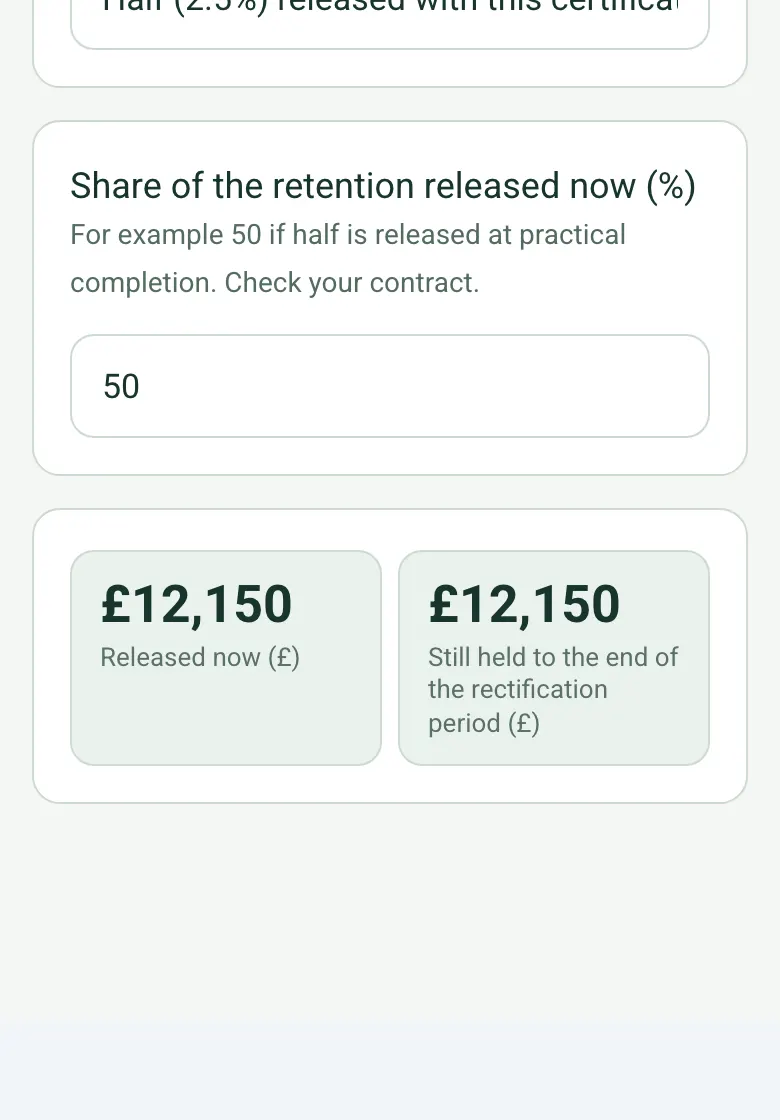
Retention worked out
Enter the contract sum, the retention percentage and the share released, and the form works out the retention held, released now and still held to the end of the rectification period.
How calculated fields work →Form library · Construction and handover
A practical completion certificate and handover record. Record the form of contract, the parties, the works, the date for completion and the date of practical completion; if it is late, the form shows the days late and, with the rate in the contract, the liquidated damages at that rate as arithmetic. Add any minor items still to finish with who will do them, dates, status and photos, and the form counts the open items and those with no owner or date. Record the rectification period and its end date, and the form checks they agree. Enter the contract sum, retention and the share released, and the form works out the retention held, released and still held. Then the handover documents and keys, and signatures from the contract administrator, contractor and client. Try the form below, see every question or open a completed example.
Ready to use from the form library, and every question is yours to edit. Try it for a small trial fee, cancel any time.
Try it on your phone
Try it on this phone
Fill in the practical completion certificate on your phone now
See how the practical completion certificate looks on your phone
Scan the code with your phone camera. It opens the real form, no sign-up needed.
Open the live example and fill it in, just as your team would on site. No sign-up needed.
See it on this phoneEvery question is editable. Add this form to your account, then change the wording, add or remove questions and options, and make it fit your own jobs.
Under JCT contracts, and many others, the certificate records the date when the contract administrator considers the works complete for all practical purposes. It starts the rectification (defects) period, ends the contractor's liability for delay damages and is usually when part of the retention is released. The exact effect depends on the contract, so check its terms.
Last updated . Facts checked by the SiteSurvey team on 21 October 2026 against JCT: Minor Works Building Contract with contractor's design 2016, guidance notes, RICS Construction Journal: why professionals should be wary of practical completion, RICS practice information: defects and rectifications and regulation 12 of the Construction (Design and Management) Regulations 2015.
Record the dates and the form shows the days late and, with the contract rate, liquidated damages at that rate as arithmetic. Add the minor items with owners, dates, status and photos, and the form counts the open ones. Enter the contract sum and retention, and it works out what is held, released and still held. The contract decides what is due.
Enter the contract sum, the retention percentage and the share released, and the form works out the retention held, released now and still held to the end of the rectification period.
How calculated fields work →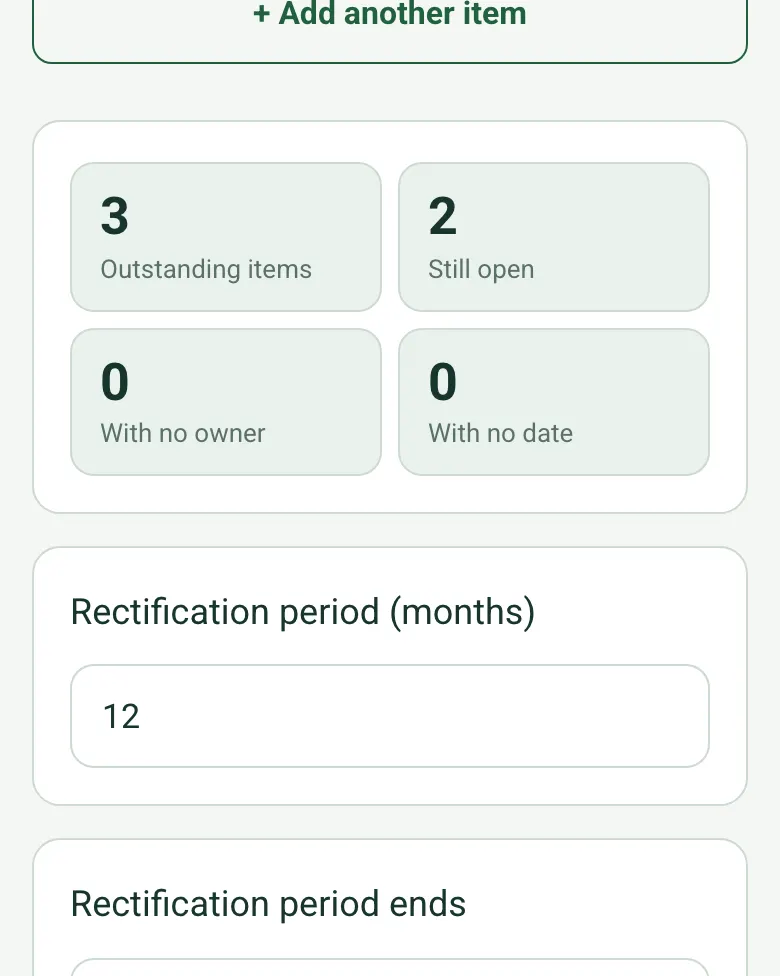
Each minor item has an owner, a date, a status and photos. The form counts the open items and those with no owner or no date, so the list can be closed.
How calculated fields work →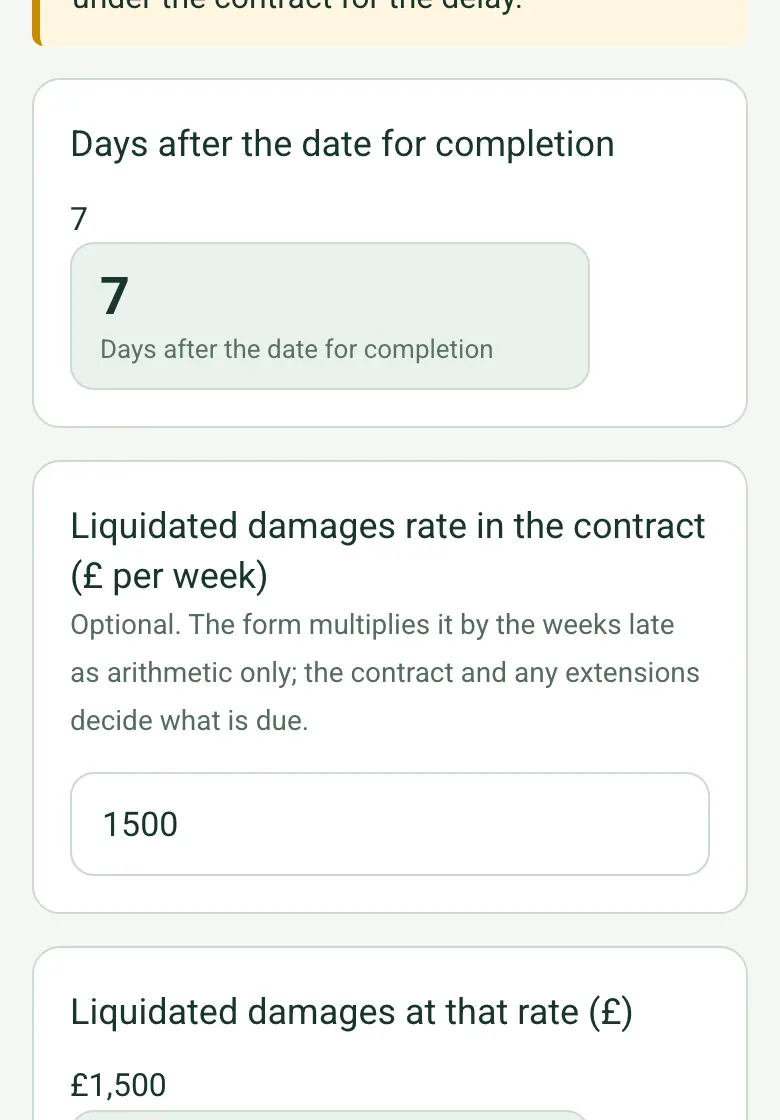
When practical completion is after the date for completion, the form shows the days late and multiplies the contract rate by the weeks as arithmetic only. Extensions and the contract decide what is due.
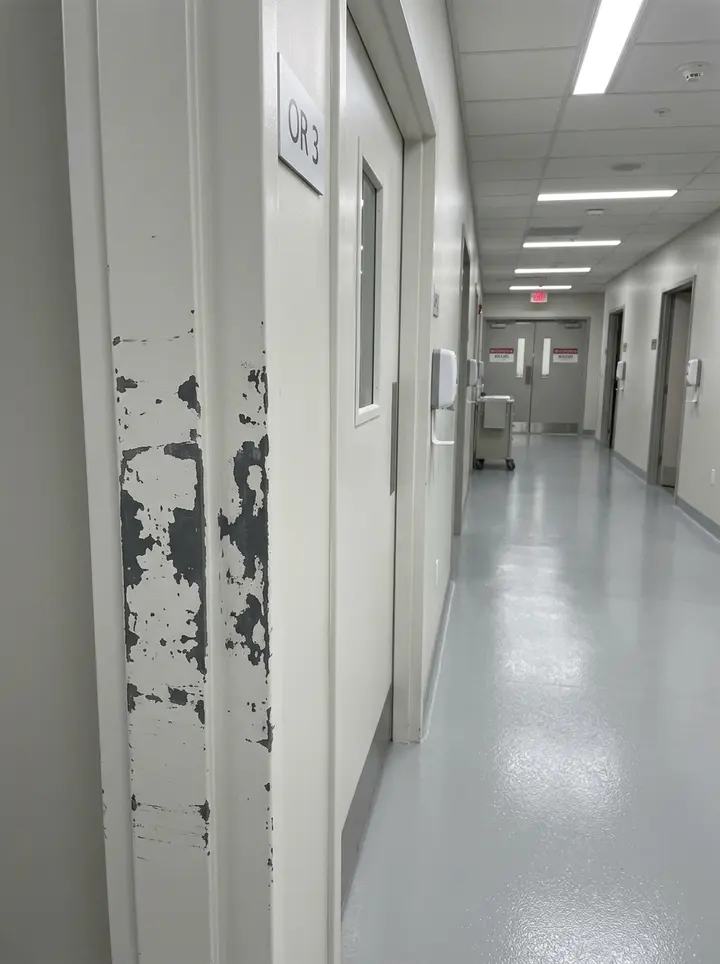
How calculated fields work →Film the finished rooms with Walk Cam on the SiteSurvey app, so the minor items are clear to everyone at handover.
A fictional surgery extension in Stroud: practical completion 7 days after the date for completion, three minor items with one finished, a 12-month rectification period, 5% retention on £486,000 with half released, and every handover document received.

Answer a few questions and watch it adapt. Your answers are not saved, and any photos you add are deleted within the hour.
This is the real form as your team would use it: questions appear as you answer, scores work themselves out and you can add photos and signatures. No sign-up needed. Or open a completed example to see every answer, photo and score filled in.
Want to see one filled in? See a completed practical completion certificate report (PDF), made by SiteSurvey from a fictional site visit.
A practical completion certificate: the contract, works and date of practical completion, outstanding minor items, the rectification period, retention, handover documents and signatures. 4 sections and 50 questions. Follow-up questions and guidance appear only when an answer calls for them, so the person on site never sees the ones that do not apply.
This is a starting point, not a fixed form. Once it is in your SiteSurvey account you can reword any question, add or remove questions, sections and answer options, and add your own logo, so it fits the way your team works and the jobs you do.
Add this form to a project in SiteSurvey and it fills in what the project already knows, so nobody on site retypes it and every form on the job uses the same names. Anything filled in can still be changed.
Optional. The form multiplies it by the weeks late as arithmetic only; the contract and any extensions decide what is due.
Optional. Use the figure the retention is calculated on under your contract.
For example 50 if half is released at practical completion. Check your contract.
A completed practical completion certificate report, made by SiteSurvey from a fictional site visit: every answer, the photos, the guidance that applied and the sign-off, ready to send as a PDF.
Under JCT contracts, the architect or contract administrator certifies the date of practical completion. The form records who certifies it and has signatures for the contractor and client too.
RICS notes that it is usual practice to issue a list of minor items at practical completion. Record each one with its location, who will finish it, a date and photos, so they are clear to everyone.
The period after practical completion during which the contractor must put right defects that appear. Its length is set in the contract: JCT's Minor Works guidance gives 3 months unless otherwise agreed, and RICS notes that 12 or 24 months is often agreed. The form records the length and the end date.
JCT's Minor Works guidance says 5 per cent is normally retained up to practical completion and the contract envisages that this is halved until the final certificate. RICS notes that the second half is returned once defects have been made good. The form records the percentage and the share released, and works out the amounts from the contract sum.
If the work is not finished by the date for completion, as extended, the employer can recover liquidated damages at the rate set in the contract. The form records the date for completion and warns when practical completion is later.
Typically the health and safety file, operation and maintenance manuals, as-built drawings, test and commissioning certificates, the building control completion certificate, warranties and keys. On projects with more than one contractor, CDM 2015 has the principal designer pass the health and safety file to the client at the end. The form warns if it is missing.
Related templates
Snag by snag record with room, element, photo and priority, checks with no snag, totals and re-inspection.
A customer handover pack record: completion and handover dates, certificates in the pack and to follow, manuals, warranties and keys, each system demonstrated, where the controls and shut-offs are, outstanding items, aftercare and the customer's signature.
A CDM health and safety file index with relevant residual risks, document revisions, maintenance information, outstanding items and client handover.
Add it from the form library in one click, change any question, and every completed form becomes a branded PDF report.
Start your trial →