Lightning protection inspection and testing record
An inspection and earth test record for a lightning protection system. Check the air terminations, down conductors, joints and test clamps, bonding, surge protection and records, then pin each test point on the map and record its resistance. The form compares each reading with the limit you enter and with the last test, counts the points above the limit and the visual defects, and shows the highest reading. Try the form below, see every question or open a completed example.
✎Every question is editable. Add this form to your account, then change the wording, add or remove questions and options, and make it fit your own jobs.
BS EN 62305-3 covers the inspection and maintenance of lightning protection systems, including air terminations, down conductors and earth terminations. GOV.UK guidance for schools says the standard recommends that all lightning protection systems are inspected and tested at least annually, with a qualified engineer checking that joints and bonds are not corroded and still have electrical continuity.
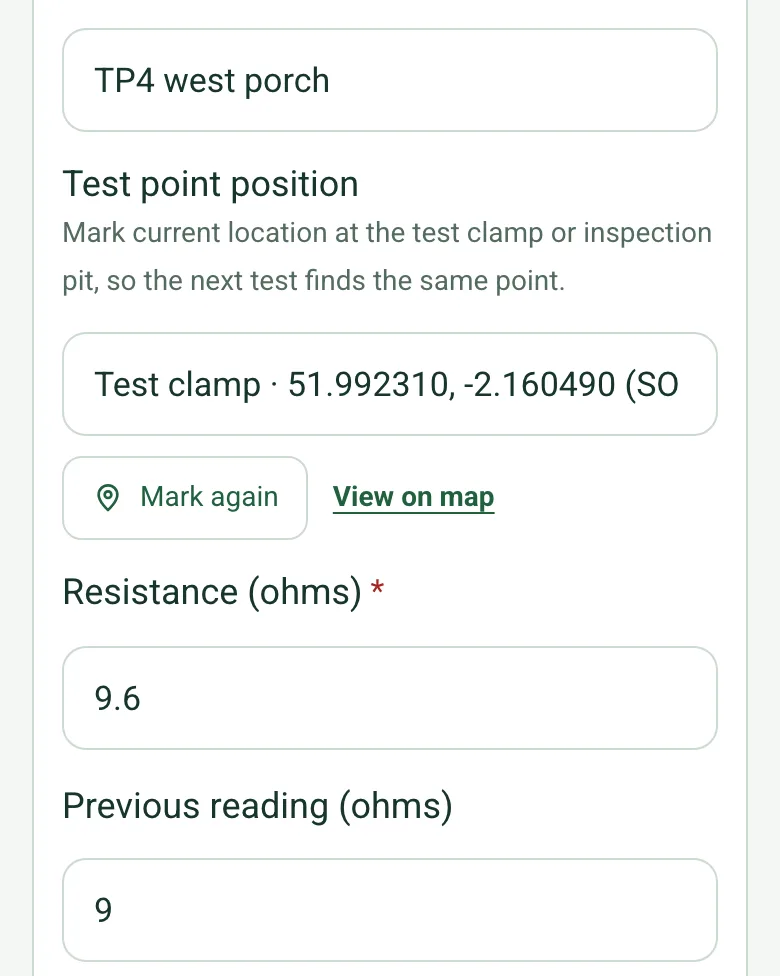
Walk round with the form at each test clamp. Pin the test point, enter the reading and the last one, and the form compares it with the limit you set for the system, shows the change since the last test and counts the points above the limit and the visual defects.
Pin each test point
Mark current location at each test clamp or inspection pit, so next year's test finds the same point and a reading can be compared like for like. Mark current location works on web forms in any phone browser today, and the app version is on its way.
Enter the limit from the system design or records (BS EN 62305-3 recommends below 10 ohms where possible). The form checks each point against it, works out the change since the last test and counts the points above the limit and higher than last time.
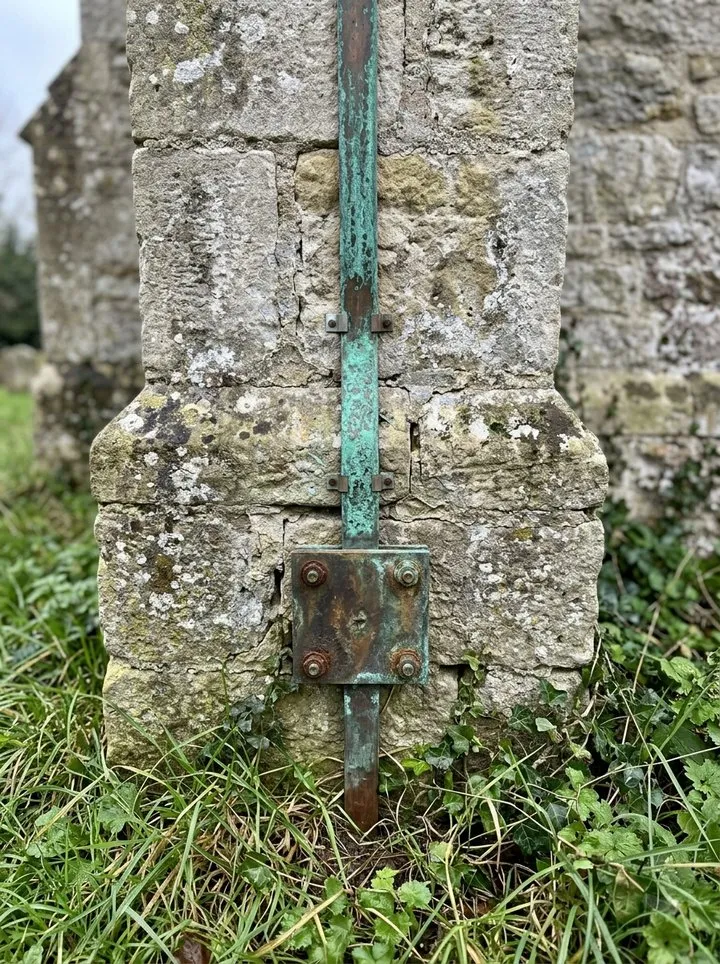
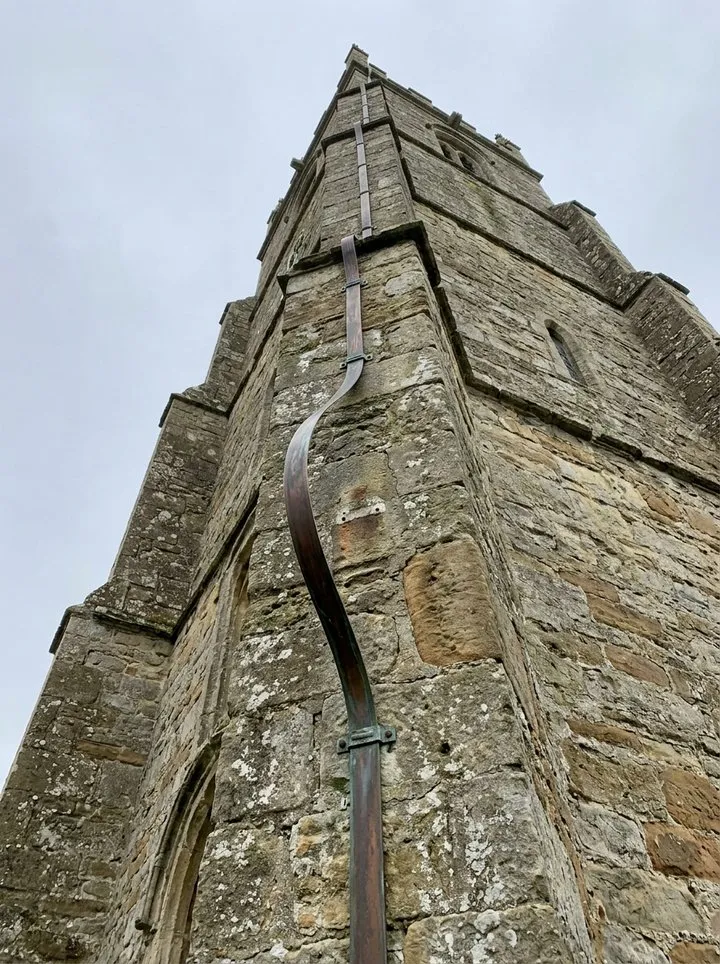
A fictional parish church: four test points pinned round the building, one at 14.5 ohms against a 10 ohm limit and up from 9.1 last year, and a down conductor on the tower pulled away from two fixings. Open it as a filled-in form, or switch to a blank copy and try it yourself.
This is the real form as your team would use it: questions appear as you answer, scores work themselves out and you can add photos and signatures. No sign-up needed. Or open a completed example to see every answer, photo and score filled in.
Every question in the lightning protection template
A lightning protection inspection and test record: system and protection level, air terminations, down conductors, bonds and joints, each earth electrode's resistance, surge protection, damage and repairs. 3 sections and 57 questions. Follow-up questions and guidance appear only when an answer calls for them, so the person on site never sees the ones that do not apply.
✎
Make it your own: every question is editable
This is a starting point, not a fixed form. Once it is in your SiteSurvey account you can reword any question, add or remove questions, sections and answer options, and add your own logo, so it fits the way your team works and the jobs you do.
Details you only enter once
Add this form to a project in SiteSurvey and it fills in what the project already knows, so nobody on site retypes it and every form on the job uses the same names. Anything filled in can still be changed.
Project: the project name
Client: the project's customer
Site: the site, when the form is opened for a space or a product
Site address: the site address, from the space or the project
1
System
ProjectShort answer
Fills in from the project name
ClientShort answer
Fills in from the project's customer
Site*Short answer
Fills in from the site, when the form is opened for a space or a product
Site addressShort answer
Fills in from the site address, from the space or the project
Test date*Date
Engineer*Short answer
Earth tester and calibration dateShort answer
Weather on siteAnswer
Lightning protection level (from the system records)Choose one
I
II
III
IV
Not known (older BS 6651 system)
Has the building had a lightning strike since the last inspection?Yes or No
CheckRecord when the strike happened and any damage seen, so the affected parts can be checked.
Shown when “Has the building had a lightning strike since the last inspection?” is Yes
When, and what damage was seenShort answer
Shown when “Has the building had a lightning strike since the last inspection?” is Yes
GuidanceBS EN 62305-3 covers the inspection and maintenance of lightning protection systems. GOV.UK guidance for schools says it recommends inspection and testing at least annually, with joints and bonds checked for corrosion and electrical continuity. BS 6651, the earlier standard, was withdrawn in 2008. BS EN 62305-3, Annex E (Table E.2), gives the maximum intervals by lightning protection level: levels I and II, visual inspection every year and complete inspection every 2 years; levels III and IV, visual inspection every 2 years and complete inspection every 4 years. Critical systems need a complete inspection every year. Inspect after any lightning strike.
Walk Cam: roof and elevationsWalk Cam video with voice-to-text
Optional. Film a guided walk-through on the SiteSurvey app.
2
Visual inspection
Air terminations and roof conductorsChoose one
OK
Defect
Not applicable
What is wrong?Short answer
Shown when “Air terminations and roof conductors” is “Defect”
Down conductors and fixingsChoose one
OK
Defect
Not applicable
What is wrong?Short answer
Shown when “Down conductors and fixings” is “Defect”
Joints, bonds and test clampsChoose one
OK
Defect
Not applicable
What is wrong?Short answer
Shown when “Joints, bonds and test clamps” is “Defect”
Bonding to roof plant and metalworkChoose one
OK
Defect
Not applicable
What is wrong?Short answer
Shown when “Bonding to roof plant and metalwork” is “Defect”
Surge protection devicesChoose one
OK
Defect
Not applicable
What is wrong?Short answer
Shown when “Surge protection devices” is “Defect”
Drawings and test records availableChoose one
OK
Defect
Not applicable
What is wrong?Short answer
Shown when “Drawings and test records available” is “Defect”
Visual inspection photosPhotos
Visual items with a defectWorked out by the form
3
Earth electrodes
Resistance limit for each test point (ohms)Number
From the system design, the records or the test specification. BS EN 62305-3 recommends a low earthing resistance, below 10 ohms where possible, measured at low frequency.
Earth electrodes
Repeat for each electrode. Each one asks:
Test point*Short answer
Test point positionShort answer
Mark current location at the test clamp or inspection pit, so the next test finds the same point.
Resistance (ohms)*Number
Previous reading (ohms)Number
Change since the last test (ohms)Worked out by the form
Shown when “Resistance (ohms)” is answered and “Previous reading (ohms)” is answered
Against the limitWorked out by the form
Shown only when the answers above make it relevant
ResultChoose one
Pass
Fail
NotesShort answer
Shown only when the answers above make it relevant
Photo of the test pointPhotos
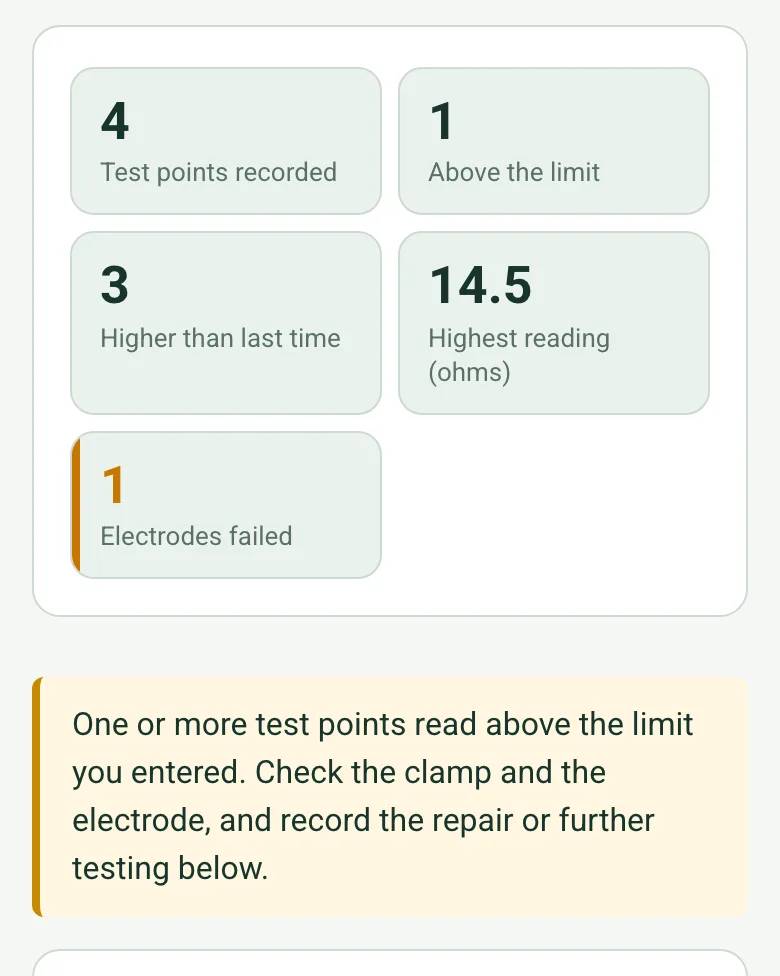
Test points recordedWorked out by the form
Above the limitWorked out by the form
Higher than last timeWorked out by the form
Highest reading (ohms)Worked out by the form
Electrodes failedWorked out by the form
CheckOne or more test points read above the limit you entered. Check the clamp and the electrode, and record the repair or further testing below.
Shown only when the answers above make it relevant
Overall result*Choose one
Satisfactory
Repairs needed
Summary of repairs neededNotes
Shown when “Overall result” is “Repairs needed”
Defects found
Repeat for each defect. Each one asks:
Component*Choose one
Air termination
Roof conductor
Down conductor
Joint, bond or test clamp
Earth electrode
Bonding to plant or metalwork
Surge protection device
Records
Other
DefectNotes
PriorityChoose one
Urgent
High
Medium
Low
Who will put it rightShort answer
Due byDate
PhotosPhotos
Defects recordedWorked out by the form
UrgentWorked out by the form
Next inspection dueDate
Days to the next inspectionWorked out by the form
Shown when “Test date” is answered and “Next inspection due” is answered
CheckThe next inspection date is before the test date. Check the date.
Shown only when the answers above make it relevant
CheckThe next inspection is further away than the BS EN 62305-3 maximum for a complete inspection at this protection level. Check the date.
Shown only when the answers above make it relevant
Site contact nameShort answer
Site contact signatureSignature
Completed by*Short answer
SignatureSignature
See it filled in
A completed lightning protection report, made by SiteSurvey from a fictional site visit: every answer, the photos, the guidance that applied and the sign-off, ready to send as a PDF.
The resistance of each earth electrode, measured at the test points, compared with the previous readings. A sharp rise is worth investigating.
What is checked visually?
Air terminations and roof conductors, down conductors and fixings, joints, bonds and test clamps, bonding to roof plant and metalwork, surge protection devices, and that drawings and records exist.
What about older systems?
Many older systems were designed to BS 6651, which BSI withdrew in August 2008. Record the protection level if the records give it, or note it as an older system.
Which standard is current?
BSI lists BS EN 62305-3:2011 as current, under review, and BS EN IEC 62305-3:2024 is now available. Agree with your engineer which edition the system is inspected against.
What if there has been a strike?
Record when it happened and any damage seen, so the engineer can check the affected parts.
Who uses this?
Lightning protection engineers, steeplejacks, facilities managers and church and heritage building managers.