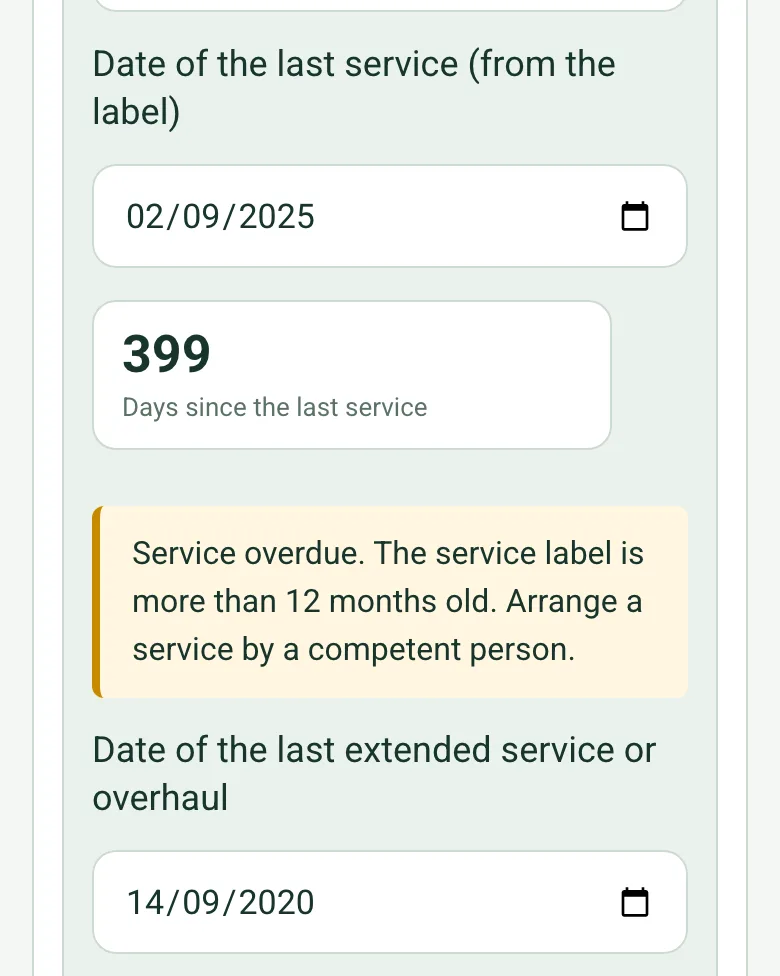
Days since the last service
Enter the date on the service label. The form works out the days since, and warns when the annual service, the 5-year extended service or the 10-year overhaul from BS 5306-3 is past due.
How calculated fields work →Form library · Fire safety
A monthly fire extinguisher inspection log for any premises. Add each floor or area, then each extinguisher in it with its number, type and size, scan the service label, and check it is in place, sealed, in the green, undamaged and readable. The form works out the days since the last service, warns when the annual service, the 5-year extended service or the 10-year CO2 overhaul is due, and counts the checks with a defect, the services overdue and the extinguishers passed and failed for each area and the building. Try the form below, see every question or open a completed example.
Ready to use from the form library, and every question is yours to edit. Try it for a small trial fee, cancel any time.
Try it on your phone
Try it on this phone
Fill in the fire extinguisher inspection on your phone now
See how the fire extinguisher inspection looks on your phone
Scan the code with your phone camera. It opens the real form, no sign-up needed.
Open the live example and fill it in, just as your team would on site. No sign-up needed.
See it on this phoneEvery question is editable. Add this form to your account, then change the wording, add or remove questions and options, and make it fit your own jobs.
A fire extinguisher inspection checklist should record each extinguisher's number, location and type, and check that it is in place and easy to reach, the identification sign is present, the safety pin and tamper seal are intact, the gauge is in the green, there is no damage, corrosion or leak, the hose and horn are sound and the instructions are readable. It should also record the date of the last service and any fault, action and replacement.
Last updated . Facts checked by the SiteSurvey team on 17 October 2026 against the Home Office guide Fire safety risk assessment: offices and shops, article 17 of the Regulatory Reform (Fire Safety) Order 2005 and BAFE: how often should I be servicing my fire extinguishers?.
Add each floor or area, then each extinguisher in it. The form works out the days since each service, counts the services overdue and the checks with a defect for each area and the whole building, and shows the share that passed.
Enter the date on the service label. The form works out the days since, and warns when the annual service, the 5-year extended service or the 10-year overhaul from BS 5306-3 is past due.
How calculated fields work →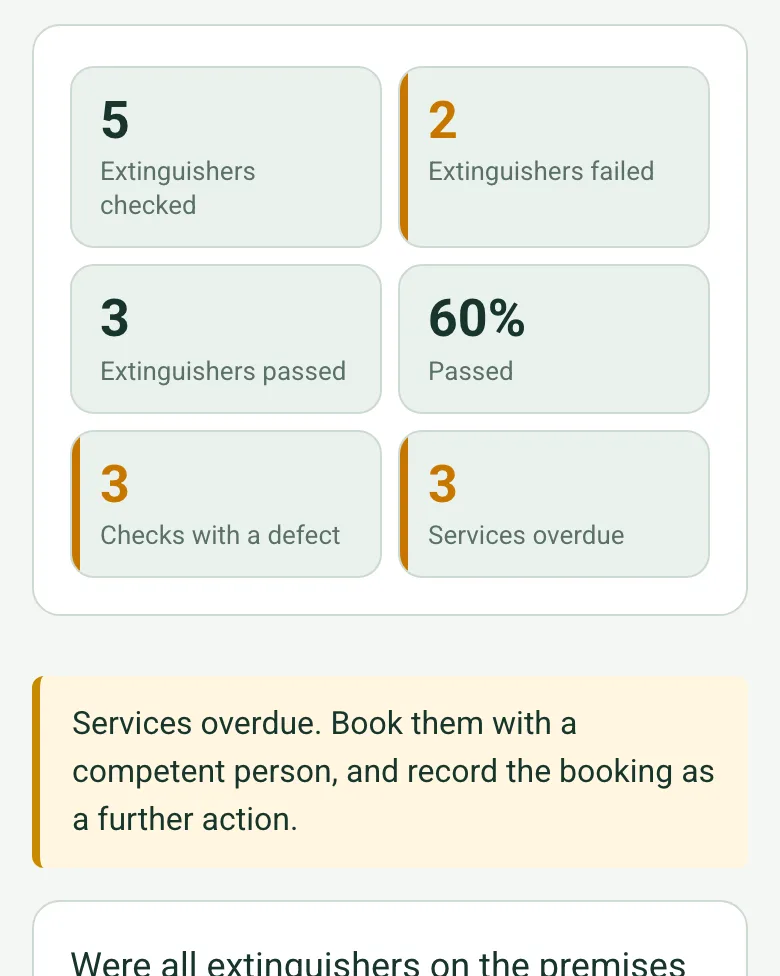
Each area shows its own count, defects and overdue services. The form adds them up for the building, works out the share that passed, and asks for the overdue services to be booked as a further action.
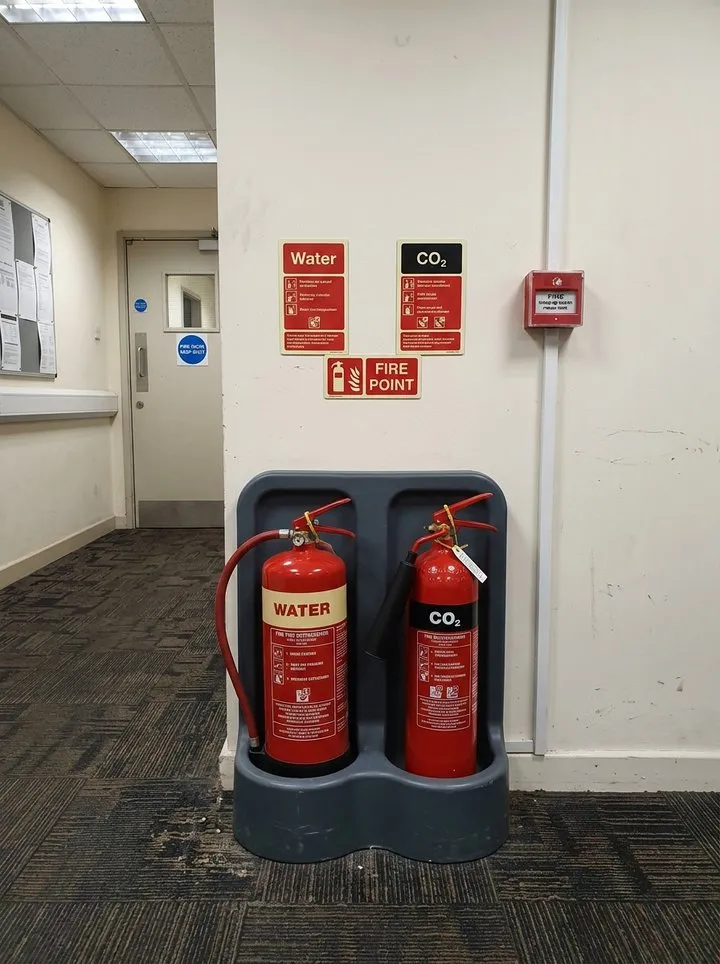
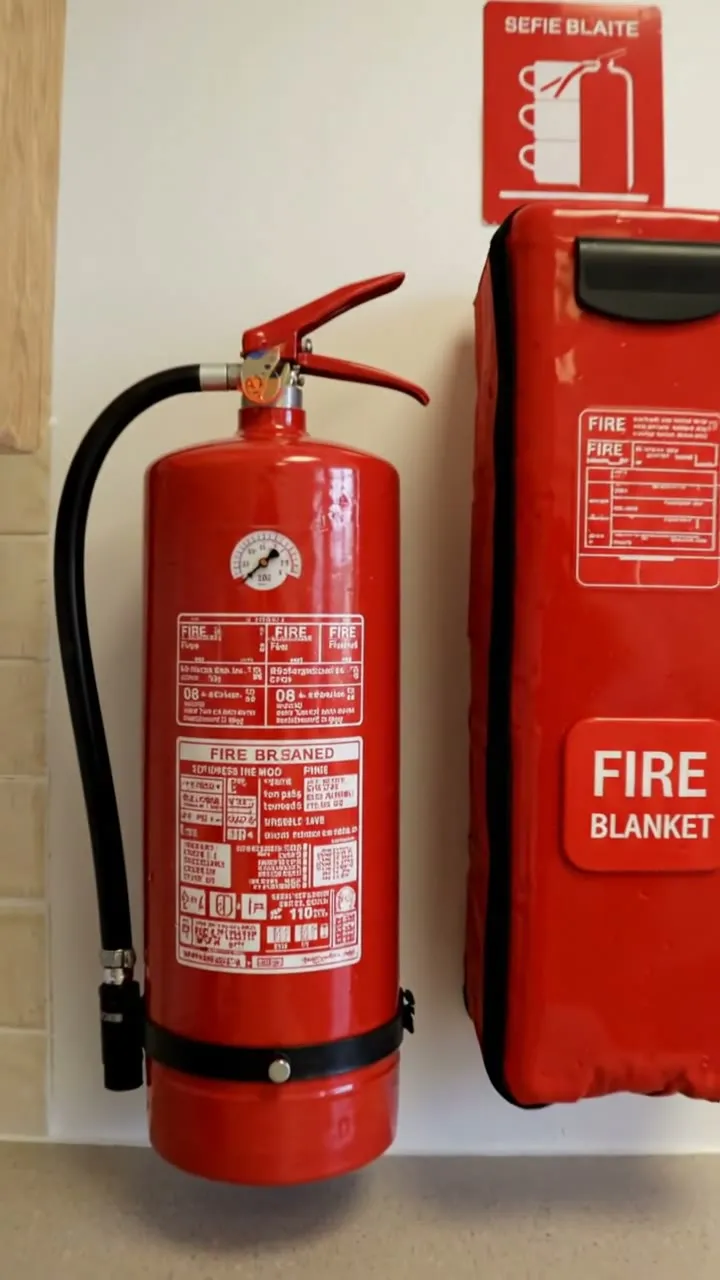
How calculated fields work →A fictional business centre over three areas: a foam extinguisher in goods-in blocked by pallets, with its seal missing and its services overdue, a stand pushed behind a door on the first floor, and a water extinguisher due its extended service. Open it as a filled-in form, or switch to a blank copy and try it yourself.
Answer a few questions and watch it adapt. Your answers are not saved, and any photos you add are deleted within the hour.
This is the real form as your team would use it: questions appear as you answer, scores work themselves out and you can add photos and signatures. No sign-up needed. Or open a completed example to see every answer, photo and score filled in.
Want to see one filled in? See a completed fire extinguisher inspection report (PDF), made by SiteSurvey from a fictional site visit.
A fire extinguisher inspection record: each extinguisher with its ID, location, type and service dates, the monthly checks, overdue service and extended service warnings, and pass or fail. 3 sections and 64 questions. Follow-up questions and guidance appear only when an answer calls for them, so the person on site never sees the ones that do not apply.
This is a starting point, not a fixed form. Once it is in your SiteSurvey account you can reword any question, add or remove questions, sections and answer options, and add your own logo, so it fits the way your team works and the jobs you do.
Add this form to a project in SiteSurvey and it fills in what the project already knows, so nobody on site retypes it and every form on the job uses the same names. Anything filled in can still be changed.
Optional. Scan the label or tag to capture its numbers.
Counts an annual service more than 12 months ago, and an extended service or overhaul past its interval.
BS 5306-3: a basic service by a competent person every 12 months.
A completed fire extinguisher inspection report, made by SiteSurvey from a fictional site visit: every answer, the photos, the guidance that applied and the sign-off, ready to send as a PDF.
Home Office guidance is to carry out brief checks to make sure extinguishers remain serviceable, and in normal conditions a monthly check should be enough. Maintenance by a competent person should be carried out annually. BAFE quotes BS 5306-3 as saying visual inspections should be done at least once a month. The form is built for the monthly check, with options for the annual service and extended service visits.
BS 5306-3 sets a basic service every year for every type. Water-based and powder extinguishers also need an extended service every 5 years, or every 10 years for primary sealed powder. Carbon dioxide extinguishers need an overhaul every 10 years. The form works out the days since each service and shows a warning when one is due.
In England and Wales, article 17 of the Regulatory Reform (Fire Safety) Order 2005 requires the responsible person to make sure fire-fighting equipment is subject to a suitable system of maintenance and kept in efficient working order and good repair. Monthly check records and annual service records are a practical way to show this.
The form treats it as out of service: when you answer that it has been used, it prompts you to replace it or have it recharged by a competent person and to note it in the fire safety log book. It then records the fault, what was done and any spare left in its place.
Yes. Each extinguisher is its own entry with its own checks, photos and result, and the form counts how many passed and failed. At the end it asks whether all extinguishers were checked, which were missed and when they will be done, and whether the check was entered in the log book.
The fire safety checklist covers a whole routine visit: extinguishers, emergency lighting, the weekly alarm test, escape routes and drills. This form goes deeper on extinguishers alone, with service dates, extended service and overhaul warnings, and a label scan for each one.
Who each hazard harms, what the law expects and the control measures to look for, in our hazard library.
Related templates
Routine fire safety checks: extinguishers, emergency lighting tests, the weekly alarm test, escape routes, signs and fire drills, with actions.
Fire risk assessment following the five steps in GOV.UK guidance: hazards, people at risk, fire precautions, emergency plan and training, findings with actions and review.
Door by door checks (gaps, seals, closers, signage, glazing), 12 month flat entrance door record and remedial work list.
A hot works permit for welding, cutting, grinding and torch-on roofing: precautions before the work, extinguishers and fire watcher, issue and acceptance signatures, the fire watch after the work with timed checks, and hand-back and cancellation.
Add it from the form library in one click, change any question, and every completed form becomes a branded PDF report.
Start your trial →