Form library · Health and safety

DSEAR risk assessment template

For competent people recording a DSEAR assessment. Record each substance or release scenario with the quantity, the flash point against the temperature in use, the ignition sources and the controls, and rank the remaining risk. Pin outside stores and cylinder cages by GPS. It records the assessment; it does not classify hazardous zones or make a workplace compliant. Try the form below, see every question or open a completed example.

Ready to use from the form library, and every question is yours to edit. Try it for a small trial fee, cancel any time.

Try it on your phone

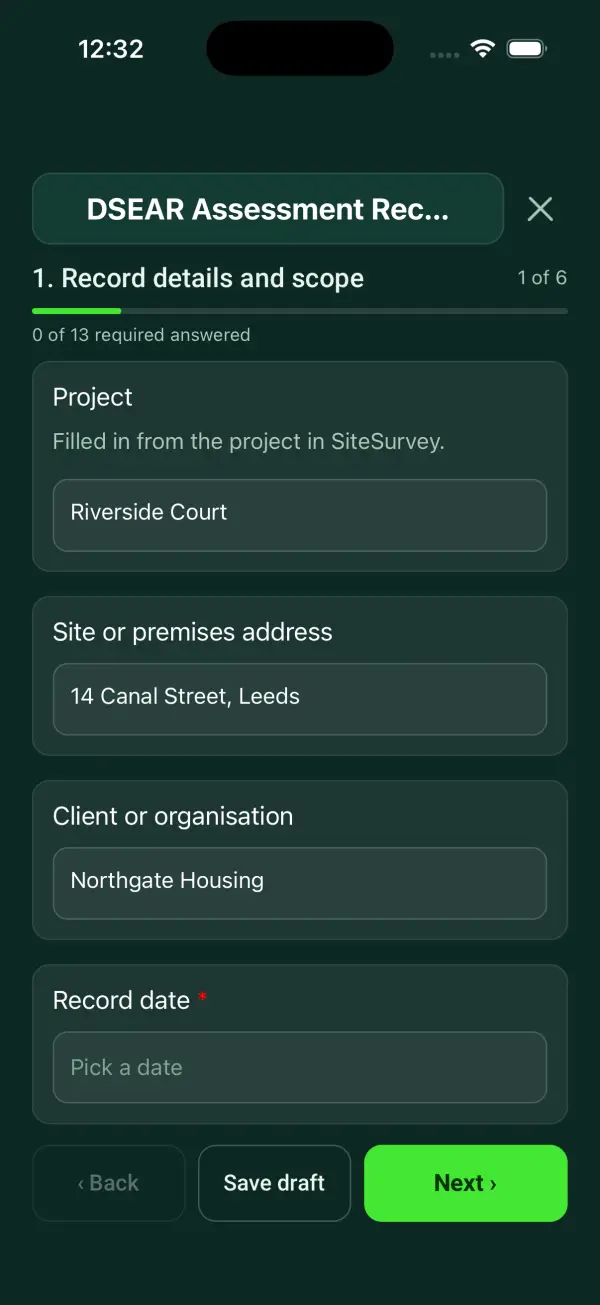
Try it on this phone

Fill in the DSEAR assessment record on your phone now

See how the DSEAR assessment record looks on your phone

Scan the code with your phone camera. It opens the real form, no sign-up needed.

Open the live example and fill it in, just as your team would on site. No sign-up needed.

See it on this phone

Every question is editable. Add this form to your account, then change the wording, add or remove questions and options, and make it fit your own jobs.

Or start your trial with this form ready →

One email, and we won't add you to a mailing list.

What risks does DSEAR address?

DSEAR requires assessment of risks from dangerous substances, including fire and explosion risks; HSE also describes gases under pressure and substances corrosive to metals within its scope. Regulation 5 requires a suitable and sufficient assessment and review in the specified circumstances. Employers with five or more employees must record the significant findings and specified information.

Last updated . Facts checked by the SiteSurvey team on 6 October 2026 against HSE DSEAR risk assessment and duties and DSEAR 2002 regulation 5 on risk assessment.

Built for recording a DSEAR assessment

Record each dangerous substance or release scenario where it is stored and used: the quantity, the flash point against the temperature in use, the ignition sources and the controls, then rank the risk that remains. Outside stores and cylinder cages are pinned by GPS. The form records a competent person's assessment; it does not classify hazardous zones or make a workplace compliant.

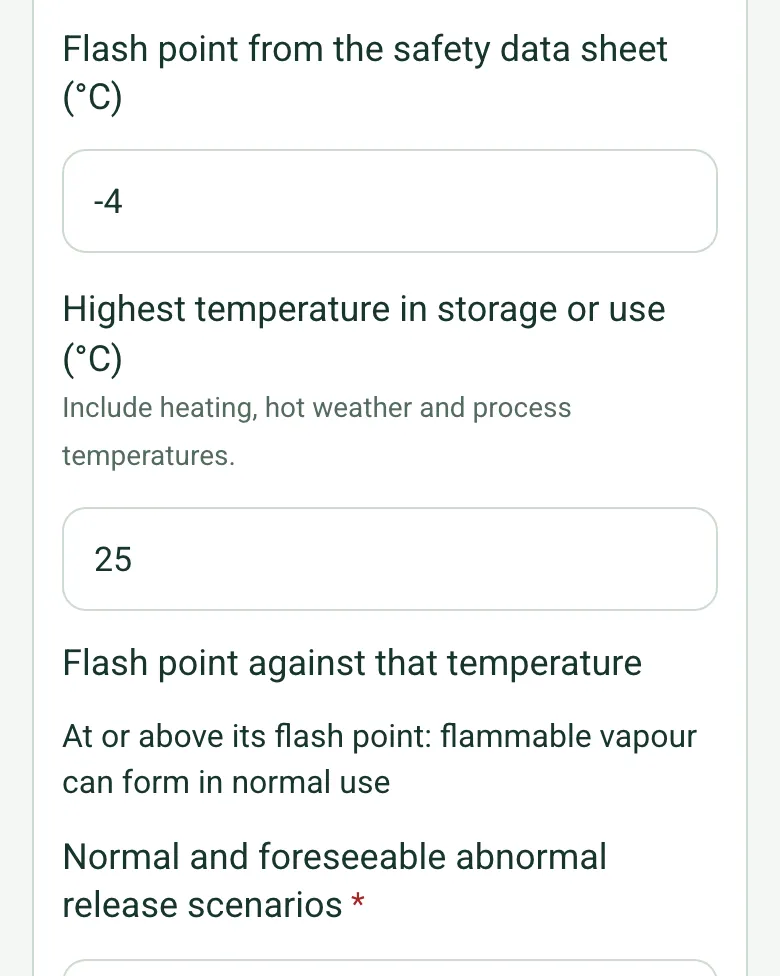
Flash point from the safety data sheet -4 °C, highest temperature in storage or use 25 °C, worked out as at or above its flash point: flammable vapour can form in normal use

Flash point against the temperature in use

For a flammable liquid, enter the flash point from the safety data sheet and the highest temperature it meets, including heating and hot weather. The form says whether flammable vapour can form in normal use, and reminds you that spraying can ignite below the flash point.

How calculated fields work →
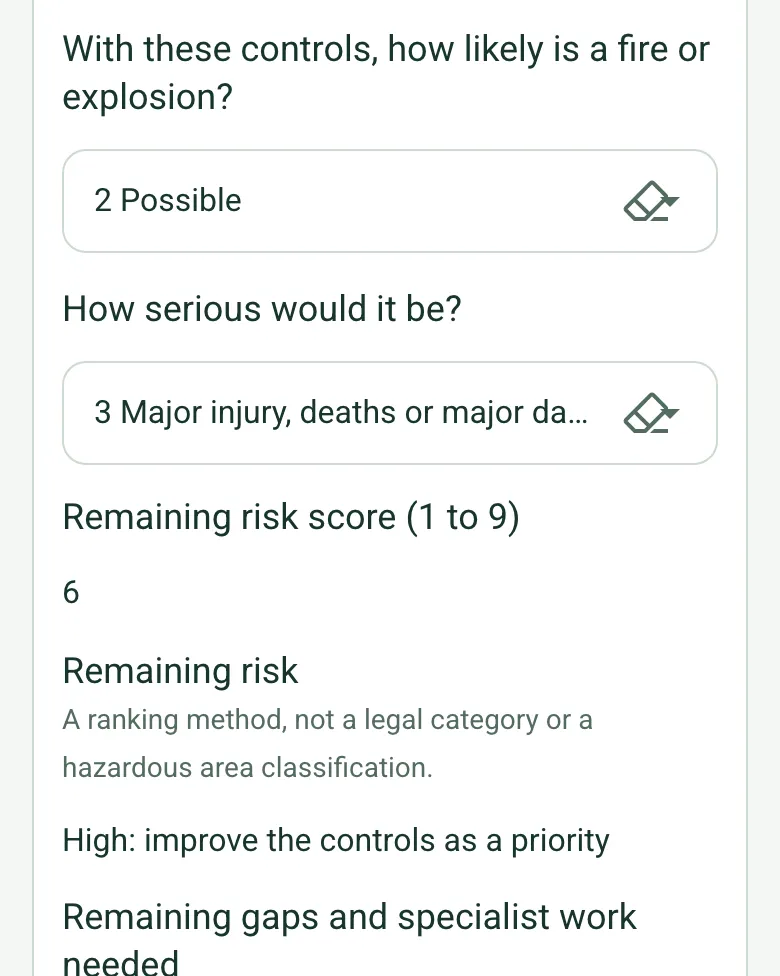
Likelihood 2 Possible and severity 3 Major injury giving a remaining risk score of 6, High: improve the controls as a priority

Rank the risk that remains

With the controls in place, pick how likely a fire or explosion is and how serious it would be. The form gives a score from 1 to 9 and a band, as a way of ranking, not a legal category or a hazardous area classification.

How calculated fields work →
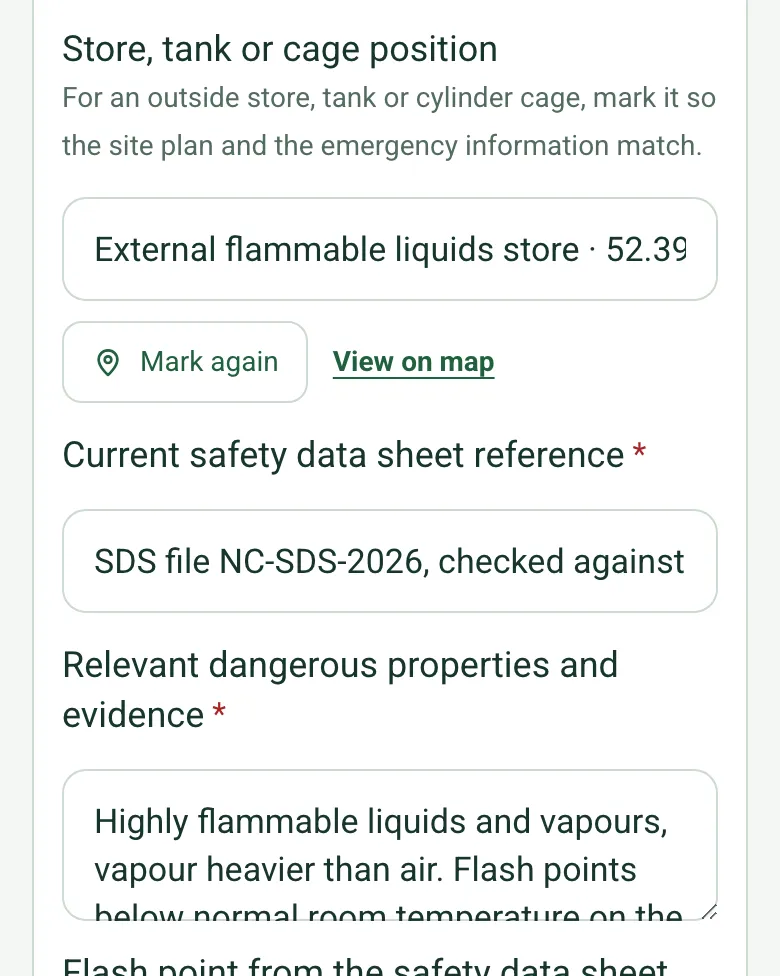
Store, tank or cage position filled in as External flammable liquids store with GPS coordinates, Mark again and View on map

Pin outside stores and cages

Mark the position of an outside flammable store, tank or cylinder cage, so the site plan and the emergency information match what is on the ground. Mark current location works on web forms in any phone browser today, and the app version is on its way.

How GPS location works →
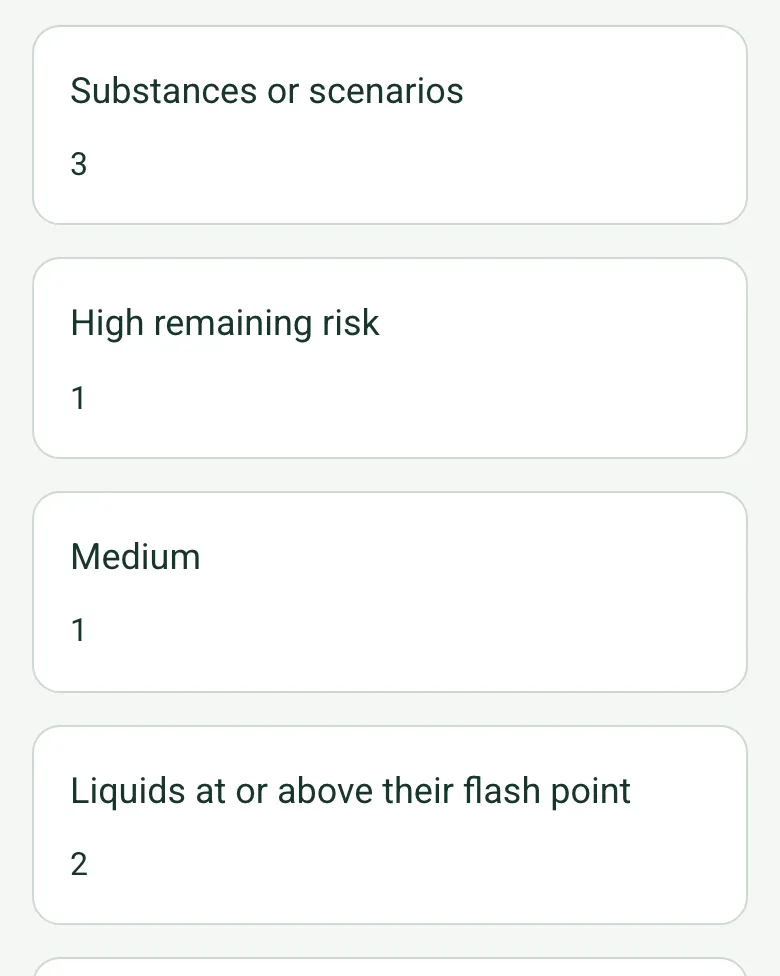
Counts worked out as 3 substances or scenarios, 1 high remaining risk, 1 medium and 2 liquids at or above their flash point

High risks and gaps counted

The form counts the substances, the high and medium remaining risks, the liquids handled above their flash point and the scenarios with gaps, and an amber note asks for actions and specialist input where they are needed.

How calculated fields work →

A completed DSEAR assessment

A fictional vehicle body repair workshop: solvent paints and thinners in the mixing room and outside store, waste solvent, and propane cylinders in a yard cage, with the remaining risk ranked and the gaps actioned. Open it as a filled-in form, or switch to a blank copy and try it yourself.

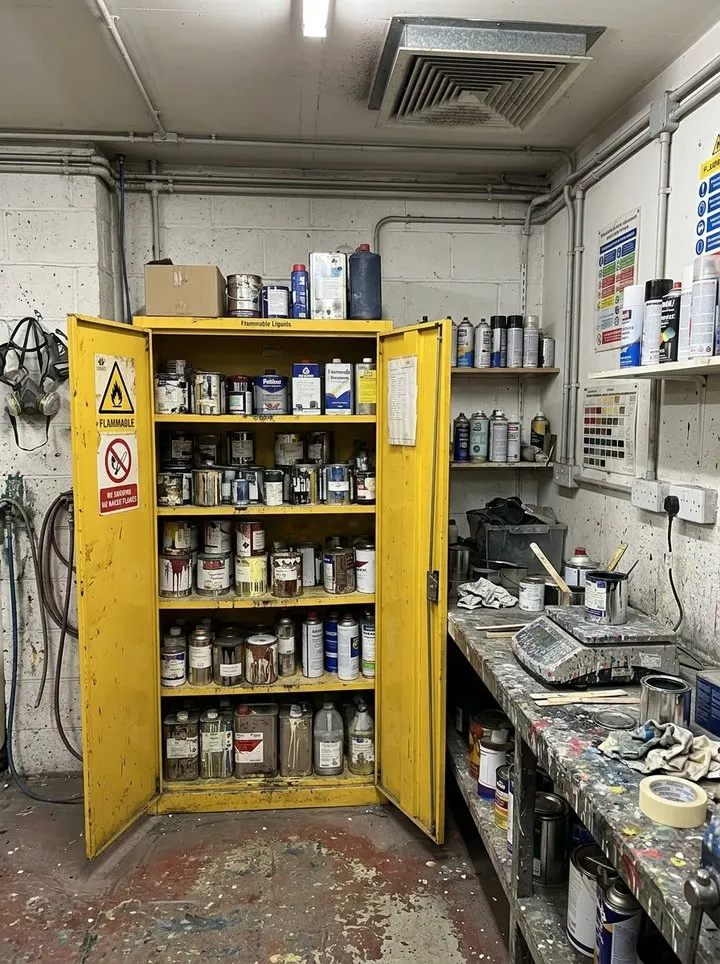
A yellow flammable liquids cabinet with its doors open, full of paint tins and thinners, in a paint mixing room with a mixing scale on the bench
Mixing room · solvent paints and thinners · High, light fitting to check
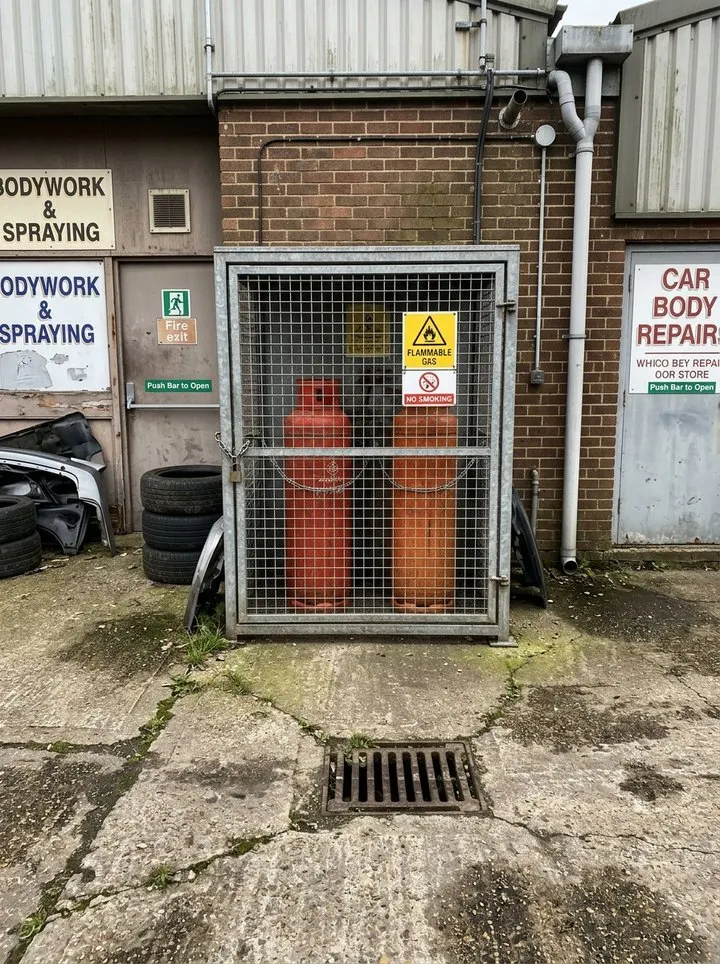
A locked mesh cage holding two propane cylinders chained upright outside a workshop, with a drain gully in the yard in front of it
Propane cage · drain gully 3 m away · Medium
Across the yard to the propane cage, past the drain gully

Try the DSEAR assessment record form live

Answer a few questions and watch it adapt. Your answers are not saved, and any photos you add are deleted within the hour.

Live form: DSEAR Assessment RecordOpen full screen ↗
Fill it in right here

This is the real form as your team would use it: questions appear as you answer, scores work themselves out and you can add photos and signatures. No sign-up needed. Or open a completed example to see every answer, photo and score filled in.

Want to see one filled in? See a completed DSEAR assessment record report (PDF), made by SiteSurvey from a fictional site visit.

Fill it in on a phone or tablet

Your team completes the dsear assessment record on site in the SiteSurvey app on iPhone, iPad and Android phones and tablets. The project name and address fill in for them, it works without signal, and it syncs when the device is back online with photos kept against the question they answer.

Customers and subcontractors do not need the app: send them a link and they can fill it in from any browser.

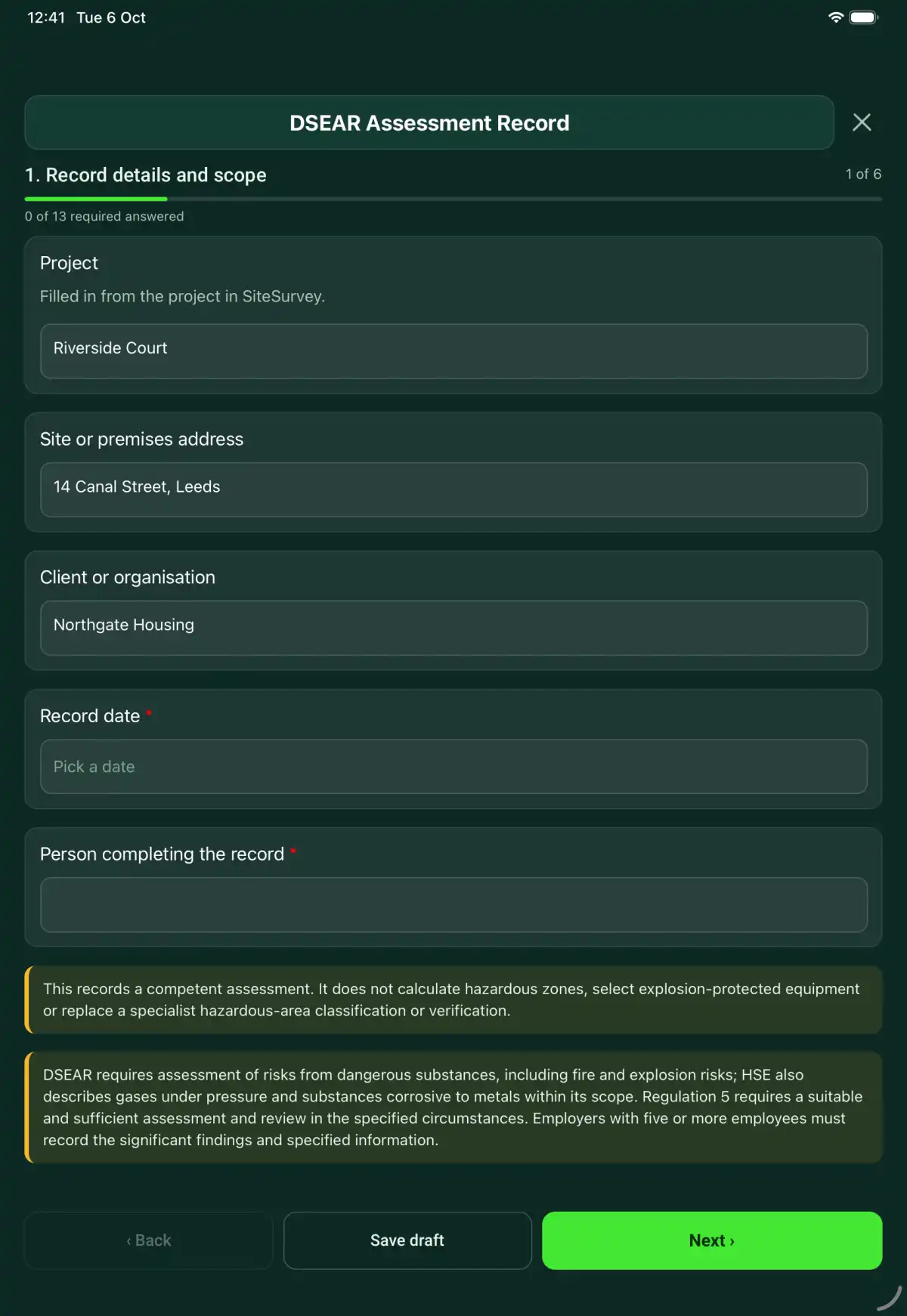
The DSEAR Assessment Record form in the SiteSurvey app on a tablet
The DSEAR Assessment Record form in the SiteSurvey app on a phone

Every question in the DSEAR assessment record template

A DSEAR assessment record with dangerous substances, release scenarios, ignition sources, existing controls, specialist references and action priorities. 6 sections and 53 questions. Follow-up questions and guidance appear only when an answer calls for them, so the person on site never sees the ones that do not apply.

Make it your own: every question is editable

This is a starting point, not a fixed form. Once it is in your SiteSurvey account you can reword any question, add or remove questions, sections and answer options, and add your own logo, so it fits the way your team works and the jobs you do.

Details you only enter once

Add this form to a project in SiteSurvey and it fills in what the project already knows, so nobody on site retypes it and every form on the job uses the same names. Anything filled in can still be changed.

  • Project: the project name
  • Site or premises address: the site address, from the space or the project
  • Client or organisation: the project's customer

Record details and scope

  • ProjectShort answer

    Filled in from the project in SiteSurvey.

    Fills in from the project name
  • Site or premises addressShort answer
    Fills in from the site address, from the space or the project
  • Client or organisationShort answer
    Fills in from the project's customer
  • Record date*Date
  • Person completing the record*Short answer
  • CheckThis records a competent assessment. It does not calculate hazardous zones, select explosion-protected equipment or replace a specialist hazardous-area classification or verification.
  • CheckSources. The Dangerous Substances and Explosive Atmospheres Regulations 2002 (DSEAR). Regulation 5 requires a suitable and sufficient assessment of the risks from dangerous substances, reviewed regularly and when there is reason to suspect it is no longer valid. Employers with five or more employees must record the significant findings. Regulation 6 requires risks to be eliminated or reduced as far as reasonably practicable. Regulation 7 requires places where explosive atmospheres may occur to be classified into zones and, where necessary, marked with the EX sign at their points of entry. HSE guidance also brings gases under pressure and substances corrosive to metals within scope.

Scope and competence

  • Process, premises and activities covered*Notes
  • Assessor competence and specialist input*Short answer
  • Scope, assumptions and assessment limitationsNotes
  • Process drawings and area plansShort answer

Substances and scenarios

  • Substance or scenario
    Repeat for each substance or scenario. Each one asks:
    • Substance, quantity and storage/use location*Short answer
    • Type of dangerous substanceChoose one
      • Flammable liquid
      • Flammable gas or LPG
      • Combustible dust
      • Oxidiser
      • Gas under pressure
      • Corrosive to metals
      • Other
    • Largest quantity stored or in use (litres or kg)Number
    • Store, tank or cage positionShort answer

      For an outside store, tank or cylinder cage, mark it so the site plan and the emergency information match.

    • Current safety data sheet reference*Short answer
    • Relevant dangerous properties and evidence*Notes
    • Flash point from the safety data sheet (°C)Number
      Shown when “Type of dangerous substance” is “Flammable liquid”
    • Highest temperature in storage or use (°C)Number

      Include heating, hot weather and process temperatures.

      Shown when “Type of dangerous substance” is “Flammable liquid”
    • Flash point against that temperatureWorked out by the form
      Shown when “Type of dangerous substance” is “Flammable liquid” and “Flash point from the safety data sheet (°C)” is answered and “Highest temperature in storage or use (°C)” is answered
    • Normal and foreseeable abnormal release scenarios*Notes
    • Ignition sources and affected people*Notes
    • Elimination, substitution, prevention and mitigation measures*Notes
    • With these controls, how likely is a fire or explosion?Choose one
      • 1 Unlikely
      • 2 Possible
      • 3 Likely
    • How serious would it be?Choose one
      • 1 Minor injury or damage
      • 2 Serious injury
      • 3 Major injury, deaths or major damage
    • Remaining risk score (1 to 9)Worked out by the form
      Shown when “With these controls, how likely is a fire or explosion?” is answered and “How serious would it be?” is answered
    • Remaining riskWorked out by the form

      A ranking method, not a legal category or a hazardous area classification.

      Shown only when the answers above make it relevant
    • CheckThe likelihood x severity score is this form's own scheme for ranking scenarios. DSEAR does not set a scoring method.
    • Remaining gaps and specialist work neededNotes
    • Photos of the store, area or controlsPhotos
  • Substances or scenariosWorked out by the form
  • High remaining riskWorked out by the form
  • MediumWorked out by the form
  • Liquids at or above their flash pointWorked out by the form
  • With gaps or specialist work recordedWorked out by the form
  • CheckHigh remaining risk or open gaps. Record what will be done, by whom and by when in the actions, and get specialist input where the gap needs it, for example hazardous area classification.
    Shown only when the answers above make it relevant

Specialist decisions

  • Are there places where an explosive atmosphere may occur?Yes or No
  • WarningZoning required. DSEAR regulation 7: these places must be classified into hazardous zones, equipment in them must be suitable for the zone, and the points of entry must be marked with the EX sign where necessary. Record the classification reference below.
    Shown when “Are there places where an explosive atmosphere may occur?” is Yes
  • Hazardous-area classification reference, author and revisionShort answer

    Reference the competent assessment and drawings used for classification decisions. State exclusions and unresolved information explicitly.

  • Equipment suitability and verification referencesShort answer
  • Operating, maintenance and emergency proceduresNotes
  • Information and training arrangementsNotes

Review

  • Changes that require review and how they are controlledNotes
  • Planned review dateDate
  • Reason for review timing and responsible personNotes

Actions and review

  • Are further actions required?*Choose one
    • Yes
    • No
  • Further action
    Repeat for each further action. Each one asks:
    Shown when “Are further actions required?” is “Yes”
    • Action and evidence reference*Notes
    • PriorityChoose one
      • Urgent
      • High
      • Medium
      • Low
    • Person responsible*Short answer
    • Target dateDate
    • Action status*Choose one
      • Open
      • In progress
      • Completed
    • Completion evidence*Notes
      Shown when “Action status” is “Completed”
  • Open actionsWorked out by the form

    Worked out from the actions above: open or in progress.

    Shown when “Are further actions required?” is “Yes”
  • Outstanding limitations and information to pass onNotes
  • Record status*Choose one
    • Ready for review
    • Further work needed
    • Work or use stopped
  • Reviewed byShort answer
  • Date reviewedDate
  • Author signature*Signature
  • CheckSigning records the information entered. It does not itself certify legal compliance, remove a limitation or authorise unsafe work.

Scope and responsibility

This records a competent assessment. It does not calculate hazardous zones, select explosion-protected equipment or replace a specialist hazardous-area classification or verification.

What a useful entry looks like

Hazardous-area classification reference, author and revision

Reference the competent assessment and drawings used for classification decisions. State exclusions and unresolved information explicitly.

Classification drawing DZ-04 revision B is referenced. The proposed additional process has not been assessed and remains outside this record's scope.

Fictional example of record wording. Use the actual evidence and approved arrangements for your job; this is not a completed report or an instruction to carry out the work.

See it filled in

A completed DSEAR assessment record report, made by SiteSurvey from a fictional site visit: every answer, the photos, the guidance that applied and the sign-off, ready to send as a PDF.

See completed form (PDF) ↗

DSEAR Assessment Record FAQs

How should I record “Hazardous-area classification reference, author and revision”?

Reference the competent assessment and drawings used for classification decisions. State exclusions and unresolved information explicitly.

Is a COSHH assessment enough?

A COSHH assessment addresses health risks from hazardous substances. DSEAR addresses different risks; link relevant assessments rather than assuming one replaces the other.

Does this classify hazardous zones?

No. Record the reference, author and revision of the competent specialist classification where required.

Does the form recommend equipment?

No. Record the equipment suitability and verification evidence established by competent people. The form does not select or certify equipment.

What are the limits of this template?

This records a competent assessment. It does not calculate hazardous zones, select explosion-protected equipment or replace a specialist hazardous-area classification or verification.

Can I complete this form on site and share the record?

In the SiteSurvey app the form works offline, with signatures recorded against the questions. Share the completed record as a PDF or a link. Dates and action owners are recorded fields; this form does not send reminders or update other systems.

Related

Hazards this form covers

Who each hazard harms, what the law expects and the control measures to look for, in our hazard library.

Use this DSEAR assessment record form with your team

Add it from the form library in one click, change any question, and every completed form becomes a branded PDF report.

Start your trial →